
Dubai Changes Speed Limits on Five Major Roads From November 1
Dubai will revise speed limits on five major road sections from November 1, raising permitted speeds on three and lowering them on two as authorities seek to improve traffic flow and road safety.
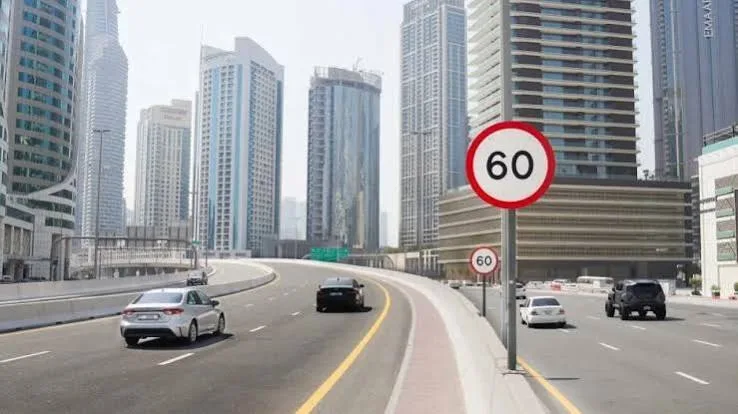
Dubai motorists will face new speed limits on five major road sections from November 1, with the Roads and Transport Authority (RTA) and Dubai Police increasing limits on three streets and reducing them on two following an engineering and traffic review.
The changes will apply in both directions along the specified sections, and authorities say speed-limit signs will be replaced and traffic cameras reprogrammed before the new limits take effect. The adjustments are intended to align permitted speeds with road design, traffic conditions and surrounding urban development.
The largest increase will be on Al Asayel Street, where the limit will rise from 60 to 80 kilometres per hour between Oud Maitha Street and Al Meydan Street. On Al Mustaqbal Street, the limit will increase from 60 to 70 km/h along the stretch between Sheikh Rashid Street and Al Meydan Street. Latifa bint Hamdan Street will also move from 60 to 70 km/h between Sheikh Zayed Road and Al Khail Road.
Two other roads will have lower limits. Al Rebat Street will change from 100 to 90 km/h between Marrakech Street and Sheikh Mohammed bin Zayed Road, while Sheikh Sabah Al Ahmad Al Jaber Al Sabah Street will drop from 80 to 70 km/h between 2nd December Street and Khalid bin Al Waleed Street. The revised limits apply only to the identified sections, rather than necessarily to each road along its entire length.
The RTA announced the changes on October 21 in coordination with Dubai Police General Command, linking them to the emirate’s Traffic Safety Strategy and the 2025 action plan for evaluating road-safety performance. According to the authority, the revisions follow an engineering and technical study conducted in recent months with the involvement of an international consultant.
The review was based on updated technical specifications in the Dubai Speed Management Manual. Factors used to assess appropriate limits include traffic volumes, road design speeds, the level of urban development along a route and actual vehicle speeds, measured using the 85th-percentile speed. Pedestrian activity and the presence of other important facilities are also considered.
The mixed changes reflect the authorities’ assessment of individual road conditions rather than a uniform increase or decrease across the city. While higher limits are intended to better match certain roads’ characteristics, lower limits will apply on two sections where the review identified a need for reduced permitted speeds.
For drivers, the key practical change is to follow the updated signs once they are installed. Motorists who regularly use the affected roads should pay particular attention to Al Rebat Street and Sheikh Sabah Al Ahmad Al Jaber Al Sabah Street, where continuing at the former posted limit after November 1 would mean exceeding the new limit.
The changes form part of Dubai’s continuing management of its road network as traffic demand, development and travel patterns evolve. By reviewing speed limits alongside road design and safety conditions, the RTA and Dubai Police are seeking to balance the movement of vehicles with the need to reduce risks for road users across the emirate.

Transport Aviation
Dubai Trials AI-Powered Electric Pods That Run on Dedicated Tracks
11 Oct 2026

Transport Aviation
Dubai Airport Launches Five-Minute International Driving Licence Service
14 Sept 2026
Transport Aviation
News Helicopter Crashes in Los Angeles Commercial Area, Killing At Least Three
16 Sept 2026
Transport Aviation
Military Plane Crash: No Survivors Found as Nigeria Enters Three Days of Mourning
6 Oct 2026

Transport Aviation
Airlines Cancel Saudi Arabia Flights After Deadly Attacks on Riyadh Airport
13 Oct 2026
Partner with Follow Global Trends
Display banners, sponsored stories and founder spotlights.
You may also like

Transport Aviation
ProTaxi Launches Electric Ride-Hailing Service in Abuja, Targets 1,000 Drivers
1 Oct 2026
Transport Aviation
Israel-Bound Flydubai Flight Diverts to Saudi Arabia After Mid-Air Cockpit Altercation
30 Sept 2026

Transport Aviation
UAE Opens Bookings for Historic Dubai–Abu Dhabi Etihad Rail Service
23 Sept 2026

Transport Aviation
Enugu Air Goes International With Non-Stop Enugu–Douala Flights
21 Sept 2026
Transport Aviation
European Airfares Could Jump 20% in 2027, Ryanair Chief Warns
20 Oct 2026
Transport Aviation
Tesla’s Rocket-Powered Roadster Arrives on UAE Booking List, With a Catch
20 Oct 2026