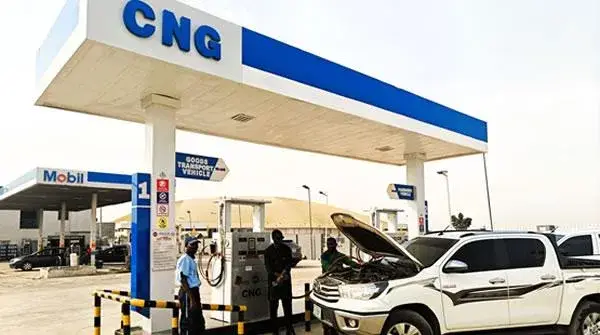
Private sector commitments behind Nigeria’s CNG investments have formally reached $2.6 billion following the commissioning of a new high-capacity refuelling and conversion facility in Karu, Abuja. The milestone marks a major turning point for the domestic energy transition, signaling that the federal push to replace petrol with cheaper compressed natural gas has moved out of its exploratory pilot phase into commercial-scale deployment.
The newly inaugurated station brings the total count of operational gas refuelling facilities across the country to 106, achieved in under two years of concentrated infrastructure expansion. Beyond the operational footprint, roughly 170 additional stations are currently undergoing active construction or completing final documentation stages with regulatory authorities.
Private Capital Anchors Infrastructure Scale-Up
The surge in private funding reflects growing investor confidence in domestic gas distribution as petrol prices remain elevated. The $2.6 billion mobilized so far encompasses investments in mother-and-daughter stations, daughter distribution networks, compression hubs, and logistics supply lines along vital interstate transit corridors.
Federal leadership has underscored that sustainable downstream energy infrastructure relies strictly on private enterprise rather than state-run retail operations. Commercial operators are deploying capital against verified commuter and commercial fleet demand, transforming high-traffic corridors into self-sustaining natural gas distribution channels.
To reinforce private participation, the presidency has directed the distribution of an additional 2,000 refuelling infrastructure units across two tranches through the Midstream and Downstream Gas Infrastructure Fund. An initial batch of 1,500 units approved earlier this year will be supplemented by 500 newly mandated units entering the market through early next year.
Integrated Capabilities at the Karu Facility
The newly commissioned facility along Saint George Akume Way in the Karu district functions as a modern Integrated Refuelling Unit. Unlike conventional retail forecourts that require sprawling footprints, the integrated setup combines compression machinery and high-pressure dispensers into a consolidated single-unit footprint to accelerate urban deployment.
In addition to direct retail pumping, the Karu station hosts a specialized technical conversion workshop equipped with twin service pits. The workshop has the operational capacity to retrofit up to 12 commercial and private vehicles daily, easing logistical friction for motorists seeking conversion services.
The project was delivered via an inter-agency public-private partnership between the State House, national transition authorities, and Rolling Energy Ltd. The partnership converted an abandoned retail filling facility into an active clean energy hub without drawing on direct public capital, while private partners funded full equipment overhaul, compression installations, and technical staffing.
Fleet Conversion and Mass Transit Priorities
With Nigeria’s vehicle population estimated at roughly 12 million units, authorities are focusing initial scale on high-mileage commercial transporters, public minibuses, and intercity logistics fleets where fuel expenditures consume the largest operational margins. Fleet operators transitioning to natural gas report running cost savings between 40% and 70% compared to equivalent petrol and diesel consumption.
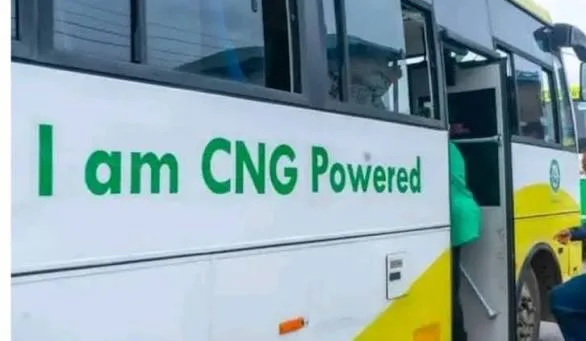
Government institutions are aligning their own logistics footprint with the transition. The State House has recently taken delivery of hybrid CNG transit buses and utility vehicles, shifting executive estate shuttles away from liquid fossil fuels. As licensing queues clear for the 170 pending facilities, technical teams plan to prioritize transit choke points in major urban centres, ensuring conversion capacity matches dispensing speed nationwide.