
Only Lagos and Enugu Can Cover Recurrent Spending With IGR, World Bank Says
Lagos and Enugu stand out as Nigeria’s only states generating enough internally sourced revenue to cover their routine spending, according to the World Bank.
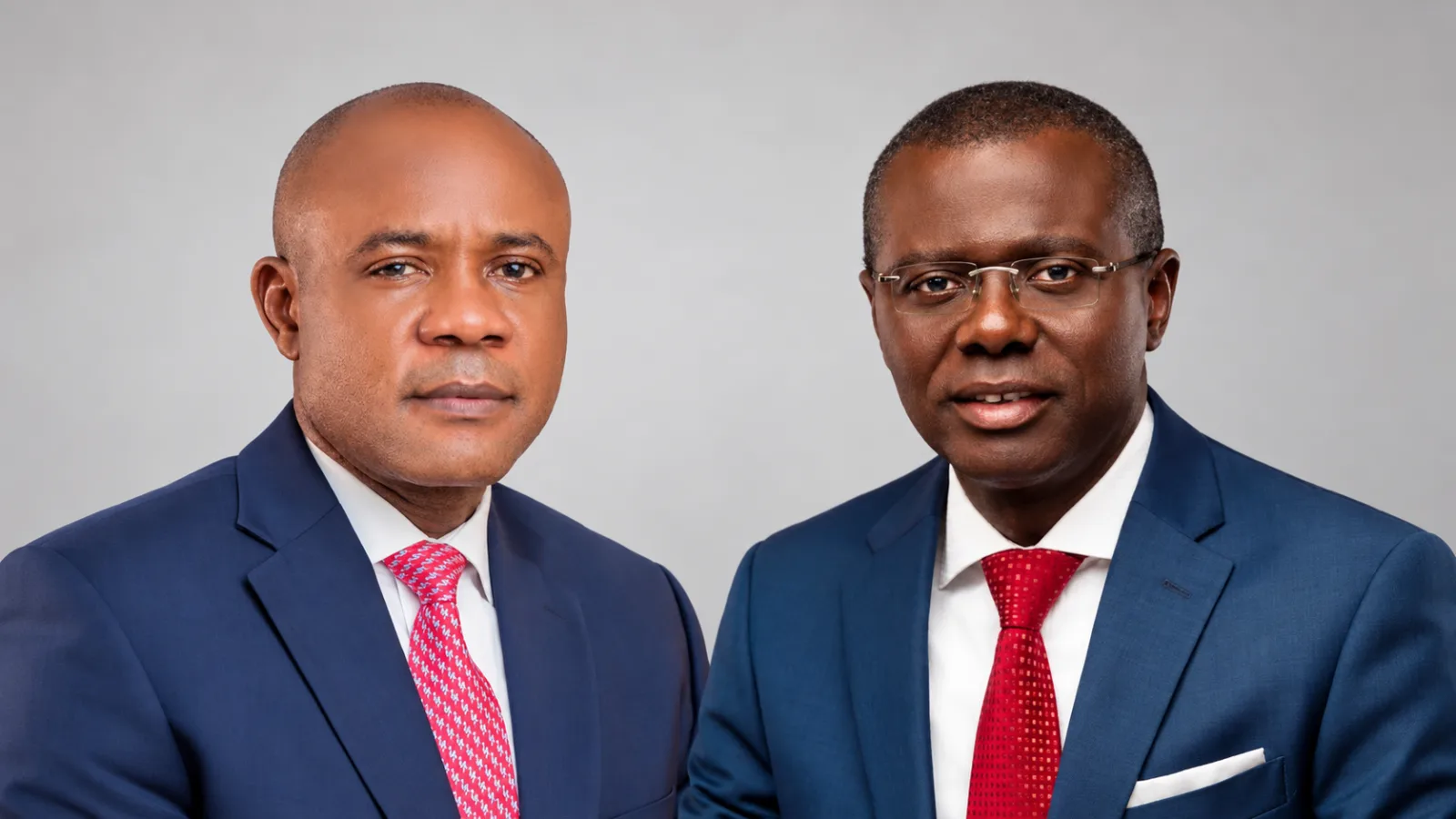
Lagos and Enugu were the only Nigerian states whose internally generated revenue (IGR) was sufficient to cover their recurrent expenditure in 2025, with Enugu recording a ratio of 377% and Lagos 160%, according to the World Bank. The findings highlight the wide differences in states’ ability to finance their day-to-day operations without relying on money distributed from the federal pool.
The figures are contained in the Bank’s October 2026 Nigeria Development Update, titled Beyond the Federal Purse: How Higher Revenues Shaped State Priorities. The report found that state governments’ IGR covered an average of about 40% of recurrent expenditure between 2021 and 2023, improving to roughly 50% in 2024 and 2025. Despite that progress, most states still depend heavily on federal allocations to meet recurring obligations such as salaries and the daily costs of running public institutions.
The percentages show how much revenue each state generates internally relative to its recurrent spending. Lagos’s 160% ratio means its IGR was equivalent to 1.6 times its recurrent expenditure, while Enugu’s 377% means its internally generated revenue was equivalent to 3.77 times those costs. The figures do not mean that either state spends that percentage of its revenue on recurrent expenses; rather, they indicate how far its own revenue could go towards meeting those obligations.
Enugu’s performance is particularly notable because of the pace of its revenue growth. The World Bank reported that the state’s IGR rose from about ₦25 billion to ₦209 billion between 2023 and 2025, representing growth of approximately 732% in real terms. Its direct assessment personal income tax revenue, paid by self-employed people such as business owners, contractors and landlords, climbed from ₦280 million to ₦14.5 billion over the same period, an increase of almost 4,000% in real terms.
The Bank attributed the improvement partly to efforts to bring more informal businesses and self-employed taxpayers into the formal tax system, alongside digital reforms to revenue collection. Automation, cashless payments made directly into government accounts and the integration of tax systems with geographic information and other government databases have helped states widen their tax bases and reduce opportunities for revenue leakages. Higher Pay-As-You-Earn tax receipts, partly reflecting salary increases associated with inflation, have also supported revenue growth across states.
The wider fiscal picture is more complicated. The World Bank said aggregate state IGR grew by 55% in real terms between 2023 and 2025, while total state revenues increased by about 93% and expenditure by approximately 92% over the period. Much of the additional money has gone into capital projects, with capital spending rising from 46% of total state expenditure in 2021 to 61% in 2025. Transport infrastructure recorded particularly strong growth, alongside spending increases in housing, agriculture and other economic services.
However, the spending pattern raises questions about whether higher public revenues are translating into sufficient investment in people and essential services. The World Bank reported that education’s share of total state expenditure declined from 14.9% in 2021 to 12.1% in 2025, while health spending remained broadly stable at around 7%. Social protection’s share increased from 1.4% to 4.4%. The figures do not, by themselves, show the quality or outcomes of spending, but they underline the need to examine not just how much governments collect and spend, but what citizens receive in return.
For states that remain heavily dependent on federal transfers, the risks extend beyond the size of their budgets. A decline in federally collected revenue could leave governments struggling to pay salaries, operate public institutions and maintain essential services. The World Bank has therefore urged states to strengthen their own revenue systems, improve spending efficiency and make public finances more resilient to changes in federal receipts. Its Country Director for Nigeria, Mathew Verghis, said stronger accountability and better service delivery would be crucial to ensuring that increased public resources improve Nigerians’ lives.
The Lagos and Enugu figures offer evidence that states can build stronger independent revenue bases, but they also expose how uneven that capacity remains across the federation. The challenge for Nigeria’s governments is to sustain revenue growth without placing unfair pressure on households and businesses, while ensuring that the money collected leads to better roads, schools, healthcare and other public services. Ultimately, fiscal strength should be measured not only by a state’s ability to fund its routine operations, but by whether it can turn public revenue into visible improvements in people’s lives.
More on Nigeria
Nigeria
World Bank: 67.27 Million Nigerians Covered by Cash Transfer Programme
21 Sept 2026
Nigeria
Nigeria, US Sign Deal to Unlock $700bn Mineral Wealth
26 Sept 2026
Nigeria
Nigeria to Host Global Alliance–World Public Relations Forum 2026 in Historic African First
24 Sept 2026
Nigeria
Nigeria Reaffirms Support for WTO, Multilateralism at BRICS Summit
13 Sept 2026

Nigeria
Nigeria Mourns as NAF Names 25 Killed in Ondo Military Plane Crash
6 Oct 2026
You may also like

Nigeria
Washington DC Declares October Nigerian American Heritage Month, Marks Nigeria Day
4 Oct 2026
Nigeria
Nigeria Targets 24-Hour Electricity for Major Commercial Corridors
1 Oct 2026
Nigeria
Tinubu Ends Four-Week European Working Vacation, Returns to Nigeria
30 Sept 2026
Nigeria
Nigeria Heads to UNGA 81 With Shettima Leading High-Level Delegation
20 Sept 2026
Nigeria
British High Commissioner-designate Pete Vowles Arrives in Nigeria
14 Sept 2026
Nigeria
Four Rescued, One Feared Dead as Uncompleted Building Collapses in Enugu
13 Sept 2026