
Israel-Bound Flydubai Flight Diverts to Saudi Arabia After Mid-Air Cockpit Altercation
A Flydubai flight from Dubai to Tel Aviv made an emergency landing in Saudi Arabia after a violent cockpit incident triggered emergency signals and a rapid descent, with Israeli officials now investigating whether it was an attempted terror attack.
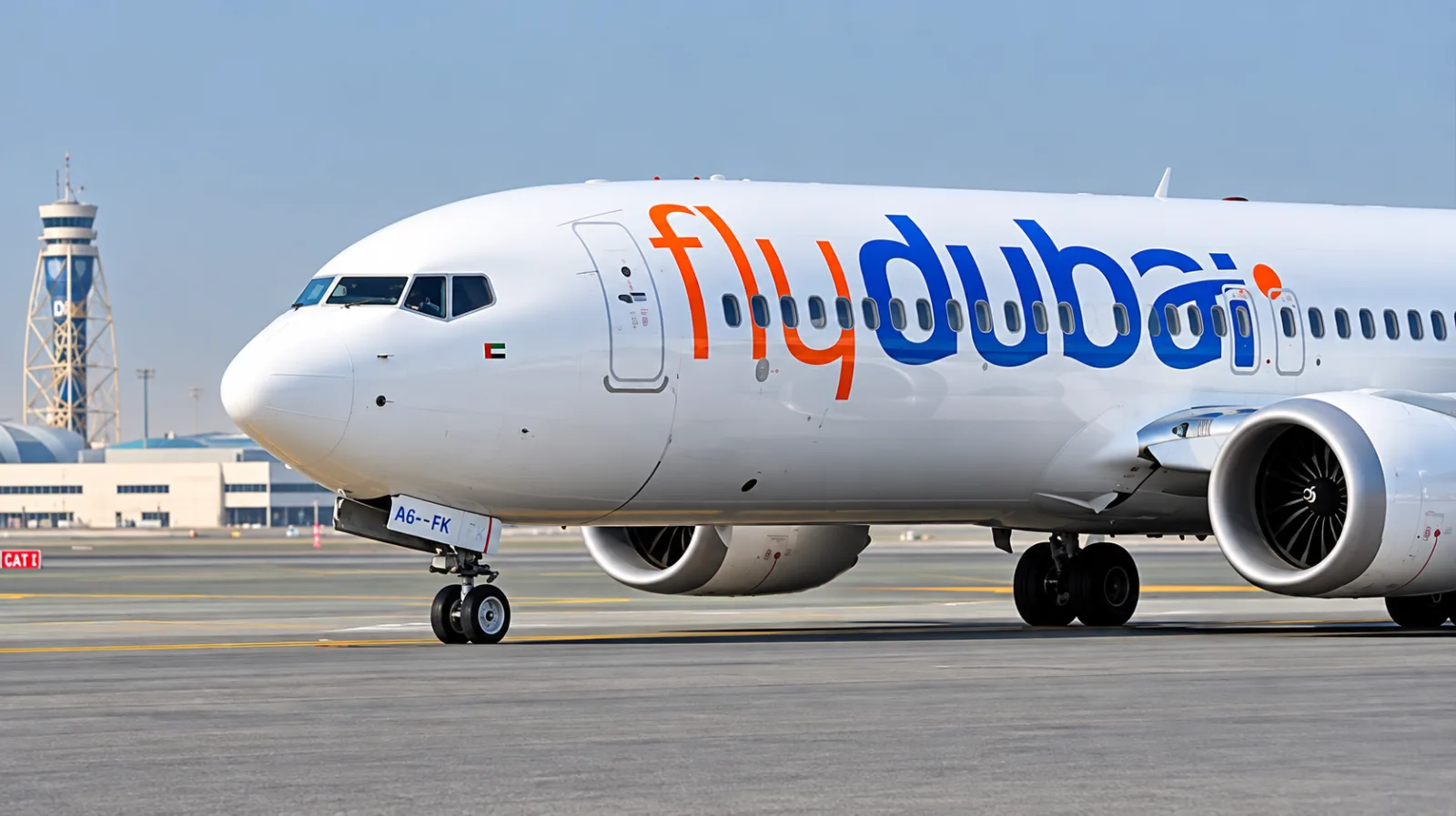
A Flydubai passenger aircraft travelling from Dubai to Tel Aviv was diverted to Saudi Arabia on Wednesday after a violent incident involving the pilots, sending the Boeing 737 into a dramatic mid-air descent and triggering an Israeli security response.
Flight FZ1073, bound for Ben Gurion Airport, eventually landed safely at Tabuk Airport in northwestern Saudi Arabia, with Flydubai saying all passengers were accounted for. The airline confirmed that an incident had occurred during the flight but said it was working with the relevant authorities and would provide further information as confirmed details became available.
The seriousness of the episode became apparent from flight-tracking data. According to FlightRadar24 data cited by the Associated Press, the aircraft was cruising at about 33,000 feet when it suddenly descended to roughly 17,000 feet within about a minute before making an erratic turn near the Jordanian border. CNN's analysis of tracking data put the descent at about 17,400 feet, from approximately 34,000 to 16,600 feet, over a little more than two minutes. Reuters, using FlightRadar24 data, reported a slightly different measurement, saying the aircraft dropped nearly 14,000 feet in less than 30 seconds.
The differences reflect how flight-tracking systems record rapid altitude changes, but all three accounts point to the same central fact: the aircraft experienced an unusually abrupt loss of altitude shortly before emergency signals were transmitted.
What happened inside the cockpit
Israeli officials and regional sources said the emergency began with a physical confrontation between the two pilots. Reuters reported that Israeli officials believe the co-pilot may have stabbed the captain before cabin crew intervened and helped regain control of the aircraft. Tabuk airport officials said both pilots were subsequently hospitalised with injuries.
Passengers also described hearing shouting and witnessing signs of violence near the front of the aircraft. One passenger's account, relayed through Israeli media, alleged that a man with a knife had forced a pilot to the floor. Reuters said it could not independently verify photographs circulating from inside the aircraft.
The precise sequence of events, however, remains under investigation. Early reports have differed over who attacked whom, the nationalities of the pilots and what motivated the confrontation. Reuters noted that Israeli media had circulated conflicting accounts, including reports of an attempted suicide and differing claims about the pilots' nationalities. Those details have not been independently established.
The aircraft transmitted a general emergency signal followed by a signal indicating possible unlawful interference, according to FlightRadar24 data cited by Reuters. That helped trigger fears that the aircraft could have been hijacked.
Israeli fighters scrambled amid security fears
The emergency prompted Israel to scramble fighter aircraft as authorities initially feared that a passenger plane carrying Israeli citizens might have been taken over. Israeli Prime Minister Benjamin Netanyahu also held security consultations as the situation unfolded. His office later said the incident was under control and that efforts were being made to return the passengers safely to Israel.
Israeli officials subsequently moved beyond the initial hijacking concern. Two officials told Reuters that Israel's assessment was that the incident may have been an attempted terror attack by one of the pilots, rather than a mental-health-related episode. Another Israeli official had earlier described the situation as a personnel incident rather than a hijacking. The distinction remains important because the investigation has not yet established the motive conclusively.
The Associated Press similarly reported that an Israeli official believed the incident may have been an attempt to attack Israelis, while stressing that the investigation was still underway.
Emergency landing in Saudi Arabia
After the aircraft stabilised, the crew diverted to Tabuk, where the plane landed safely. The arrival was notable because Saudi Arabia does not have formal diplomatic relations with Israel, although commercial flights between Israel and the United Arab Emirates have operated since the UAE and Israel established diplomatic relations in 2020.
The flight was carrying a large number of Israeli passengers, with Reuters reporting that Israeli media estimated around 150 Israelis were onboard. Other reports have put the total number of passengers higher, but an independently verified passenger figure was not immediately available.
Saudi security personnel surrounded the aircraft after landing while passengers remained onboard during the initial response, according to passenger accounts reported by AP. The crew were questioned as part of the investigation.
For Flydubai, the incident places renewed attention on cockpit security and the safeguards designed to prevent a dispute involving flight crew from escalating into a threat to an entire aircraft. The airline is a Dubai-based carrier and a sister company of Emirates, operating a fleet made up entirely of Boeing 737-family aircraft.
The immediate outcome was a safe landing and no reported passenger fatalities, but the investigation will now have to establish exactly what happened in the cockpit, who initiated the violence, why the aircraft descended so rapidly and whether the episode was an act of terrorism or a serious internal confrontation. Until those questions are answered, the most consequential claims about motive remain allegations rather than established facts.
The incident also highlights how quickly a cockpit disturbance can become an international security crisis when it occurs aboard an Israel-bound aircraft carrying Israeli citizens and travelling through the airspace of several countries. What began as an emergency signal in the cockpit ultimately involved Saudi authorities, Israeli fighter aircraft and high-level security consultations, making the final findings of the investigation important not only for Flydubai but for wider aviation security procedures across the region.

Transport Aviation
Flydubai CEO Thanks Captain, Passengers After Mid-Air Cockpit Incident
2 Oct 2026

Transport Aviation
From Plumber to Dentist: The Ordinary Passengers Who Became FlyDubai Heroes
3 Oct 2026

Transport Aviation
Who Is Captain Smit Machchhar? The Pilot at the Centre of Flydubai FZ1073 Emergency
3 Oct 2026
Transport Aviation
Airlines Cancel Saudi Arabia Flights After Deadly Attacks on Riyadh Airport
13 Oct 2026

Transport Aviation
FlyDubai Co-Pilot Identified as Hamam Al-Hammami as Questions Grow Over Security Vetting
3 Oct 2026
Partner with Follow Global Trends
Display banners, sponsored stories and founder spotlights.
You may also like

Transport Aviation
UAE Investigation Finds Flydubai Co-Pilot Tried to Seize Plane in Terrorist Act
3 Oct 2026

Transport Aviation
Indian Flydubai Pilot Says He Fought to Save 174 Passengers
2 Oct 2026

Transport Aviation
Dubai Changes Speed Limits on Five Major Roads From November 1
23 Oct 2026

Transport Aviation
Dubai Trials AI-Powered Electric Pods That Run on Dedicated Tracks
11 Oct 2026

Transport Aviation
Mayday Call After Private Jet Loses Door Shortly After Take-Off in Abuja
16 Oct 2026

Transport Aviation
Airbus Ramps Up Aircraft Deliveries, Ships Over 70 Planes in September
2 Oct 2026