
Airlines Cancel Saudi Arabia Flights After Deadly Attacks on Riyadh Airport
Major international airlines have cancelled or suspended Saudi Arabia services after deadly attacks on Riyadh’s main airport forced an extended shutdown and disrupted flights across the region.
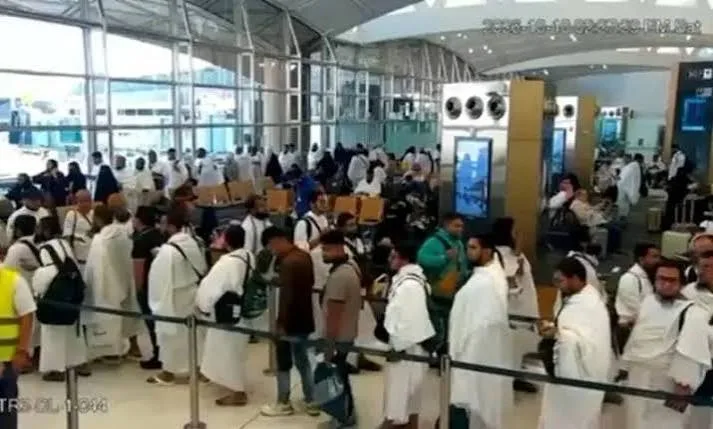
Air travel to Saudi Arabia has been thrown into further uncertainty after a series of deadly attacks on Riyadh’s King Khalid International Airport prompted airlines across Europe, Asia and the Middle East to suspend services, cancel flights and revise travel schedules.
The disruption intensified on Monday, October 12, after Saudi authorities extended the airport’s closure until October 17 to allow safety inspections and checks on operational readiness. Yemen’s Houthi movement claimed responsibility for the attacks, which reportedly killed 13 people on Saturday, followed by another incident on Sunday that killed one person and injured several others.
The attacks have triggered one of the most significant disruptions to Saudi civil aviation in recent years. Aviation analytics firm Cirium reported that 99.7 per cent of scheduled flights at Riyadh airport were cancelled on Sunday, while cancellations and suspensions spread to other Saudi airports, including those serving Jeddah and Dammam.
The Houthi movement, which is aligned with Iran, claimed it had targeted Saudi airport infrastructure with missiles and drones. Those claims should be distinguished from independently verified details of the strikes. Saudi authorities have confirmed the security disruption, while the closure has forced airlines and aviation regulators to reassess the risks of operating in the affected airspace.
The disruption has affected carriers serving Saudi Arabia from several international hubs. Reuters reported that Lufthansa Group cancelled Riyadh flights through October 16, Air France-KLM extended its suspension until the end of October, and Etihad Airways cancelled services between Abu Dhabi and Riyadh, as well as some flights to Jeddah and Dammam, through October 19.
Other airlines have taken similar precautions: - Air India and IndiGo: Suspended Riyadh services through October 15, with IndiGo also cancelling flights to Dammam. - Gulf Air: Cancelled Riyadh flights from October 12 to 17. - Qatar Airways: Temporarily suspended services to Riyadh and Dammam. - Akasa Air: Suspended flights to Riyadh and Jeddah through October 13. - Philippine Airlines: Extended its Riyadh suspension through November 29. - Delta Air Lines: Postponed the planned launch of its Atlanta–Riyadh service until March 2027. The dates differ by airline and may change as the security situation develops. Travellers with bookings should check directly with their airline before travelling to the airport and confirm whether they qualify for a refund, rebooking or other assistance.
The disruption is not confined to Saudi Arabia’s capital. Airlines have also adjusted services to other destinations in the kingdom, while aviation authorities have warned operators to exercise caution in the region. The US Federal Aviation Administration advised American carriers to take care when flying to or over Saudi Arabia, and the European Union Aviation Safety Agency widened its airspace warning amid missile and drone threats.
The closure has created a difficult operational challenge for airlines that depend on Gulf hubs to connect passengers travelling between Europe, Asia and Africa. When airspace becomes unsafe or an airport closes, carriers may have to reroute aircraft, cancel onward connections or leave planes and crews out of position for later services. Longer routes can also increase fuel consumption and operating costs.
For passengers, the consequences include missed connections, longer journeys, unexpected hotel expenses and uncertainty over when normal schedules will resume. Travellers heading to Saudi Arabia for work, religious visits, business or family commitments may face particular difficulty if alternative flights are limited.
The attacks also raise questions about the protection of civilian aviation during regional conflicts. Aviation safety specialists have warned that repeated strikes on airports and nearby infrastructure require airlines to reassess their risk calculations rather than rely on normal operating assumptions. The priority remains protecting passengers and crew, even when suspensions create substantial commercial losses.
The wider significance is that the security of a major airport can quickly become an international travel issue. Riyadh’s prolonged closure shows how conflict can disrupt not only local air services but also the connections that link continents, businesses and families. Until authorities can establish that airport operations and surrounding airspace are safe, airlines are likely to remain cautious, and passengers should expect schedules to change at short notice.
Transport Aviation
Israel-Bound Flydubai Flight Diverts to Saudi Arabia After Mid-Air Cockpit Altercation
30 Sept 2026
Transport Aviation
Enugu Air Goes International With Non-Stop Enugu–Douala Flights
21 Sept 2026

Transport Aviation
Dubai Airport Launches Five-Minute International Driving Licence Service
14 Sept 2026

Transport Aviation
Flydubai CEO Thanks Captain, Passengers After Mid-Air Cockpit Incident
2 Oct 2026

Transport Aviation
Emirates Signs Seven Tourism Partnerships at Arabian Travel Market 2026
14 Sept 2026
You may also like

Transport Aviation
ProTaxi Launches Electric Ride-Hailing Service in Abuja, Targets 1,000 Drivers
1 Oct 2026
Transport Aviation
Singapore Airlines Crowned World’s Best Airline for 2026
19 Sept 2026
Transport Aviation
Toyota and IVECO Launch Next-Generation Hydrogen Truck Partnership
13 Sept 2026
Transport Aviation
IATA: Nigeria Remains One of the Toughest Markets for Airline Business
12 Sept 2026

Transport Aviation
Dubai, Abu Dhabi Brace for Cheaper Flights as Wizz Air Resumes Operations
10 Sept 2026

Transport Aviation
Dubai Trials AI-Powered Electric Pods That Run on Dedicated Tracks
11 Oct 2026