Dangote Refinery Expands Free Fuel Delivery to Four More States
Dangote Refinery has widened its free fuel delivery programme to four more states, seeking to cut distribution costs and create room for cheaper petrol.
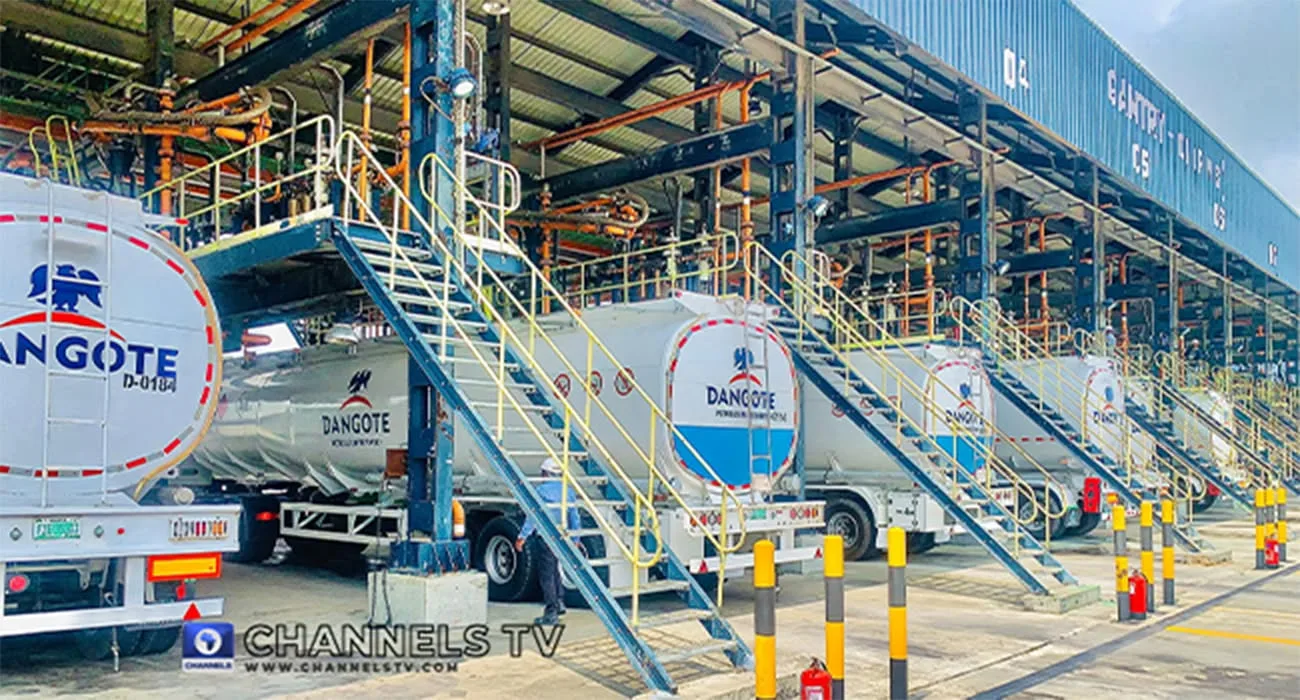
The Dangote Petroleum Refinery has expanded its free petroleum-products delivery initiative to Kano, Imo, Anambra and Nasarawa, extending a programme designed to reduce one of the costs that can push petrol prices higher across Nigeria.
The four states join Lagos, Ogun, Rivers, Kaduna, Delta and the Federal Capital Territory, where the initiative was previously available. The latest expansion brings the programme to 10 delivery locations, covering nine states and Abuja.
Under the arrangement, Dangote Refinery absorbs the cost of transporting eligible petroleum products to participating customers. The company says this removes a significant logistics expense from the downstream supply chain, potentially giving independent petroleum marketers more room to sell at competitive prices.
Fatima Aliko Dangote, the refinery's Group Executive Director for Commercial Operations, Oil and Gas, WAEP and Fertilizer, said the objective was to ensure that the benefits of domestic refining were felt beyond the refinery itself. She said absorbing delivery expenses should reduce avoidable costs and improve the efficiency of fuel distribution.
The move is particularly significant for markets far from the refinery in Lagos. Moving petrol over long distances typically involves haulage, insurance, vehicle maintenance, driver costs and exposure to road-related risks. Removing the delivery charge does not eliminate every cost in the distribution chain, but it can reduce the burden on marketers supplying distant markets.
The initiative is also tied to Dangote's broader push to expand the reach of domestically refined petroleum products. Earlier in August, the refinery announced another phase of its free-delivery offer for qualifying bulk buyers, with a minimum purchase requirement of 250,000 litres. Reports on that programme said eligible marketers could purchase petrol at ₦1,165 per litre and receive a 10-day credit period.
Independent petroleum marketers have welcomed the expansion. The Independent Petroleum Marketers Association of Nigeria has described the arrangement as a potential relief for marketers facing high logistics and financing costs, while also calling for the initiative to be extended to additional parts of the country.
For consumers, however, the important question is whether the savings will actually appear at filling stations. Dangote Refinery has said the programme creates room for lower pump prices, but free delivery by itself does not guarantee that every litre sold to motorists will immediately become cheaper. Retail prices can still be influenced by the marketer's operating costs, local competition and other factors across the supply chain.
The geographical expansion nevertheless matters. Kano gives the programme a stronger foothold in the North, while Imo and Anambra extend it into the South-East and Nasarawa strengthens coverage in the North-Central zone. Together, the additions broaden the refinery's direct reach beyond the areas closest to Lagos and the southern coastal market.
The development comes as Nigeria's downstream oil market continues to adjust to the growing role of the Dangote refinery, which has a stated processing capacity of 700,000 barrels per day. The refinery is increasingly supplying the domestic market while also exporting refined products, changing the dynamics of a sector that previously depended heavily on imported petrol. Reuters reported last week that the refinery is also preparing for a major initial public offering, highlighting its growing importance to Nigeria's energy and capital markets.
The broader significance is that competition in Nigeria's fuel market is increasingly moving beyond who supplies petrol to how efficiently it reaches consumers. By taking on delivery costs, Dangote is attempting to tackle the logistics component of the pump-price equation directly. Whether that eventually translates into consistently cheaper petrol for motorists will depend on how much of the saving is passed through the distribution chain, but the expansion signals a market increasingly focused not only on domestic refining, but on making domestic supply cheaper and more accessible across the country.
More on Oil and Gas
Oil and Gas
Dangote Refinery Hikes Petrol Price by ₦85 Per Litre
12 Sept 2026
Oil and Gas
Crude at $100: Nigeria Set for Bigger Oil Earnings as Petrol Fears Grow
9 Sept 2026
Oil and Gas
Saudi Pipeline Outage Threatens Loss of 4% of Global Oil Output
14 Sept 2026
Oil and Gas
NNPC Launches Nigeria's First Self-Service Smart Filling Station, Targets 70 Nationwide
11 Sept 2026
Oil and Gas
Oil Nears $100 Per Barrel as Middle East Tensions Shake Global Markets
8 Sept 2026
You may also like
Oil and Gas
Scorpio Drilling Unveils $28 Million Rig in Major Nigerian Upstream Investment
4 Sept 2026
Oil and Gas
19 Nigerian Oil Block Licences Face 2026 Expiry as NUPRC Tightens Acreage Rules
26 Aug 2026

Oil and Gas
Ogoni Oil Return: Youths Push for 500 Jobs as Leaders Demand Transparency
22 Aug 2026
Oil and Gas
Ghana Eyes Nigeria Electricity Market as Accra Pushes West African Energy Hub Ambition
22 Aug 2026
Oil and Gas
Bonny Light Nears $95 as Hormuz Crisis Keeps Oil Markets on Edge
17 Aug 2026
Oil and Gas
Nigeria’s $50bn Deepwater Bet: NNPC Says Tax Reform Will Unlock New Oil Investment
14 Aug 2026