
19 Nigerian Oil Block Licences Face 2026 Expiry as NUPRC Tightens Acreage Rules
Nineteen Nigerian upstream licences have stated expiry dates in 2026, putting renewed attention on extensions, conversions and the government’s push to end dormant oil assets.
Nineteen oil licences in Nigeria’s upstream petroleum sector have stated expiry dates falling within 2026, according to the latest Nigerian Upstream Petroleum Regulatory Commission (NUPRC) concession data, placing a number of oil and gas assets at an important regulatory crossroads.
The licences comprise 12 Petroleum Prospecting Licences (PPLs) and seven Oil Prospecting Licences (OPLs). The latest concession situation report, released in August, shows that some of the licences have already reached their stated expiry dates, while others are due to expire later in the year.
Among the licences approaching expiry are PPL 220, held by Navante Exploration and Production Limited, which is scheduled to expire on October 16; PPL 232, held by Kizi Oil and Gas Services Limited, due on November 16; and PPL 235, operated by Oceangate Engineering Oil & Gas Limited, with a November 1 expiry date. PPL 223 is listed for November 30, while PPL 266, held by AOS Orchard Petroleum Development Limited, is scheduled to expire on November 21.
The OPL portfolio also contains several licences whose stated tenures fall in 2026. These include OPL 289, operated by Cleanwaters Consortium, which is due to expire on September 9, as well as OPL 2010, whose stated expiry date is December 23. Other OPLs listed in the report have already passed their stated expiry dates earlier this year.
Importantly, the expiry dates should not be interpreted as evidence that all 19 licences have been cancelled or that their holders will automatically lose the acreage. The NUPRC concession data identifies the stated tenure dates, but some licences are marked for possible optional extension or conversion, while others are already shown as being in the conversion process. The regulatory outcome for individual licences will therefore depend on the applicable rules and the status of applications by the holders.
That distinction is particularly important because Nigeria introduced amended Conversion and Renewal (Licences and Leases) Regulations in 2026. The regulations govern applications involving the conversion and renewal of upstream licences and leases, including the conversion of OPLs to PPLs or Petroleum Mining Leases, the renewal of eligible leases and extensions of PPL tenure.
The development comes as the Federal Government and the NUPRC push a more aggressive approach to oil acreage management. The regulator has repeatedly warned operators that holding petroleum licences without developing the underlying assets will no longer be tolerated. NUPRC Chief Executive Oritsemeyiwa Eyesan has pointed to the Petroleum Industry Act’s “drill or drop” principle, under which operators are expected to either progress with their work programmes or risk relinquishing their assets.
That policy is already influencing the way Nigeria approaches new acreage. In July, NUPRC announced the emergence of 31 companies as winners of 37 oil and gas blocks in the 2025 Licensing Round, after 143 companies submitted bids for the assets. The blocks cover areas ranging from the Niger Delta to the Benin Basin, Anambra Basin, Chad Basin and Benue Trough.
The regulator has also been issuing fresh Petroleum Prospecting Licences from earlier licensing exercises. In July, 12 successful awardees received 19 PPLs from the 2024 Licensing Round and the 2022/2023 Mini Bid Round, covering deep offshore, shallow-water and continental-shelf acreage. NUPRC said the awards were intended to stimulate exploration, expand reserves and attract investment into the upstream sector.
The timing is significant. Nigeria is trying to increase crude production and attract capital into an industry that has struggled with ageing infrastructure, underinvestment, project delays and insecurity. The return of major investment activity is beginning to show in parts of the sector; ExxonMobil, for example, recently committed $1 billion to the Usan Infill Project in OML 138, with the project expected to add about 40,000 barrels per day when it comes on stream.
For the 19 licences approaching or reaching the end of their stated tenure, the immediate question is therefore not simply whether the blocks will expire. It is whether their holders have met the conditions required for renewal or conversion, whether the regulator will approve extensions, and whether any acreage that cannot justify continued tenure will eventually return to the government for reallocation.
With NUPRC preparing another licensing round and maintaining pressure on operators to develop their assets, expiring acreage could become part of a broader reshuffling of Nigeria’s upstream landscape. The significance goes beyond the 19 licences themselves: how transparently and efficiently the government handles these expiries will test its commitment to turning idle or underdeveloped acreage into productive assets, while giving serious investors greater confidence that Nigeria’s oil resources are being actively managed rather than simply held.
More on Oil and Gas
Oil and Gas
Scorpio Drilling Unveils $28 Million Rig in Major Nigerian Upstream Investment
4 Sept 2026

Oil and Gas
Crude at $100: Nigeria Set for Bigger Oil Earnings as Petrol Fears Grow
9 Sept 2026

Oil and Gas
Ogoni Oil Return: Youths Push for 500 Jobs as Leaders Demand Transparency
22 Aug 2026
Oil and Gas
OMV to Continue Austrian Hydrogen Project After Masdar Exit
19 Sept 2026
Oil and Gas
Saudi Pipeline Outage Threatens Loss of 4% of Global Oil Output
14 Sept 2026
You may also like
Oil and Gas
Dangote Refinery Hikes Petrol Price by ₦85 Per Litre
12 Sept 2026
Oil and Gas
NNPC Launches Nigeria's First Self-Service Smart Filling Station, Targets 70 Nationwide
11 Sept 2026

Oil and Gas
Oil Nears $100 Per Barrel as Middle East Tensions Shake Global Markets
8 Sept 2026
Oil and Gas
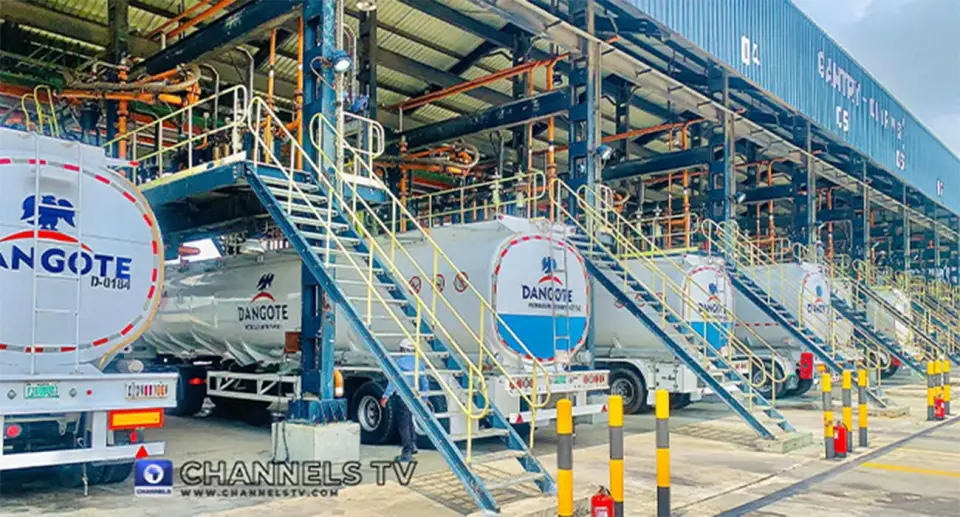
Dangote Refinery Expands Free Fuel Delivery to Four More States
24 Aug 2026
Oil and Gas
Ghana Eyes Nigeria Electricity Market as Accra Pushes West African Energy Hub Ambition
22 Aug 2026
Oil and Gas
Bonny Light Nears $95 as Hormuz Crisis Keeps Oil Markets on Edge
17 Aug 2026