BRICS Pauses Common Currency Plan, Prioritises Local Currency Trade
BRICS has shelved plans for a common currency, choosing instead to expand trade in national currencies and strengthen cross-border payment systems.
BRICS has formally moved away from the idea of creating a single common currency, with member states agreeing instead to deepen the use of their national currencies for trade and improve payment links across the expanded bloc. The decision reflects a more pragmatic approach to financial cooperation as BRICS continues to grow in both membership and global economic influence.
The shift was confirmed ahead of the 18th BRICS Summit, which India is hosting, where officials clarified that there is currently no proposal for a common BRICS currency. Instead, leaders are prioritizing the interoperability of national payment systems, allowing businesses and financial institutions to settle cross-border transactions directly in local currencies rather than relying primarily on the U.S. dollar or other third-party currencies.
The updated strategy marks a notable evolution in BRICS’ long-running discussions about reshaping the global financial system. While speculation over a shared BRICS currency has circulated for years, officials say the bloc’s immediate priority is building practical infrastructure that makes trade easier among member nations with different monetary systems.
Central to that effort is connecting domestic payment networks so they can communicate seamlessly across borders. Such interoperability would enable exporters and importers to invoice and settle transactions in currencies including the Indian rupee, Chinese yuan, Brazilian real, South African rand and other member currencies, reducing exchange costs and improving payment efficiency.
The New Delhi Declaration endorsed stronger cross-border payment systems and encouraged the New Development Bank (NDB) to expand lending in local currencies. The bank, established by BRICS to finance infrastructure and sustainable development projects, has increasingly promoted financing that reduces borrowers’ exposure to foreign exchange volatility.
Officials say expanding local-currency financing could make development funding more resilient while giving member countries greater flexibility in managing international trade and investment. The approach also aligns with broader efforts by several emerging economies to diversify settlement options in global commerce.
Creating a shared currency would require deep monetary integration, coordinated fiscal policy and common financial institutions—conditions that do not currently exist across the diverse BRICS membership. The bloc now includes economies with different exchange rate regimes, inflation targets and central banking frameworks, making a single currency considerably more complex than expanding bilateral and multilateral local-currency trade.
Rather than pursuing monetary union, BRICS leaders appear to be favouring incremental financial integration through payment technology, banking cooperation and settlement mechanisms that preserve each country’s monetary sovereignty.
As BRICS expands its role in the global economy, the decision signals a shift from ambitious symbolism to practical implementation. By prioritizing interoperable payment systems and local-currency settlements over a common currency, the bloc is betting that financial connectivity, not monetary union, will be the more achievable path toward reducing dependence on traditional reserve currencies.
More on Global
Global
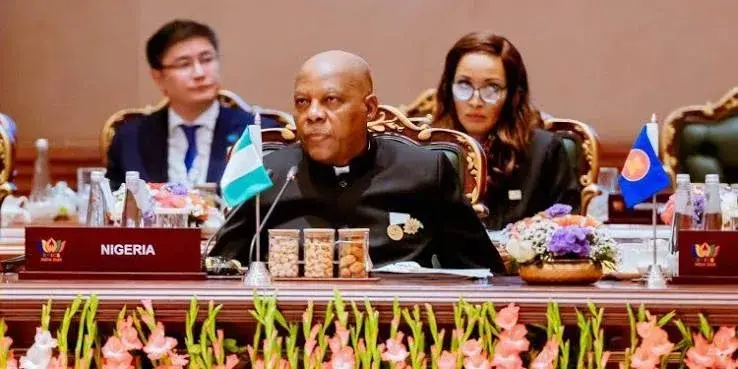
BRICS Summit 2026: Nigeria Calls for UN Security Council and Global Financial Reform
14 Sept 2026

Global
Russia Strikes Near Poland Border as Ukraine Warns of New Campaign Against Gas Stations
13 Sept 2026

Global
BRICS Summit Opens in New Delhi as Leaders Push for a Stronger Global South
11 Sept 2026
Global
UK Bans Trade With Israeli Settlements Over ‘Ethnic Cleansing’ Concerns
8 Sept 2026

Global
Russian Court Hands Canadian-Russian National Seven Years for High Treason
17 Sept 2026
You may also like
Global
Mark Carney Says Canada Is Pursuing a ‘Unique Alliance’ With the EU Amid US Trade War
15 Sept 2026

Global
Russia and North Korea Inaugurate First-Ever Highway Border Crossing
10 Sept 2026

Global
Trump Promises $5,000 to Every Adult if Republicans Win Congress
10 Sept 2026
Global
Britain Faces US Pressure Over West Bank Boycott as Israel Raises Falklands Issue
8 Sept 2026
Global
U.S. Federal Reserve Hikes Rates to 3.75%–4.00% as Inflation Persists
17 Sept 2026
Global
EU Considers Canada for First-Ever Associate Membership, Von der Leyen Confirms
16 Sept 2026