U.S. Federal Reserve Hikes Rates to 3.75%–4.00% as Inflation Persists
The U.S. central bank has lifted borrowing costs for the first time since 2023, signalling that inflation remains its top priority despite political pressure.
The U.S. Federal Reserve has raised its benchmark interest rate for the first time in three years, marking the first major monetary policy decision under Chairman Kevin Warsh and setting the stage for a potentially uneasy relationship with President Donald Trump, who has repeatedly demanded lower borrowing costs.
The Federal Open Market Committee voted unanimously to increase the federal funds rate by 0.25 percentage points, lifting its target range to 3.75%–4.00%. The Fed said the move was necessary because inflation remains well above its long-term 2% target, despite a resilient labour market and steady economic growth. Reuters
Speaking after the decision, Warsh said recent inflation data showed little evidence that underlying price pressures were easing fast enough. He argued that the economy’s strength, including robust consumer spending and sustained business investment, meant the central bank had room to tighten policy in pursuit of price stability.
The rate increase represents a notable shift from the Fed’s previous easing cycle and is expected to make mortgages, auto loans, business borrowing and credit card debt more expensive over time. At the same time, higher interest rates typically improve returns for savers through higher yields on savings accounts and fixed-income investments.
Several factors have complicated the inflation outlook in recent months. Rising energy prices linked to geopolitical tensions in the Middle East, persistent tariff-related cost pressures and strong investment in artificial intelligence infrastructure have all contributed to keeping inflation elevated. Fed officials now expect inflation to return to target more slowly than previously projected.
The central bank’s updated economic projections also point to the possibility of additional tightening. Sixteen of the 18 policymakers who submitted forecasts expect at least one more rate increase before the end of the year, underscoring the Fed’s increasingly hawkish stance. The decision is politically significant because it places Warsh at odds with the president who appointed him. Trump has consistently argued that U.S. interest rates should fall to 1% or lower, saying cheaper borrowing would accelerate investment and economic growth. Shortly after the Fed’s announcement, he renewed his call for lower rates, although he stopped short of directly criticizing Warsh by name.
Warsh, meanwhile, sought to reinforce the Federal Reserve’s independence, insisting that monetary policy would remain guided by economic data rather than political expectations. Analysts say the quarter-point increase strengthens the Fed’s credibility as an inflation-fighting institution, even as it risks creating friction with the White House.
Financial markets had largely anticipated the move, but investors reacted cautiously to the Fed’s signal that borrowing costs could rise further. Treasury yields climbed, the U.S. dollar strengthened and major stock indexes ended the day lower as traders adjusted expectations for a prolonged period of tighter monetary policy.
The rate hike marks more than the beginning of Kevin Warsh’s tenure, it signals a renewed commitment to containing inflation even as political and geopolitical pressures intensify. With another policy meeting approaching later this year, the balance between protecting price stability and sustaining economic growth is likely to become one of the defining economic debates in the United States.
More on Business
Business
UK Inflation Hits 3.1% as Stable Underlying Prices Ease Pressure on Bank of England
16 Sept 2026
Business
CBN Cuts MPR to 23% From 26.5% as MPC Signals Major Policy Shift
22 Sept 2026

Business
Bumble Agrees to $1.3 Billion Buyout as Revenue and Paying Users Fall
14 Oct 2026
Business
Dangote Refinery’s Profit Soars to $4.7bn as ₦2.15tn IPO Deadline Moves to October 27
13 Oct 2026

Business
Amazon AWS to Invest More Than $1 Billion in US Data Centre Communities Over Five Years
3 Oct 2026
Partner with Follow Global Trends
Display banners, sponsored stories and founder spotlights.
You may also like
Business
GM Sales Slow as U.S. EV Demand Weakens in Third Quarter
30 Sept 2026

Business
UAE’s Shorter Workweek Boosts Employee Happiness Despite Hectic Workdays
26 Sept 2026
Business
Dangote Refinery Pushes Nigeria’s Petrol Imports Down as Local Supply Hits 71%
26 Sept 2026
Business
Naira Rises to ₦1,375/$ in Parallel Market as Exchange Rate Gap Narrows
24 Sept 2026
Business
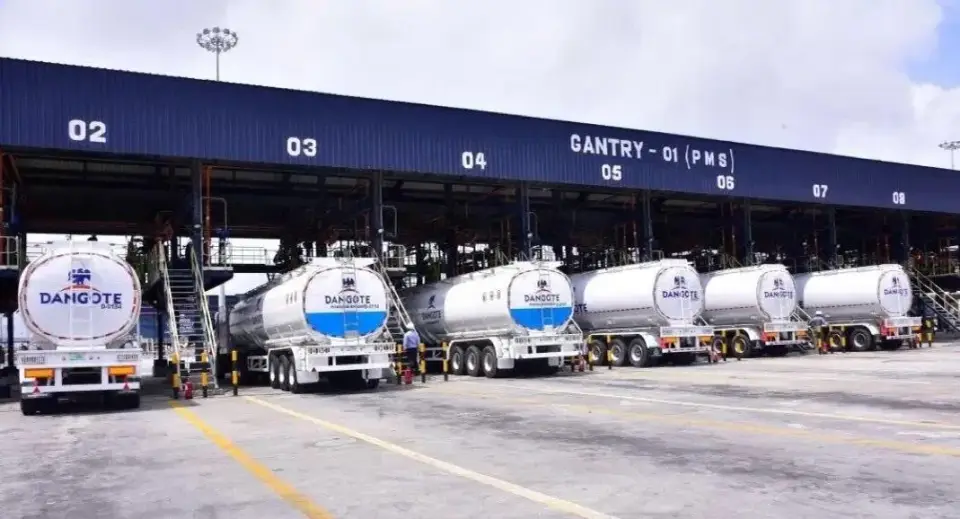
Dangote Refinery Cuts Petrol Price to ₦1,325 Per Litre
22 Sept 2026
Business
Ghana’s Economy Grows 6% in Q2 as Communications Sector Powers Recovery
10 Sept 2026