
UAE’s Shorter Workweek Boosts Employee Happiness Despite Hectic Workdays
A new study suggests the UAE’s pioneering four-and-a-half-day workweek is improving employee wellbeing and job satisfaction, even as workers report more demanding schedules during working days.

The United Arab Emirates’ landmark four-and-a-half-day workweek is delivering higher levels of employee happiness and work-life balance, according to a new study that suggests the shorter week has become one of the country’s most successful workplace reforms despite making individual workdays noticeably busier.
The research found that employees working under the revised schedule generally reported greater job satisfaction, improved mental wellbeing and more time for family and personal commitments. At the same time, many respondents acknowledged that the compressed timetable has intensified the pace of work between Monday and Friday, creating fuller calendars and longer daily productivity periods.
The UAE became the first country to introduce a nationwide 4½-day working week for federal government employees in 2022, replacing the traditional Sunday–Thursday workweek with a Monday–Friday schedule that aligns more closely with global financial markets. Under the system, most public-sector workers finish at midday on Friday, while Saturday and Sunday remain the weekend.
The study indicates that the benefits of the shorter week have not come from reducing expectations, but from reorganizing how work is performed. Employees described working days as more focused and structured, with fewer unnecessary meetings and greater emphasis on completing tasks within tighter timeframes.
Researchers noted that while workers often experience busier weekdays, the additional personal time appears to outweigh the increased daily intensity. Many participants said the extended weekend has improved their ability to rest, spend time with family and manage personal responsibilities without reducing overall productivity.
The UAE’s experiment has attracted international attention as governments and businesses increasingly reconsider traditional working patterns. Countries including Iceland, Belgium and the United Kingdom have tested various forms of shorter workweeks, while companies across Europe and Asia continue to evaluate whether reduced working hours can improve retention, employee wellbeing and organizational performance.
For the UAE, the reform also had a strategic economic objective. Aligning the workweek more closely with international business partners has strengthened connectivity with global financial markets while supporting the country’s ambition to remain a competitive destination for multinational companies and skilled professionals.
Business leaders say the findings reinforce a growing shift in workplace thinking: productivity is increasingly measured by outcomes rather than hours spent at a desk. Although compressed schedules may not suit every industry, the UAE’s experience suggests that carefully designed flexibility can improve employee morale without sacrificing operational efficiency.
As organizations worldwide continue to rethink the post-pandemic workplace, the UAE’s four-and-a-half-day model offers an influential case study. Its biggest lesson may not be that people work less, but that smarter scheduling and greater flexibility can produce happier employees while keeping businesses competitive in an increasingly demanding global economy.
More on Business
Business
Nigeria’s Cocoa Exports to US Jump to $142m in 2025
22 Oct 2026

Business
Wealthy Investors Move More Gold to Singapore Amid Global Uncertainty
23 Oct 2026

Business
Two European Women Freed After More Than 18 Months in Niger Captivity
23 Oct 2026

Business
JPMorgan Deposits ₦50bn With CBN as It Seeks Nigerian Banking Licence
22 Oct 2026
Business
Guinness Nigeria’s Nine-Month Profit Jumps 53% to ₦40.69bn
22 Oct 2026
Partner with Follow Global Trends
Display banners, sponsored stories and founder spotlights.
You may also like

Business
Indonesian Stocks Tumble to Six-Year Low as MSCI Downgrade Warning Sparks Sell-Off
19 Oct 2026
Business
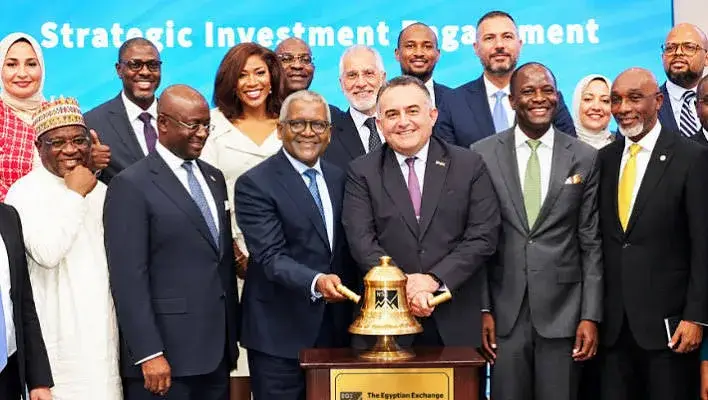
Dangote Refinery IPO Attracts Investors From 51 African Countries
19 Oct 2026

Business
Banks Lead as Nigerian Companies Raise ₦2.45 Trillion on NGX
18 Oct 2026

Business
Bumble Agrees to $1.3 Billion Buyout as Revenue and Paying Users Fall
14 Oct 2026

Business
SoftBank-Backed OPay Files for New York IPO, Eyes $4 Billion Valuation
14 Oct 2026
Business
Dangote Refinery’s Profit Soars to $4.7bn as ₦2.15tn IPO Deadline Moves to October 27
13 Oct 2026