
EU Considers Canada for First-Ever Associate Membership, Von der Leyen Confirms
The European Union is considering offering Canada its first-ever associate membership, European Commission President Ursula von der Leyen has confirmed.
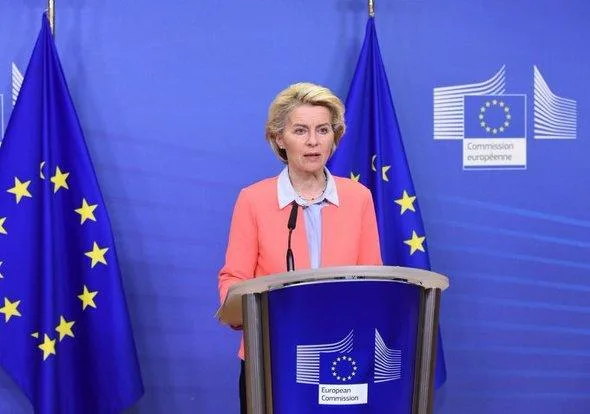
The European Union is exploring the possibility of granting Canada its first-ever associate membership, a move that could redefine transatlantic cooperation and bring one of Europe’s closest allies into a new institutional partnership without full EU membership.
European Commission President Ursula von der Leyen confirmed the proposal during her annual State of the European Union address in Strasbourg, describing Canada as one of Europe’s closest democratic partners and highlighting the growing importance of deeper transatlantic cooperation. She said stronger partnerships are becoming increasingly necessary as the international rules-based order faces mounting pressure and geopolitical divisions continue to widen. According to von der Leyen, the EU and Canada are closely aligned on key global issues including artificial intelligence, climate action, Arctic affairs, support for Ukraine, defence cooperation, access to critical raw materials and building more resilient supply chains. She added that the relationship is ultimately rooted in shared democratic values, calling democracy the fundamental bond linking both sides.
What associate membership could mean
Unlike full membership, associate membership would not make Canada a member state of the European Union or give it voting rights in the bloc’s core institutions. Instead, officials say the concept would create a structured framework for closer cooperation in areas such as trade, defence, innovation, climate policy, critical minerals and advanced technologies.
The idea reflects an evolving geopolitical landscape in which the EU is seeking stronger partnerships with like-minded democracies amid increasing global competition and supply chain realignments. Canada already enjoys extensive ties with the bloc through the Comprehensive Economic and Trade Agreement (CETA), making it one of Europe’s closest non-European economic partners.
A relationship already growing closer
The EU and Canada have steadily expanded cooperation in recent years beyond commerce. The two sides have strengthened collaboration on energy security, Arctic policy, support for Ukraine and the development of resilient supply chains for critical raw materials used in batteries and clean technologies. Analysts say an associate framework could consolidate many of these initiatives under a more permanent institutional arrangement.
Canadian officials have welcomed deeper engagement with Europe, although neither Brussels nor Ottawa has outlined the legal structure or timeline for any potential agreement. Any new status would likely require complex negotiations and approval from EU member states before it could take effect.
A new model for global partnerships?
The proposal is significant because it signals the EU’s willingness to rethink how it engages strategic allies outside Europe. Rather than expanding geographically through conventional accession, Brussels appears to be exploring flexible partnerships that preserve national sovereignty while deepening political and economic integration on shared priorities.
If Canada ultimately becomes the EU’s first associate member, it could establish a new model for cooperation between democratic nations confronting common challenges—from security and climate change to technological competition. Whether the idea advances or not, it highlights how international alliances are evolving beyond traditional definitions of membership and partnership.
More on Global
Global
Mark Carney Says Canada Is Pursuing a ‘Unique Alliance’ With the EU Amid US Trade War
15 Sept 2026

Global
Russia and North Korea Inaugurate First-Ever Highway Border Crossing
10 Sept 2026

Global
Prince George Begins Eton Journey as Future King Takes Historic First Step
9 Sept 2026
Global
UK, France and Canada to Sanction West Bank Settlers as US Opts Out
9 Sept 2026
Global
U.S. Federal Reserve Hikes Rates to 3.75%–4.00% as Inflation Persists
17 Sept 2026
You may also like
Global
U.S. House Votes to Rein In Trump’s War Powers Over Iran
16 Sept 2026

Global
Trump Approves $2.8 Billion Arms Sale to Israel Amid Rising Middle East Tensions
16 Sept 2026

Global
BRICS Summit 2026: Nigeria Calls for UN Security Council and Global Financial Reform
14 Sept 2026

Global
Trump Begins Two-Day Ireland Visit with Taoiseach Meeting and Irish Open Stop
13 Sept 2026

Global
25 Years After 9/11, Trump Says Iran Fight Is Part of the Same Mission
12 Sept 2026

Global
King Charles Confirms Harry and Meghan Will Not Return as Working Royals
8 Sept 2026