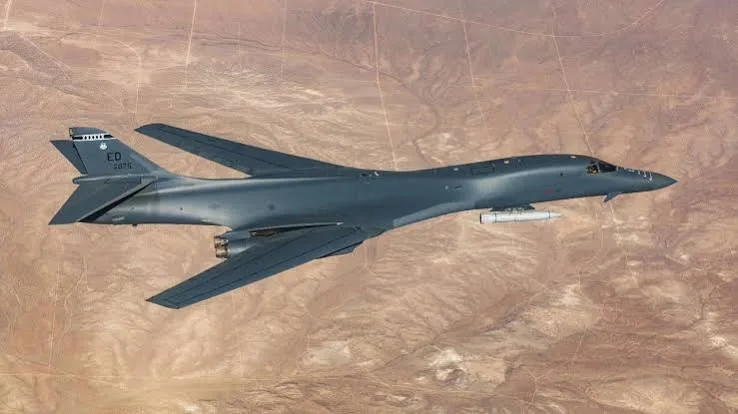
Boeing has completed the critical design review for its new Load Adaptable Modular (LAM) pylon for the B-1 bomber.
The milestone, announced on November 17, marks a major step toward restoring the aircraft's external weapons-carrying capability.
The review confirms that the design is mature enough to advance into the next phase. That stage will involve preparing hardware and software for manufacturing, integration and testing.
The US Air Force's B-1 program office accepted the design and established a formal system baseline. This provides the reference design for future development and testing.
Boeing says the new capability could potentially double the B-1's payload capacity and give the bomber greater flexibility for future missions.
New pylon uses existing aircraft hard points
The LAM pylon is designed to use six existing hard points beneath the B-1 bomber.
These mounting points were originally intended for the Air-Launched Cruise Missile. Repurposing them allows the aircraft to carry external payloads without requiring an entirely new airframe design.
The external carriage system could support additional weapons and payload types, including future advanced munitions.
Boeing says the pylon could help keep the B-1 relevant through 2040 and beyond as the US Air Force continues modernising its bomber fleet.
The design also offers commanders more flexibility when planning missions involving different payload requirements.
B-1B has been photographed carrying a hypersonic weapon
Recent imagery has shown a B-1B carrying what appears to be the AGM-183A Air-Launched Rapid Response Weapon, commonly known as ARRW.
The weapon was visible on an external pylon in images included in Boeing's announcement. However, the publicly available information does not confirm when that flight occurred.
The US Air Force has also not publicly confirmed an ARRW launch from the B-1B.
The aircraft has reportedly been involved in testing external carriage involving different weapons and test articles. Publicly available budget documents describe tests involving a 5,000-pound-class store and the release of a weapon-shaped test article.
These developments suggest that the B-1B is being evaluated for expanded weapons integration. However, carrying a weapon during a test flight does not automatically mean it has been approved for operational use.
Upgrade could extend the B-1's military relevance
The B-1B Lancer remains an important part of the US bomber fleet. The aircraft was designed for high-speed missions and now operates primarily with conventional weapons.
The new pylon programme is part of broader efforts to expand the bomber's weapons options and extend its usefulness.
The US Air Force has been adjusting plans for the aircraft's retirement, with the B-1B expected to remain in service into the 2030s.
The external carriage capability could allow the aircraft to carry larger or additional weapons, supporting testing and potentially future mission requirements.
Boeing's design milestone does not mean the pylon is ready for operational deployment. Manufacturing, integration and testing remain important steps before the capability can be fielded.
What happens next?
The programme now moves toward preparing the system for production and testing.
Engineers and the US Air Force will need to complete the remaining development work, evaluate the system's performance and establish the aircraft's future approved configurations.
The critical design review is an important achievement, but further milestones remain before the upgrade becomes an operational capability.
For Boeing and the US Air Force, the project represents another effort to adapt an existing bomber to changing weapons and mission requirements.