UBA Enters New Era as Emmanuel Nnorom Succeeds Tony Elumelu
Emmanuel N. Nnorom has officially taken over as Group Chairman of UBA, succeeding Tony Elumelu after his 12-year tenure at the bank.
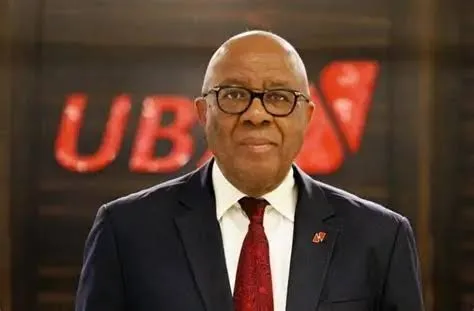
Emmanuel N. Nnorom has officially assumed the position of Group Chairman of United Bank for Africa Plc (UBA), taking charge of the board of one of Africa's largest banking groups as the institution enters a new phase of leadership.
Nnorom's appointment took effect on August 21, following the retirement of Tony O. Elumelu, who completed the 12-year tenure permitted for non-executive directors of Nigerian banks under Central Bank of Nigeria corporate governance rules. UBA's board had selected Nnorom as Elumelu's successor at its July 6 meeting.
The transition marks the end of a significant chapter for UBA. Elumelu's 12 years as chairman coincided with the bank's expansion into a major pan-African financial institution. UBA now operates across 20 African countries, with international operations in the United Kingdom, United States, France and the United Arab Emirates, and says it serves more than 50 million customers globally.
Nnorom, however, is hardly a newcomer to the institution. His career at UBA spans more than eight years in senior executive positions, including Group Chief Operating Officer, Group Chief Financial Officer and Managing Director/Chief Executive Officer of UBA Africa, where he oversaw subsidiaries across 18 African countries and was involved in the group's regional expansion. He returned to the board as a non-executive director in 2024.
His wider corporate experience also gives the new chairman a background beyond banking. Nnorom previously served as Chief Executive Officer of Heirs Holdings and as President and Chief Executive Officer of Transnational Corporation of Nigeria (Transcorp), where he was involved in businesses spanning power, hospitality and energy. UBA describes him as a chartered accountant with more than four decades of experience covering banking, finance, audit, operations and corporate governance.
His professional credentials include fellowship of the Institute of Chartered Accountants of Nigeria and honorary membership of the Chartered Institute of Bankers of Nigeria. He is also an alumnus of Templeton College, Oxford, where he completed executive leadership and management programmes.
The new chairman inherits a bank that has grown considerably in scale and geographic reach, but also operates in a financial environment where regulatory compliance, technology, capital strength and regional economic conditions are becoming increasingly important to large African banks.
For UBA, the choice of someone with extensive institutional knowledge suggests an emphasis on continuity even as the bank moves beyond the Elumelu era. Nnorom has already worked within the group's senior management and understands its expansion across African markets, while his board experience gives him a direct understanding of the governance responsibilities attached to the chairmanship.
Elumelu, in announcing his retirement, expressed confidence in Nnorom's ability to lead the board, describing him as a leader of integrity, experience and sound judgement. Nnorom, for his part, said he was conscious of the legacy he was inheriting and would work with the board, management and employees across UBA's markets to sustain the group's momentum and create long-term value for stakeholders.
The leadership change is therefore less about a sudden strategic break than a carefully planned succession. Elumelu's departure was driven by the regulatory tenure limit rather than an announced strategic disagreement, while the appointment of a former senior UBA executive gives the group considerable continuity at board level.
For shareholders, customers and employees, the more important question now will be what Nnorom does with that continuity. UBA has built a sizeable African and international footprint, and its next phase will require the group to maintain growth while navigating changing regulation, digital competition and the very different economic conditions across the markets in which it operates.
Nnorom's arrival ultimately represents more than a change of name at the top of UBA's board. It is a test of whether a major African financial institution can preserve the gains of one leadership era while adapting to the demands of the next. With a chairman who knows UBA from the inside and has spent decades across banking and corporate leadership, the group is betting on experience and institutional memory as it charts its next stage of growth.
More on Business
Business
UK Inflation Hits 3.1% as Stable Underlying Prices Ease Pressure on Bank of England
16 Sept 2026
Business
Ghana’s Economy Grows 6% in Q2 as Communications Sector Powers Recovery
10 Sept 2026
Business
Nigerian Breweries Goes Debt-Free as Cash Generation Jumps 264% in H1
9 Sept 2026
Business
Banking Reforms and New Listings Drive NGX Towards Historic ₦300 Trillion Value
7 Sept 2026
Business
Trump Signs Two-Year AGOA Extension as Okonjo-Iweala Hails Boost for Africa
6 Sept 2026
You may also like
Business
UAE Turns Up the Volume on Copyright: Businesses to Pay for Playing Music
17 Aug 2026

Business
Investor Rush: BOI’s ₦250bn Bond Signals Fresh Confidence in Nigeria’s Market
17 Aug 2026
Business
From Abuja to Paris: Sam Jonah Escalates River Park Estate Dispute to ICC
10 Aug 2026
Business
Dangote Refinery Strengthens Balance Sheet as Debt Falls to ₦7.9tn
10 Sept 2026
Business
Dangote Refinery Signs ₦2.15tn IPO, Targets 10 Million Investors
8 Sept 2026

Business
Nigeria’s Biggest Banks Ease FX Pressure With Higher Naira Card Dollar Limits
7 Sept 2026