Trump Signs Two-Year AGOA Extension as Okonjo-Iweala Hails Boost for Africa
President Donald Trump has signed legislation extending AGOA for two years, offering temporary relief to African exporters and renewing hopes for a longer-term US-Africa trade partnership.
President Donald Trump has signed into law a bipartisan bill extending the African Growth and Opportunity Act (AGOA) for two years, preserving duty-free access for eligible African exports to the United States and providing much-needed certainty for businesses across the continent.
The extension, approved by Congress before receiving the president’s signature, prevents the programme from lapsing while lawmakers work on a broader overhaul of America’s trade relationship with sub-Saharan Africa. AGOA, first enacted in 2000, allows qualifying African countries to export thousands of products to the US market without paying tariffs and has become one of the cornerstone pillars of US-Africa economic engagement.
World Trade Organization Director-General Ngozi Okonjo-Iweala welcomed the decision, describing it as an encouraging signal for African economies and investors. She said the extension helps sustain confidence in cross-border trade at a time when many developing economies are navigating slowing global growth, supply chain shifts and heightened geopolitical uncertainty. Okonjo-Iweala conveyed her delight at the development via a post on X (formerly Twitter). She said: “Great to learn that the USA has granted a two-year extension of the African Growth and Opportunity Act (AGOA), extending trade preferences to qualifying African countries. “Hope this will help stimulate mutually beneficial and greater Africa-USA trade! Thanks to Congress, the Administration, and the numerous individuals and organizations that worked hard to make this happen. “Credit also to the African Union @_AfricanUnion and African leaders for patience and persistence on this issue,” she added.
The legislation also drew praise from Republican and Democratic lawmakers, who argued that maintaining AGOA serves both American strategic interests and African economic development. Members of Congress said the additional two years would give policymakers time to negotiate a more modern framework capable of supporting investment, manufacturing and resilient supply chains between the United States and Africa.
For African exporters, the extension is particularly significant. Industries including textiles, apparel, automotive components, agricultural products and processed goods rely heavily on preferential access to the US market. Business groups had warned that allowing AGOA to expire would have threatened thousands of jobs, disrupted long-term contracts and weakened investor confidence in export-oriented manufacturing.
Several African governments have also been pushing Washington to move beyond short-term renewals toward a predictable, long-term trade arrangement. Analysts say the temporary extension offers welcome stability but falls short of the certainty businesses need when making multi-year investment decisions in factories, logistics and industrial infrastructure.
The debate over AGOA comes as the United States seeks to deepen its economic presence in Africa amid growing competition from other global powers. Trade, infrastructure investment and supply chain partnerships have become increasingly central to Washington’s engagement with the continent, making the future of AGOA more than a tariff issue, it is also a strategic policy choice.
While the two-year extension does not resolve the long-term future of US-Africa trade, it buys valuable time for governments and businesses on both sides of the Atlantic. The challenge now is whether policymakers can transform that breathing space into a durable agreement that expands trade, creates jobs and reflects Africa’s growing role in the global economy.
More on Business
Business
China Unveils Eight-Point Economic Consensus Following Xi’s Washington Visit
28 Sept 2026
Business
Dangote Refinery Signs ₦2.15tn IPO, Targets 10 Million Investors
8 Sept 2026
Business
Ghana’s Economy Grows 6% in Q2 as Communications Sector Powers Recovery
10 Sept 2026
Business
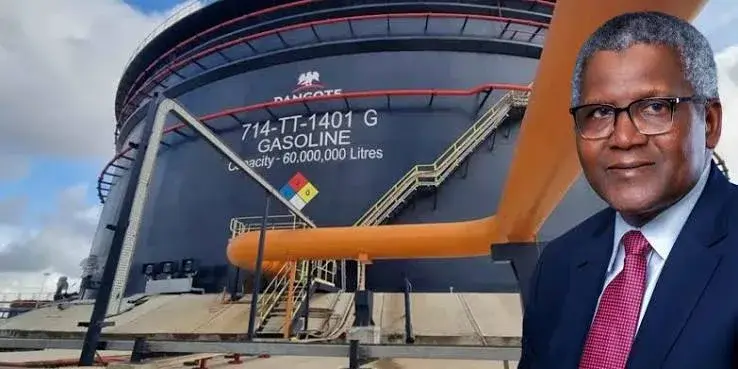
Dangote Refinery Set for Historic Stock Market Debut at ₦525 Per Share
5 Sept 2026
Business
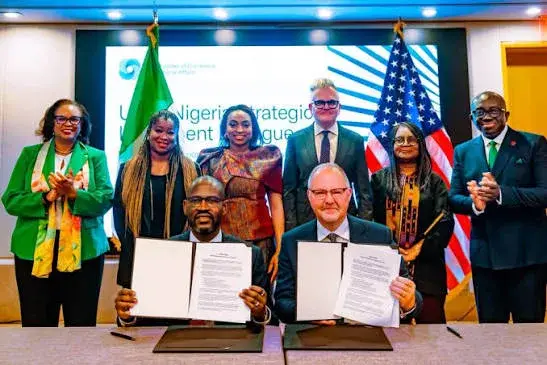
Nigeria Seals Three US Mining Investment Deals Across Technology, Energy and Security
28 Sept 2026
You may also like
Business
Davido, Dangote Take Refinery IPO Global With Times Square Billboard Campaign
24 Sept 2026

Business
Dangote Says Banks’ Systems Crashed Minutes After Refinery IPO Opened
21 Sept 2026
Business
Nigerian Breweries Goes Debt-Free as Cash Generation Jumps 264% in H1
9 Sept 2026

Business
Nigeria’s Biggest Banks Ease FX Pressure With Higher Naira Card Dollar Limits
7 Sept 2026
Business
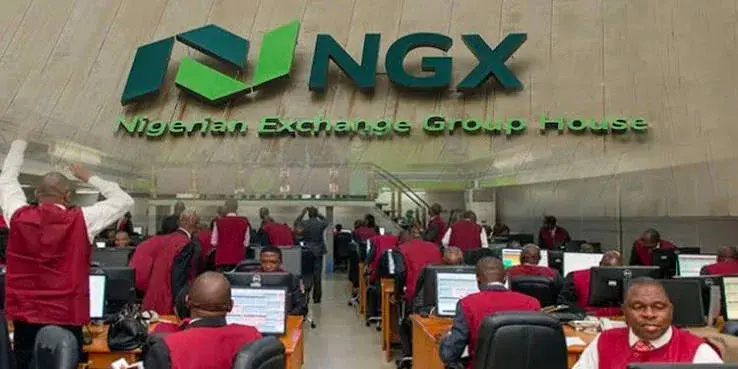
Banking Reforms and New Listings Drive NGX Towards Historic ₦300 Trillion Value
7 Sept 2026
Business
Europe’s Biggest Carmaker Plans 50,000 More Job Cuts Amid EV Pressure
4 Sept 2026