Investor Rush: BOI’s ₦250bn Bond Signals Fresh Confidence in Nigeria’s Market
The Bank of Industry’s maiden ₦250 billion Series 1 Fixed Rate Bond has attracted strong institutional demand, becoming oversubscribed within just five working days.
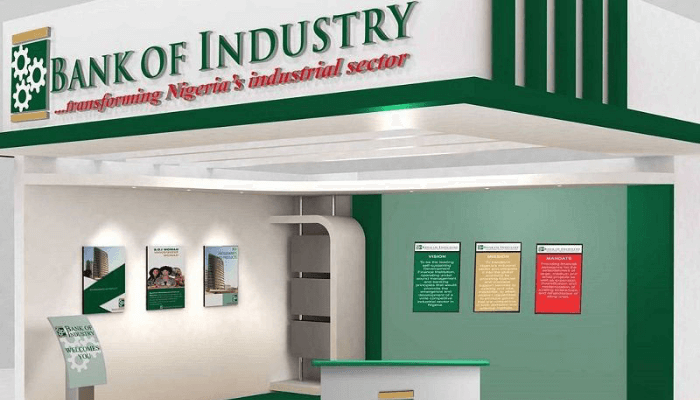
The Bank of Industry (BOI) has secured strong institutional demand for its debut ₦250 billion Series 1 Fixed Rate Bond, with the offer oversubscribed within five working days, a development the bank says demonstrates growing confidence in Nigeria’s domestic capital market and its ability to mobilise long-term funding for productive investment.
The bond was issued through BOI Financing SPV Plc under the bank’s $1 billion Multi-Currency Instruments Programme and attracted a broad mix of institutional investors, including pension fund administrators, commercial banks, development finance institutions and corporates. The Nigeria Sovereign Investment Authority (NSIA) and the International Finance Corporation (IFC) also provided anchor support, adding weight to the transaction.
For BOI, the significance goes beyond successfully raising ₦250 billion. The strong response suggests that large domestic investors are increasingly willing to commit capital to longer-term instruments when the issuer offers a credible development mandate and an attractive risk-return proposition.
BOI Managing Director and Chief Executive, Olasupo Olusi, described the response as a vote of confidence in both the bank and the capacity of Nigeria's capital market to provide patient capital for businesses. He attributed part of the demand to incentives approved by President Bola Tinubu, including a ₦100 billion fund that will be used to blend the bond's pricing and cushion the impact of high interest rates on manufacturers and other BOI customers.
That intervention is important because the cost of borrowing remains one of the biggest constraints facing Nigerian businesses. For manufacturers and other capital-intensive enterprises, expensive financing can make expansion, equipment upgrades and new investments difficult to justify. If BOI can deploy cheaper, longer-term funds through its lending programmes, the impact could extend beyond the balance sheets of individual businesses.
The bank says proceeds from the bond will strengthen its ability to provide long-term financing to enterprises in priority sectors, with emphasis on expanding productive capacity, increasing local value addition, creating jobs and supporting economic diversification. That places the transaction directly within Nigeria's broader effort to shift the economy away from dependence on imports and commodities towards stronger domestic production.
The timing is also significant for BOI itself. The development finance institution reported ₦644.9 billion in total financing to businesses in 2025, supporting more than 7,000 enterprises across sectors including manufacturing, agriculture, pharmaceuticals, technology, power and logistics. Its own development-impact assessment estimated that the financing supported or sustained about 1.68 million jobs.
The new bond gives the bank another source of funding as it seeks to scale that role. Rather than relying primarily on government support or international funding lines, BOI is increasingly tapping the domestic savings pool, particularly institutional investors with long-term liabilities and investment horizons.
There is, however, an important detail still outstanding. BOI said the final subscription and allotment figures have not yet been disclosed, as the transaction remains subject to Securities and Exchange Commission approval and completion of the issuance process. The fact that the offer was oversubscribed therefore signals strong demand, but does not yet reveal precisely how much investors ultimately sought.
The broader implication could nevertheless be significant. Nigeria has substantial pools of institutional savings, particularly through pension funds and other large investors, but converting those resources into long-term financing for productive businesses remains a central challenge. A successful BOI bond could demonstrate that domestic capital markets can play a larger role in financing industrialisation rather than concentrating primarily on short-term government and financial-sector instruments.
That is why this transaction matters beyond BOI.
If the funds are successfully channelled into factories, farms, technology companies, infrastructure and other productive enterprises, the real measure of success will not be the size of the bond or the speed at which it was oversubscribed. It will be whether the capital ultimately translates into more production, stronger Nigerian businesses, new jobs and greater economic value created at home.
For now, the investor response has delivered a clear signal: there is appetite for credible, long-term development assets in Nigeria. The next test is turning that confidence into growth on the ground.
More on Business
Business
Banking Reforms and New Listings Drive NGX Towards Historic ₦300 Trillion Value
7 Sept 2026
Business
UK Inflation Hits 3.1% as Stable Underlying Prices Ease Pressure on Bank of England
16 Sept 2026
Business
Dangote Refinery Strengthens Balance Sheet as Debt Falls to ₦7.9tn
10 Sept 2026
Business
PZ Cussons Nigeria Profit Soars 348.7% to N45.17bn, Declares N2.50 Dividend
31 Aug 2026
Business
Nvidia Data Centre Revenue Surges to $89 Billion as AI Demand Explodes
27 Aug 2026
You may also like

Business
Nigeria’s Biggest Banks Ease FX Pressure With Higher Naira Card Dollar Limits
7 Sept 2026

Business
Dangote Refinery Set for Historic Stock Market Debut at ₦525 Per Share
5 Sept 2026
Business
Nigeria, Canada Move to Deepen Trade Ties as Musawa Leads Delegation to Toronto
31 Aug 2026

Business
Crude Falls, Petrol Rises: Dangote Pushes Price to ₦1,200
26 Aug 2026
Business
Manufacturing Now Accounts for 50.1% of Nigeria’s Industrial Output — NESG.
21 Aug 2026
Business
Guinness Nigeria Shuts Down Delisting Rumours, Bets on Growth
18 Aug 2026