
UAE Petrol Prices Jump Over 16% as Residents Turn to Metro, Remote Work
UAE motorists are rethinking daily travel as October fuel prices rise by more than 16%, pushing some residents towards the Metro, carpooling and remote work.
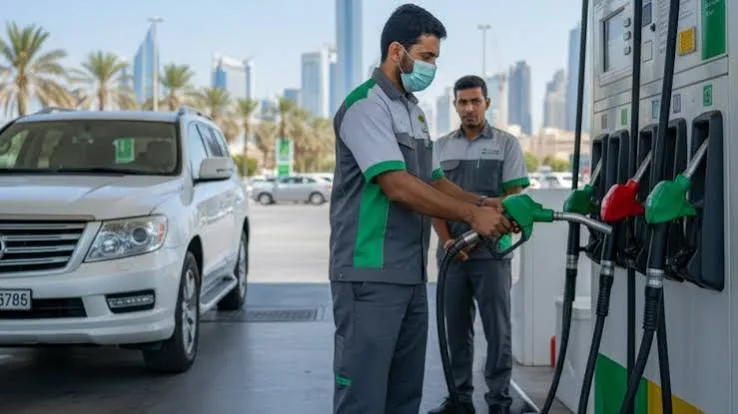
UAE motorists are facing another increase in fuel costs this month, with petrol prices rising by as much as 16.6% from October 1 and prompting some residents to reconsider how they travel to work and manage their monthly budgets.
The UAE’s Gasoline and Diesel Prices Follow-up Committee set E-Plus 91 at Dh4.21 per litre, up from Dh3.61 in September. Special 95 increased to Dh4.28 from Dh3.69, while Super 98 rose to Dh4.40 from Dh3.80. Diesel also climbed, reaching Dh4.80 per litre from Dh4.30.
The October adjustment marks the third consecutive monthly increase and takes all three petrol grades above Dh4 per litre for the first time in more than four years. Compared with September, Super 98 is up 15.8%, Special 95 by 16% and E-Plus 91 by 16.6%, while diesel has increased by 11.6%.
The UAE's monthly pricing system links retail fuel rates to movements in international energy markets. The latest increases come against a backdrop of elevated crude prices and continued uncertainty around Middle Eastern oil supplies. Brent crude approached $110 a barrel during September as tensions involving the United States and Iran and concerns around the Strait of Hormuz continued to influence markets.
For motorists, the impact is already showing up in decisions about commuting. Some Dubai residents are considering switching from private cars to the Metro, while others are looking at fewer office days or combining several errands into one trip.
Alwin Pinto, who lives in Al Qusais and works in Jumeirah Lakes Towers, told Khaleej Times that he spends around Dh700 to Dh800 a month on petrol. Because a Metro station is close to his home and his workplace is within walking distance of a station, he plans to use public transport more frequently. A regular all-zone Nol pass costs Dh350 for 30 days, although he would still have some fuel expenses for journeys outside his commute.
For other residents, the calculation is more difficult. Shabbir Ahmed, who drives from Ajman to work in Deira, said his monthly petrol bill already exceeds Dh1,200 and could rise above Dh1,500 if he continues travelling to the office five days a week. He told Khaleej Times he plans to ask his employer about working remotely for part of the week.
Sales professionals and other workers whose jobs require frequent travel are also looking for ways to cut unnecessary journeys. One sales executive interviewed by the newspaper said he planned to group client appointments by location and use the Metro when visiting offices close to stations. Car-lift users are also facing potential fare increases as operators respond to higher fuel expenses.
The increase comes at a particularly sensitive time for global energy markets. Oil supplies have been disrupted by the wider conflict involving Iran, while uncertainty around shipping through the Strait of Hormuz has affected expectations for crude and refined-product supplies. China has also suspended fuel-product exports beyond Hong Kong and Macau for October, adding pressure to already tight international fuel markets.
The effects extend beyond individual motorists. Higher petrol and diesel prices can raise operating costs for delivery companies, taxis, logistics operators, construction businesses and other companies that depend heavily on road transport. Those costs can eventually feed into prices for goods and services, although the extent depends on how businesses absorb or pass on the increase.
The latest price rise also highlights the role of public transport in Dubai's response to changing mobility costs. For residents with convenient access to the Metro, a higher fuel bill can make public transport more attractive, particularly for regular commuting. For workers living farther from stations or whose jobs require frequent driving, however, switching away from cars may be considerably harder.
The broader significance of the October increase is therefore not limited to what motorists pay at petrol stations. Sustained energy-price pressure can influence commuting patterns, household spending, business costs and demand for public transport. If international oil-market disruptions persist, the UAE's market-linked pricing system means residents and businesses may continue to feel those global movements locally — potentially accelerating efforts to reduce unnecessary driving and find more efficient ways of moving people and goods.
Energy
EU, G7 Move to Release Oil and Diesel Reserves as Fuel Prices Rise
2 Oct 2026

Energy
Oil Surges Above $107 as Qatar Pushes New US-Iran Talks
29 Sept 2026
Energy
S&P Global Energy Opens New Abuja Office, Hosts Nigerian Oil and Gas Leaders
26 Sept 2026
Energy
Dangote Taps Indian Engineering Giant for $16bn Kenya Refinery
24 Sept 2026

Entertainment
Sean ‘Diddy’ Combs’ Release Date Brought Forward Again to January 2028
3 Oct 2026
You may also like

Business
Amazon AWS to Invest More Than $1 Billion in US Data Centre Communities Over Five Years
3 Oct 2026
Global
Russian Strikes Hit Kyiv’s Dnipro Crossings, Triggering Traffic Chaos
3 Oct 2026

Transport Aviation
FlyDubai Co-Pilot Identified as Hamam Al-Hammami as Questions Grow Over Security Vetting
3 Oct 2026
Travel & Tourism
Sardinia: Inside Italy’s Blue Zone Where Exceptional Longevity Has Made the Island a Global Travel Curiosity
3 Oct 2026

Technology
Starbase Technologies Puts Emerging African Creators in the Spotlight with Yolly
3 Oct 2026
Transport Aviation
UAE Investigation Finds Flydubai Co-Pilot Tried to Seize Plane in Terrorist Act
3 Oct 2026