
UAE Flights Stay Stable, but Kuwait Routes Remain Caught in Gulf Tensions
UAE flights remain largely unaffected by escalating Gulf tensions, though some routes to Kuwait continue to face disruptions.
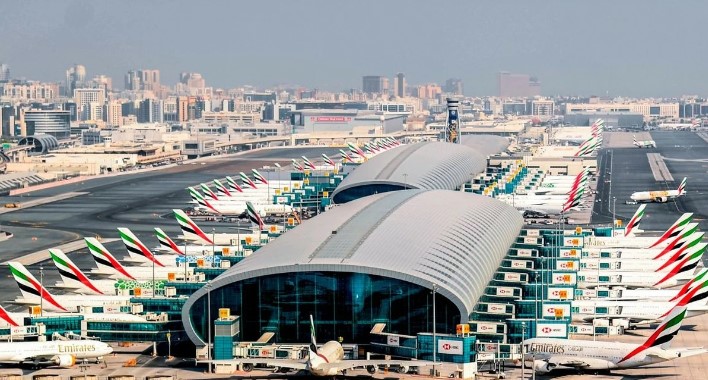
Air travel through the United Arab Emirates is holding largely steady despite continuing security concerns across the Gulf, with Dubai and Abu Dhabi airports operating normally while airlines maintain targeted cancellations on some regional routes, particularly services to Kuwait.
The situation marks a significant improvement from the widespread disruption that followed the escalation of the US-Iran conflict earlier this year. UAE airports are currently functioning without broad closures, and the majority of flights are operating as scheduled, although carriers continue to monitor developments closely and adjust individual routes where necessary.
For travellers flying through Dubai International Airport and Zayed International Airport in Abu Dhabi, the immediate picture is relatively stable. Airlines have largely maintained their long-haul networks, while the most visible disruptions are concentrated on selected short-haul Gulf services.
Kuwait remains one of the main trouble spots.
Etihad Airways, for example, has continued to cancel selected Abu Dhabi–Kuwait services, while Air Arabia has also cancelled some flights between Sharjah and Kuwait. Other regional destinations, including Bahrain and parts of Saudi Arabia and Qatar, have experienced individual schedule changes as airlines respond to the evolving security environment.
The disruption is not uniform across the UAE aviation system. Instead, airlines are taking a route-by-route approach, allowing major international networks to continue operating while reducing exposure on corridors considered more vulnerable to regional security developments.
That distinction matters for passengers. Someone flying from Lagos to Dubai, for example, may find their UAE connection operating normally, while a traveller booked onward from Dubai or Abu Dhabi to Kuwait could face a cancellation or schedule change.
Airlines are also continuing to reroute some flights around sensitive airspace. Such diversions can add time and fuel costs to journeys even when flights ultimately operate as planned. Earlier data showed major Gulf airlines recovering toward pre-conflict activity levels, although operations remained below normal in some cases.
The aviation industry's cautious approach reflects the fact that the security picture remains fluid. The European Union Aviation Safety Agency has maintained a conflict-zone advisory covering parts of the Gulf region, while governments including the UK, United States, Canada and Australia continue to advise travellers to monitor developments and be prepared for possible changes to flight schedules.
For the UAE, maintaining relatively stable aviation operations is economically important. Dubai and Abu Dhabi serve as major international connecting hubs, linking Europe, Africa, Asia, North America and Australia. Prolonged disruption would therefore have consequences far beyond the Gulf, affecting connecting passengers, tourism, cargo movements and airline revenues.
The UAE's ability to keep its airports functioning while selectively adjusting vulnerable routes also highlights the resilience of its aviation infrastructure. Rather than shutting down large portions of the network, carriers have been able to maintain much of their international connectivity while adapting to restrictions in specific air corridors.
But stability should not be mistaken for a return to completely normal conditions.
Airlines continue to review schedules, and passengers travelling to Kuwait, Bahrain, Qatar or other destinations close to areas affected by regional tensions face a greater possibility of delays or cancellations than those travelling on unaffected long-haul routes. Travellers are being advised to confirm their flight status directly with their airline before leaving for the airport.
The situation also demonstrates how quickly geopolitical developments can reshape international aviation. Gulf airlines sit at the crossroads of some of the world's busiest air corridors, meaning even a disruption in one part of the region can force aircraft to take longer routes, alter schedules and affect connections thousands of kilometres away.
For FollowGlobalTrends readers, the key message is that flying through the UAE remains broadly possible, but passengers should not assume that every Gulf route is operating normally. Dubai and Abu Dhabi remain comparatively stable aviation gateways, while Kuwait and selected regional connections continue to face disruptions.
In a region where the security situation can change rapidly, flexibility, and checking the latest airline update before travelling, remains essential.
More on Travel & Tourism

Travel & Tourism
SriLankan Airlines Restores Full Middle East Network With Kuwait Service Resumption
29 Aug 2026

Travel & Tourism
Mount Anak Krakatau: What to Know About the Volcano Disrupting Indonesia Flights
8 Sept 2026
Travel & Tourism
Indonesia Grounds Flights as Anak Krakatau Ash Shuts Jakarta’s Main Airport
6 Sept 2026
Travel & Tourism
Air Canada to Launch Direct Lagos Flights in 2027 After Landmark Nigeria–Canada Aviation Deal
7 Aug 2026

Travel & Tourism
One Visa, Six Countries: GCC Grand Tourist Visa Set to Launch Soon
8 Sept 2026
You may also like

Travel & Tourism
UK Immigration: Far-Right Protesters Block Asylum Seekers in Southern England
7 Sept 2026
Travel & Tourism
Want British Citizenship? 10 Routes That Could Make You Eligible.
20 Aug 2026

Travel & Tourism
Air Peace Chairman Urges Dialogue, Warns Against Crippling Nigeria's Aviation Industry
6 Aug 2026
Travel & Tourism
UK Passport Fee Backlash Forces Nigeria High Commission to Refund £50
13 Sept 2026

Travel & Tourism
Canada Expands Study Access for Temporary Foreign Workers
11 Sept 2026
Travel & Tourism
Riyadh Set to Host New Global Travel Summit as Tourism Ministry Joins WTM
2 Sept 2026