
Air Peace Chairman Urges Dialogue, Warns Against Crippling Nigeria's Aviation Industry
Air Peace Chairman Allen Onyema has warned against any disruption to Nigeria's aviation sector as a deepening labour dispute raises fears of flight disruptions.
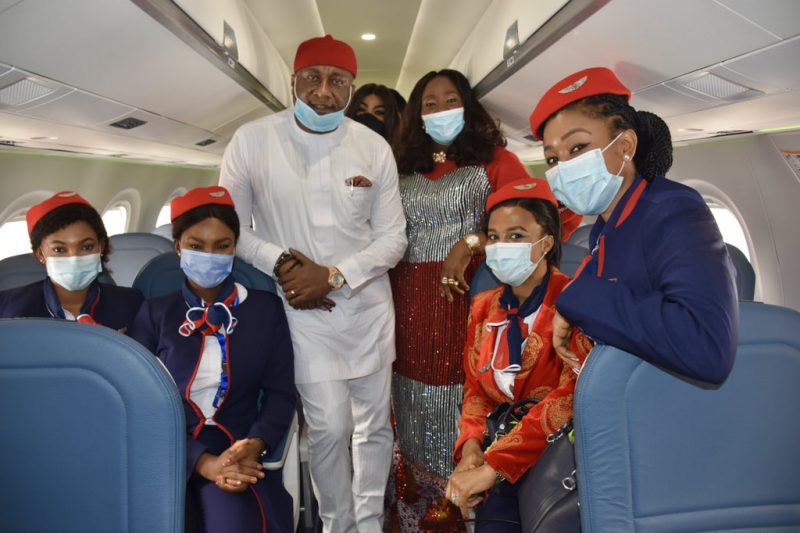
The Chairman and Chief Executive Officer of Air Peace, Dr. Allen Onyema, has warned aviation labour unions against taking actions that could cripple Nigeria's aviation industry, arguing that prolonged disruptions would threaten jobs, weaken already struggling airlines and undermine confidence in the country's air transport sector.
Onyema's remarks follow threats by aviation unions to picket airline operations over outstanding regulatory debts owed to the Nigerian Civil Aviation Authority (NCAA). He questioned the rationale behind the proposed industrial action, noting that airlines and the NCAA had already agreed on structured repayment arrangements after operators faced severe financial pressures during the recent Middle East conflict, when aviation fuel prices reportedly surged from about ₦900 per litre to as high as ₦3,500 per litre.
Speaking in Lagos during the launch of a book authored by aviation journalist Muneer Bankole, Onyema maintained that airlines are accountable to the NCAA rather than labour unions on regulatory financial matters. He described attempts by unions to enforce debt recovery on behalf of government agencies as an unusual practice that could destabilise an industry already operating under intense economic strain.
The Air Peace chairman painted a sobering picture of the challenges confronting Nigerian carriers. According to him, domestic airlines contend with some of the highest borrowing costs in the economy, with commercial lending rates ranging between 30 and 33 percent, alongside rising insurance premiums, multiple taxes and charges, volatile foreign exchange costs and escalating maintenance expenses. He argued that these structural pressures—not poor business management alone—have contributed to the collapse of dozens of Nigerian airlines over the past three decades.
Onyema also highlighted operational challenges beyond finance, revealing that Air Peace recorded 56 bird strikes within a year, incidents that caused extensive damage to aircraft and resulted in expensive repairs, including engine replacements. He argued that while airlines faithfully pay statutory charges intended to support airport infrastructure and safety, persistent infrastructure gaps continue to expose operators to avoidable costs and operational disruptions.
His comments reflect wider concerns within Nigeria's aviation industry about long-term sustainability. Domestic airlines have repeatedly warned that high operating costs, foreign exchange volatility, limited access to affordable financing and infrastructure deficiencies are eroding profitability at a time when passenger demand is gradually recovering. Industry stakeholders have increasingly called for policy reforms that would reduce operating expenses while strengthening regulatory oversight and aviation safety.
Onyema urged all stakeholders, including regulators, unions and government agencies, to prioritise dialogue over confrontation, warning that grounding airlines would ultimately hurt passengers, employees and the wider economy. He stressed that the survival of domestic carriers should remain a national priority, given aviation's role in supporting trade, tourism and economic integration across Nigeria.
For readers of FollowGlobalTrends.com, the latest dispute highlights the delicate balance between protecting workers' rights and preserving the viability of an industry that serves as a critical pillar of national development. As Nigeria seeks to strengthen its aviation sector and position itself as a regional transport hub, constructive engagement between operators, regulators and organised labour may prove just as important as investments in aircraft, airports and infrastructure.
More on Travel & Tourism
Travel & Tourism
Air Canada to Launch Direct Lagos Flights in 2027 After Landmark Nigeria–Canada Aviation Deal
7 Aug 2026
Travel & Tourism
UK Passport Fee Backlash Forces Nigeria High Commission to Refund £50
13 Sept 2026
Travel & Tourism
US Judge Strikes Down Trump Visa Freeze Affecting Nigeria, 74 Other Countries
23 Aug 2026

Travel & Tourism
Canada Expands Study Access for Temporary Foreign Workers
11 Sept 2026
Travel & Tourism
Mount Anak Krakatau: What to Know About the Volcano Disrupting Indonesia Flights
8 Sept 2026
You may also like
Travel & Tourism
Low-Flying Airlink Jets Ignite Global Debate Over Rugby Stadium Spectacle
1 Sept 2026

Travel & Tourism
Arabian Travel Market 2026 to Spotlight Dubai’s Resilience and Future of Global Tourism
28 Aug 2026

Travel & Tourism
Tunisia Welcomes 5.8 Million Tourists by July as 2026 Travel Boom Accelerates
25 Aug 2026

Travel & Tourism
Canada Targets Global Healthcare Workers as It Moves to Fill Labour Shortages
24 Aug 2026
Travel & Tourism
UAE Flights Stay Stable, but Kuwait Routes Remain Caught in Gulf Tensions
8 Aug 2026

Travel & Tourism
One Visa, Six Countries: GCC Grand Tourist Visa Set to Launch Soon
8 Sept 2026