
Arabian Travel Market 2026 to Spotlight Dubai’s Resilience and Future of Global Tourism
Arabian Travel Market 2026 will return to Dubai in September with a programme centred on tourism resilience, global connectivity, crisis preparedness and the next phase of industry growth.
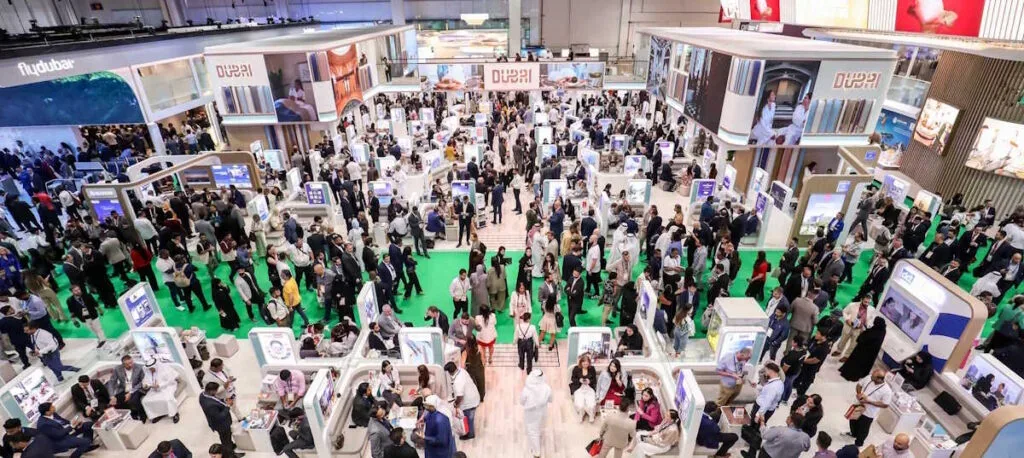
Dubai is preparing to welcome the global travel industry in September as Arabian Travel Market 2026 puts resilience, connectivity and the future of tourism at the centre of its agenda.
The event will take place from September 14 to 17 at Dubai World Trade Centre, following the decision to move the exhibition from its original dates after consultation with exhibitors, partners and industry stakeholders. Organizers say the revised schedule is intended to give international participants greater flexibility while preserving opportunities for business, networking and industry collaboration.
The shift comes at a sensitive time for travel across the Middle East, with airlines and destinations continuing to navigate the effects of regional tensions and disruption. ATM organizers say Dubai's established aviation infrastructure, tourism ecosystem and coordination between government and private-sector operators have helped the emirate maintain its position as a major international travel hub.
Danielle Curtis, Regional Portfolio Director for the UAE at RX Global, said the September event would provide an important platform for the industry to reconnect and strengthen partnerships at a time when collaboration is particularly important.
Dubai's aviation network is already showing signs of recovery. Emirates said in May that it had restored 96% of its global network, serving 137 destinations across 72 countries with more than 1,300 weekly frequencies. The airline subsequently reported operations to 138 destinations across 73 countries.
That recovery is central to Dubai's tourism proposition. The emirate's position as an international connecting hub means that the health of its aviation network has implications far beyond the UAE itself, linking travellers from Europe, Africa, Asia, the Americas and the wider Middle East.
ATM organisers are also positioning the 2026 edition as a forum for examining how the industry should prepare for future disruptions. Under the theme “Travel 2040: Driving New Frontiers Through Innovation and Technology,” the conference programme will examine crisis management, destination resilience, traveller confidence, aviation continuity, digital transformation and sustainable tourism growth.
Sessions across the Global Stage, Future Stage and Experience Hub will bring together tourism authorities, policymakers, researchers and technology leaders to discuss how destinations can improve their ability to respond to geopolitical, economic and environmental shocks.
Research partners including STR, Tourism Economics, GSIQ and ICCA will contribute analysis on traveller sentiment, global mobility, destination competitiveness and future demand. Euromonitor International's Stephen Dutton is also scheduled to deliver a keynote examining how inflation and what he describes as a “polycrisis” are reshaping the travel market.
The event's emphasis on resilience reflects a broader change in the tourism industry. Travellers have continued to spend on international experiences despite economic uncertainty, but destinations are increasingly being judged not only by what they offer visitors, but also by how reliably they can keep airlines flying, hotels operating and major events running when conditions deteriorate.
For Dubai, that resilience has become an important part of its international tourism pitch. Hoor Al Khaja, Senior Vice President of International Operations at Dubai Corporation for Tourism and Commerce Marketing, said the city's approach was built around long-term planning, agility and coordination between government and industry.
There are, however, reasons for the sector to remain cautious. Current travel advisories from several governments continue to reflect uncertainty across the region. Australia's Smartraveller, for example, currently advises travellers to reconsider their need to travel to the UAE because of the unpredictable regional security situation, while warning that airspace closures and flight disruptions can occur at short notice. The UK's travel advice also continues to warn about regional tensions and possible travel disruption.
That makes ATM 2026 particularly relevant to the industry. The event is not simply returning to Dubai at a time of recovery; it is arriving as travel businesses reassess how to operate in an environment where geopolitical developments can quickly affect routes, consumer confidence and international events.
With exhibitors expected from more than 160 countries, ATM 2026 will offer a significant meeting point for airlines, hotels, tourism boards, travel companies and technology providers looking beyond the immediate disruption. The organizers say the show will focus on practical strategies for strengthening the industry's ability to adapt while identifying new opportunities for growth.
For Dubai, the September gathering will serve as both a tourism industry meeting and a showcase of the city's own ambitions. The wider significance is that the global travel sector is entering an era in which resilience is becoming almost as important as growth. As destinations compete for travellers, investment and international events, the ability to remain connected, operational and adaptable during periods of uncertainty could increasingly determine which tourism hubs emerge strongest. ATM 2026 will put that question directly on the agenda, with Dubai positioning itself as a case study in how to keep the world's travel networks moving.
More on Travel & Tourism

Travel & Tourism
Sheikh Mohammed Highlights Dubai Tourism Growth at Arabian Travel Market 2026
14 Sept 2026

Travel & Tourism
Technology, Talent and Customer Focus Will Define Travel's Future, Leaders Say at ATM 2026
15 Sept 2026

Travel & Tourism
ATM 2026 Closes in Dubai with Tourism Leaders from 115+ Countries and Major Travel Deals
18 Sept 2026

Travel & Tourism
UAE Online Travel Bookings to Exceed 50% by 2030, ATM Research Finds
17 Sept 2026
Travel & Tourism
Riyadh Set to Host New Global Travel Summit as Tourism Ministry Joins WTM
2 Sept 2026
You may also like

Travel & Tourism
Dubai, Abu Dhabi, Marriott Among Winners at ATM 2026 Best Stand Awards
17 Sept 2026
Travel & Tourism
Dubai’s Global Village Returns October 14 With AED 25 Tickets and New Attractions
8 Oct 2026

Travel & Tourism
Tunisia Welcomes 5.8 Million Tourists by July as 2026 Travel Boom Accelerates
25 Aug 2026

Travel & Tourism
Emirates Introduces Jaywan Card Payments with Flight Discounts from September 16
15 Sept 2026

Travel & Tourism
Qatar Airways, Uber Join Forces to Make Global Business Travel More Seamless
27 Aug 2026
Travel & Tourism
Sardinia: Inside Italy’s Blue Zone Where Exceptional Longevity Has Made the Island a Global Travel Curiosity
3 Oct 2026