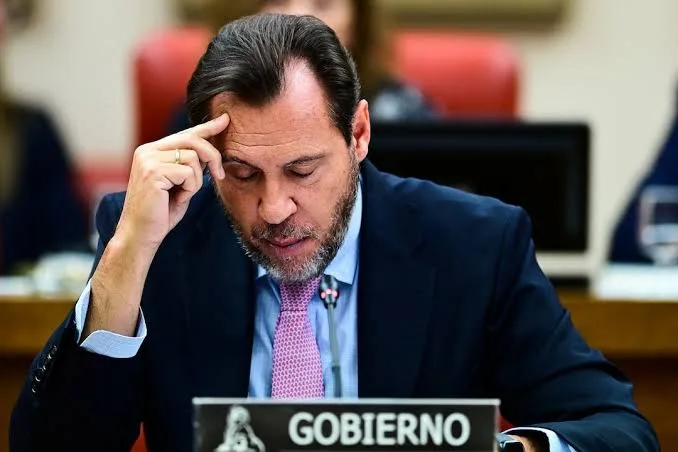
The announcement that Spain transport minister resigns came during an emotional parliamentary hearing in Madrid. Transport and Sustainable Mobility Minister Óscar Puente submitted his resignation after a high-speed collision killed 69 people and injured around 200 others near the central town of Urda.
Addressing lawmakers on the parliamentary standing committee, Puente stated that leaving office was essential for public accountability and democratic standards. He maintained that no transport minister could ethically remain in office following two catastrophic rail tragedies within a single calendar year. He also confirmed his withdrawal as a candidate in the country's upcoming general election.
The disaster occurred on October 28 along the busy Madrid-Seville corridor, one of Europe’s oldest high-speed lines. Emergency workers and forensic investigators spent days recovering victims from the wreckage, making it one of the deadliest passenger rail accidents in modern European history.
What Triggered the Fatal Collision
Technical briefings delivered during the legislative inquiry detailed a cascade of communication failures preceding the impact. The incident unfolded when the automated safety and signaling system controlling that section of the line suffered an unexpected breakdown.
Central traffic controllers in Madrid intervened to manage movements manually. Under manual authorization, a state-run passenger train traveling at over 160 kilometers per hour was cleared to advance along the track, where a private high-speed train was already stationary.
The subsequent impact derailed multiple passenger carriages and destroyed substantial track infrastructure. The revelation that trains continued moving at elevated speeds despite critical security failures has drawn severe backlash from rail unions and opposition parties, triggering calls for nationwide labor strikes.
Compounding Rail Safety Crises and Political Fallout
Public grief has been deepened by the fact that this collision represents the second fatal disaster on the same corridor in ten months. In January, another high-speed derailment near Adamuz in Córdoba province claimed 46 lives when a derailed train collided with oncoming traffic.
Spain operates the world’s second-largest high-speed rail network after China, historically celebrated as an engineering benchmark with exceptional safety records. However, back-to-back tragedies have intensified scrutiny on state infrastructure managers and railway maintenance budgets across the Iberian nation.
Prime Minister Pedro Sánchez now faces intense pressure to reassure millions of daily commuters that the high-speed network remains secure. The government announced emergency safety revisions and pledged comprehensive infrastructure reviews as the nation mourns the victims.