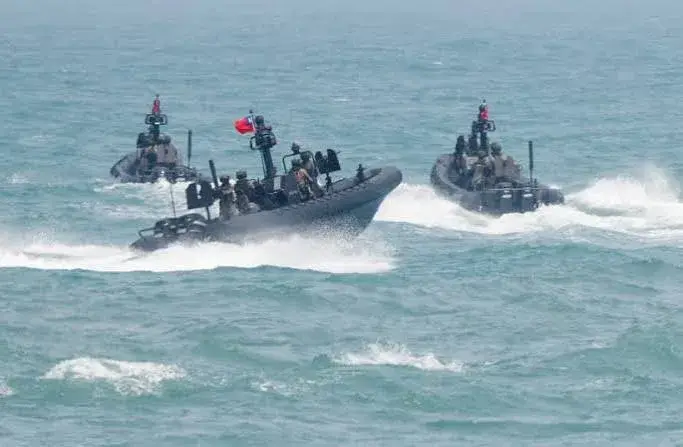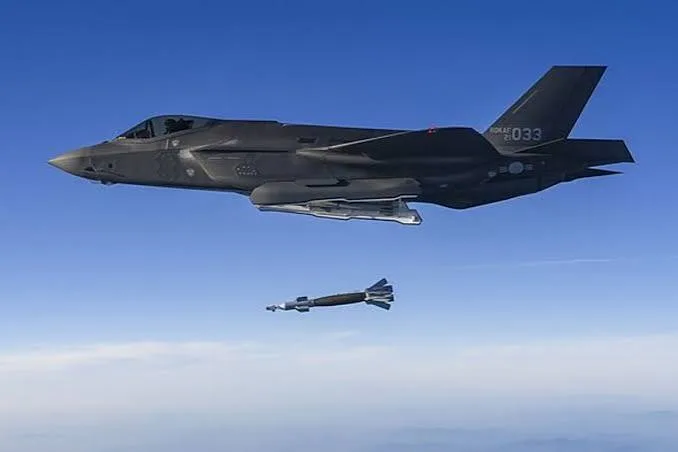
The South Korean military scrambled frontline fighter jets on Tuesday morning after multiple Russian warplanes entered its air defense identification zone over the East Sea.
The unannounced approach triggered an emergency siren on Ulleung Island, prompting local authorities to advise roughly 9,000 residents to seek shelter underground.
The alert was canceled within minutes after South Korean jets conducted tactical maneuvers, prompting the Russian military aircraft to turn east and exit the area.
Sudden Air Raid Alert on Ulleung Island
The security incident began shortly before 8:00 a.m. off the eastern coast of the Korean Peninsula.
Radar operators detected several Russian military planes flying across the sea toward Ulleung Island, an administrative county situated 130 kilometers east of the mainland.
The Ministry of the Interior and Safety issued a mobile emergency air raid alert at 7:52 a.m., urging citizens to evacuate into designated subterranean shelters.
Provincial officials initially caused brief public confusion by mistakenly describing the unidentified contacts as suspected North Korean aircraft.
Defense officials lifted the alert three minutes later at 7:55 a.m. after confirming the aircraft had altered course without penetrating sovereign airspace.
Tactical Maneuvers and Airspace Clarification
South Korea's Joint Chiefs of Staff (JCS) clarified that the Russian aircraft entered the Korea Air Defense Identification Zone (KADIZ), not sovereign territorial airspace.
An air defense zone is an internationally recognized buffer area where approaching military flights are expected to identify themselves to prevent accidental clashes.
JCS spokesperson Jang Do-young explained that the military issued the civilian alert preemptively because the aircraft traveled at high speed toward territorial waters.
The Republic of Korea Air Force deployed advanced F-15K fighter jets to intercept, monitor, and escort the Russian formations until they cleared the zone.
Military officials confirmed that the Russian flight group remained within the KADIZ for approximately 20 minutes before returning over international waters.
Diplomatic Summons and Seoul's Formal Protest
The South Korean Ministry of National Defense responded swiftly by lodging a stern diplomatic complaint with Moscow.
Ministry officials summoned the Russian defense attaché in Seoul, Colonel Nikolai Marchenko, to the defense headquarters on Tuesday afternoon.
Kim Hak-jo, the ministry’s director general for international policy, lodged a formal protest urging the Russian government to take concrete steps to prevent repeated incursions.
Defense spokespersons stressed that uncoordinated military flights close to populated islands unnecessarily escalate regional military friction.
Russian defense officials have historically asserted that their long-range maritime patrol flights comply strictly with international civil aviation rules over neutral waters.
Regional Aerial Tensions in the East Sea
The encounter highlights growing geopolitical friction across Northeast Asian airspace, where Russian and Chinese military aircraft routinely conduct joint maritime patrols.
South Korea has consistently pushed foreign militaries to notify flight plans in advance when operating inside its identification boundary.
Security analysts note that while KADIZ entries have occurred periodically, issuing live civil defense alerts on border islands represents a heightened state of military vigilance.
South Korean defense radar networks remain on elevated watch across the East Sea corridor to track unexpected aerial activity.