
Nepal-Tibet Flood Death Toll Rises to 469 as Fresh Flood Threat Hampers Rescue
The death toll from catastrophic floods along the Nepal-Tibet border has risen sharply as rescuers face fresh danger from an overflowing lake and more than 1,400 people remain missing.
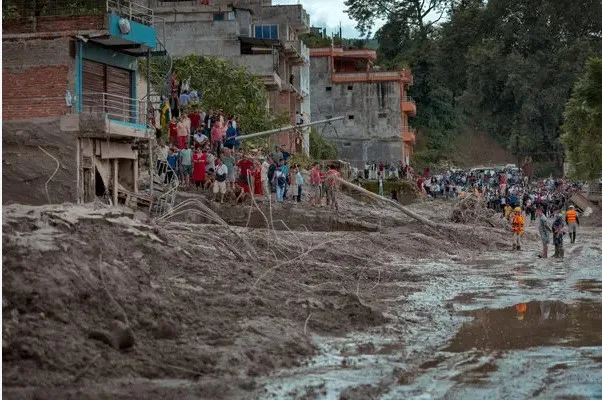
The death toll from devastating flash floods along the Nepal-China border has risen to at least 469 in Nepal, with three additional deaths reported in Tibet, as rescue teams continue searching for hundreds of people still missing.
Nepal Police said on Friday that 469 people had died in the disaster, while more than 1,400 remained unaccounted for. Authorities have deployed thousands of security personnel to search through mud, debris and damaged settlements, but the scale of destruction and difficult Himalayan terrain are slowing the operation.
The floods struck on Wednesday after a massive ice-and-rock collapse in the Himalayan region sent an enormous surge of water, mud and debris through valleys on both sides of the Nepal-China border. The torrent swept through communities and destroyed roads, bridges, homes and other infrastructure, including key facilities around the Gyirong border crossing in Tibet.
The disaster has also affected large numbers of foreign nationals. Many of those reported missing were tourists and pilgrims travelling towards Mount Kailash and other religious destinations in Tibet. Reuters reported that hundreds of foreigners were among those unaccounted for in Nepal, with people from countries including India, the United States, Britain, Australia and Canada affected.
Rescue efforts have now been complicated by a new threat. A lake created when landslide debris blocked a river near the disaster zone has begun to overflow, raising fears that another surge could sweep through already devastated areas. Chinese authorities temporarily halted rescue operations in the affected Tibetan area and ordered teams to withdraw as the danger increased.
In Nepal, rescuers have been using heavy machinery, helicopters and search dogs to look for survivors and recover bodies. But damaged roads and bridges have made some areas extremely difficult to reach, while the continuing risk of landslides and flooding has forced emergency workers to balance the search for victims against their own safety.
The cause of the disaster is becoming clearer, although scientists are still examining the precise sequence of events. Initial reports suggested seismic activity may have been involved, but satellite imagery and geological analysis indicate that an ice-and-rock avalanche or glacial collapse triggered the devastating flood. The collapse generated enough force to create seismic signals, adding to early uncertainty about what had happened.
The scale of the destruction has raised fresh questions about disaster preparedness in the Himalayas, a region where rapidly changing glaciers, unstable slopes and extreme weather can combine to produce sudden and highly destructive events. Scientists have cautioned against drawing a simple direct line between this single disaster and climate change, but warming temperatures are widely understood to be increasing risks associated with glacier instability and other high-altitude hazards.
The human toll is likely to remain uncertain for some time. With more than 1,400 people still missing and rescue operations repeatedly disrupted by dangerous conditions, authorities are facing the difficult task of identifying victims while continuing to search for those who may have survived. Families across Nepal and several other countries are waiting for information about relatives who were travelling through the region when the floods struck.
The tragedy is more than a devastating flood story; it is a warning about the growing vulnerability of communities, pilgrimage routes and critical infrastructure in the high Himalayas. As the immediate rescue effort continues, Nepal, China and the wider international community will face a longer-term question: how to protect people in mountain regions where glaciers and landscapes are changing faster than many existing warning and emergency systems were designed to handle. The rising death toll makes that question impossible to ignore.
More on Trending
Trending
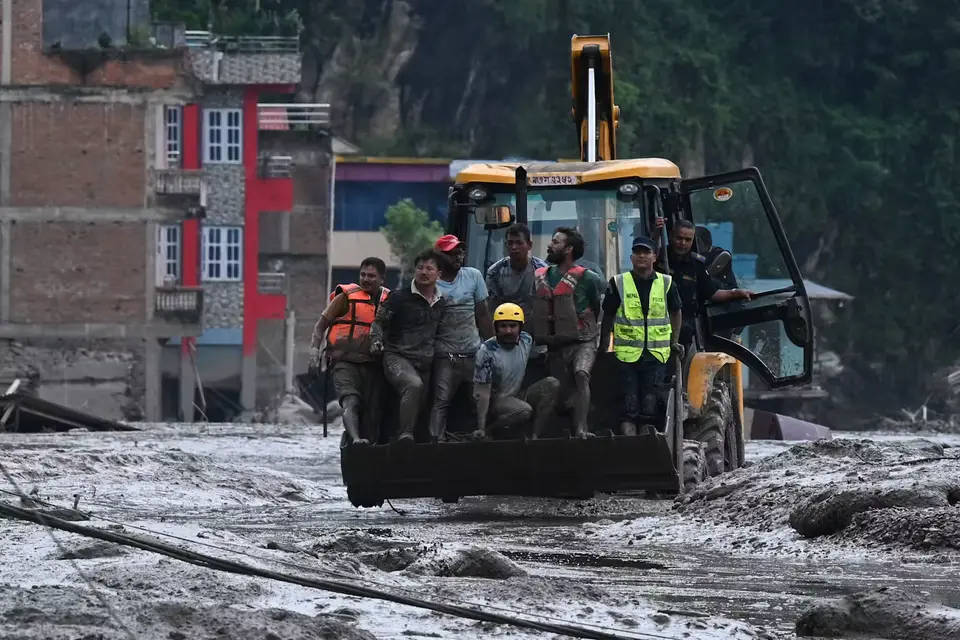
Glacier Collapse Triggers Deadly Nepal Flood as Rescue Teams Search for Nearly 1,500 Missing
27 Aug 2026
Trending
Glacier Collapse Warning Deepens Nepal–China Flood Disaster as Death Toll Tops 1,000
1 Sept 2026

Trending
Seven Dead, 23 Missing After Ferry Carrying 267 Capsizes Off Cyprus
30 Aug 2026
Trending
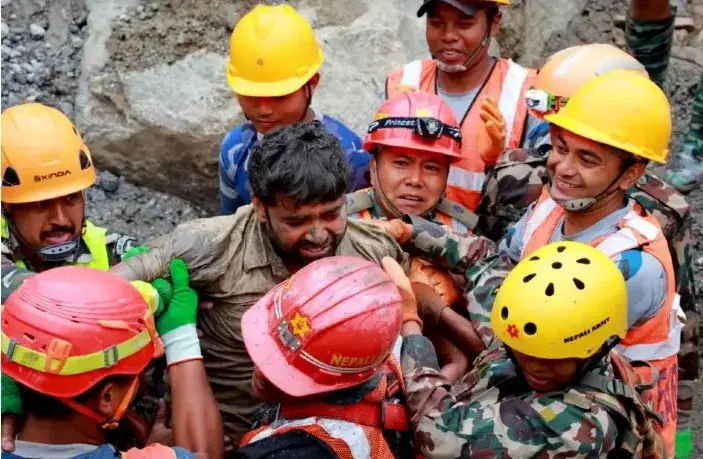
Two Workers Rescued Alive from Nepal Tunnel After Nine Days Trapped by Floods
4 Sept 2026

Trending
Missing Nigerian Woman Saratu Jibo Found Safe in Doha After Airport Scare
7 Sept 2026
Partner with Follow Global Trends
Display banners, sponsored stories and founder spotlights.
You may also like

Trending
UK Coroner Links Nigerian Influencer’s Death to Cosmetic Procedure in Thailand
6 Sept 2026
Trending
Small Plane Crashes Off Groote Eylandt as Rescue Crews Struggle to Reach Remote Site
25 Aug 2026

Trending
Royal Caribbean Passenger Rescued After 20 Hours at Sea
15 Oct 2026

Trending
Harry and Meghan Back in UK Spotlight With Visits to Youth and Food Charities
15 Oct 2026

Trending
Nicki Minaj Follows Peter Obi on X After Amplifying His Niger State Security Message
19 Sept 2026

Trending
Lady Gaga Welcomes First Child With Fiancé Michael Polansky
12 Sept 2026