Mbah Calls for National Emergency in Education, Unveils New Enugu Education Policy
Enugu Governor Peter Mbah is urging Nigeria to treat education as a national emergency as the state launches a long-term policy built around technology, teacher development and stronger learning outcomes.
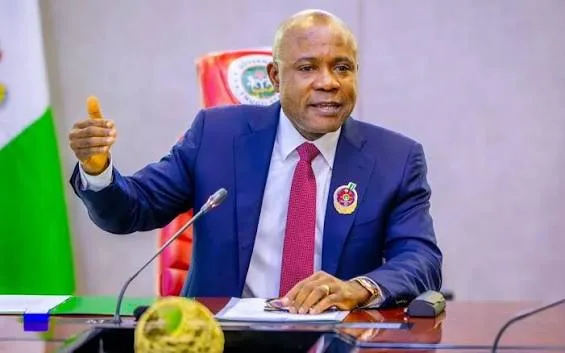
Enugu State Governor Peter Mbah has called on Nigeria to declare a national emergency in education, arguing that the country needs a major increase in investment if it is to build the skills and human capital required for long-term economic growth.
Mbah made the call on Wednesday at the 2026 Enugu Education Summit, where he also unveiled a new Enugu State Education Policy intended to guide the sector for the next six to 10 years. The summit, held at the International Conference Centre in Enugu, brought together government officials, education specialists and development partners under the theme, “Transforming Education for the Future: Leadership, Innovation, Partnership, Financing and Sustainable Reform.”
The governor argued that treating education as an emergency should go beyond political declarations and be reflected in government budgets, teacher development, school infrastructure, educational standards and partnerships between federal and state governments, communities, development agencies and the private sector.
His argument comes against a difficult national backdrop. A September 2026 UNICEF report found that Nigeria's public spending on education as a share of total government expenditure fell from 9.3 per cent in 2015 to 3.6 per cent in 2023, well below the international benchmark of 15–20 per cent. UNICEF also cited significant learning gaps, including large proportions of pupils failing to reach minimum proficiency in mathematics at primary and junior-secondary levels.
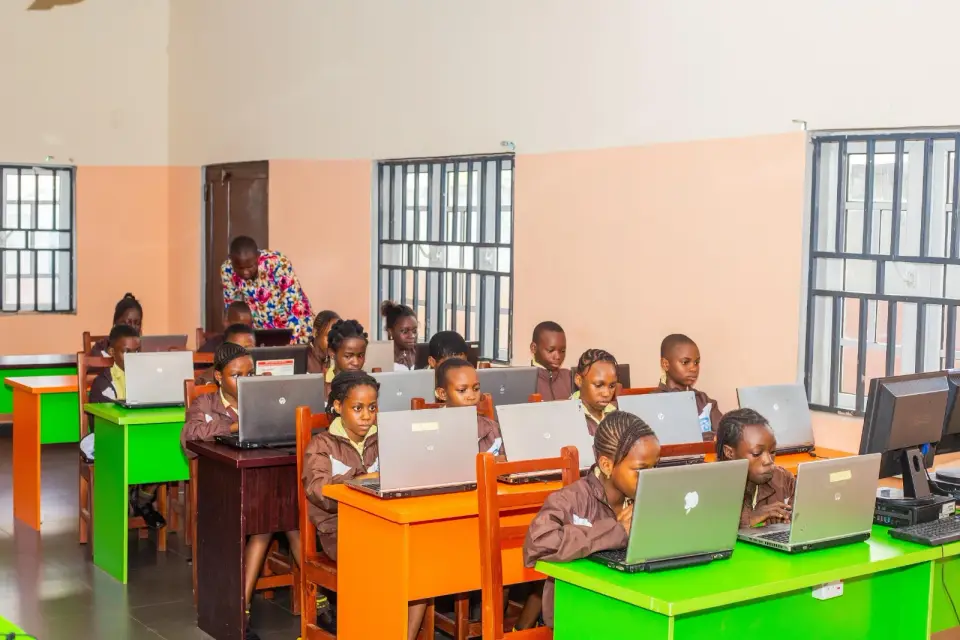
Against that national picture, Mbah presented Enugu's approach as an attempt to move beyond incremental repairs and build a different education system. He said his administration had allocated roughly 33 per cent of the state budget to education for three consecutive years, while developing 268 Smart Green Schools and more than 7,000 classrooms equipped with modern learning technologies. The state's education ministry currently describes the Smart Green School programme as a transformation of basic education built around experiential learning, digital skills and infrastructure.
The governor's administration has also been expanding the personnel needed to operate the new schools. In July, the state approved the recruitment of 6,580 teachers and other education personnel, including nearly 4,700 core-subject teachers as well as digital librarians, ICT personnel, counsellors and experiential-learning staff.
Technology is another major part of the state's strategy. Enugu's Education Management System, or ENEMS, is being developed as an AI-supported platform integrating teacher management, learner management, learning assessment and the state's experiential-learning curriculum. Mbah has previously said artificial intelligence should be used to make teachers more effective rather than replace them, provided educators receive the necessary training and safeguards.
The newly unveiled state policy is linked to a broader Education Sector Plan for 2026–2035, which was developed with the Federal Government, UNICEF and the National Institute for Educational Planning and Administration. The plan focuses on access, equity and inclusion, teaching quality, infrastructure, teacher capacity, governance, financing and education management.
UNICEF welcomed Enugu's direction, saying the state had demonstrated a commitment to education transformation through its investment in Smart Green Schools, teachers, foundational learning, digital literacy and experiential learning. UNICEF also said it supported the development of the state's 2026–2035 education sector plan.
UNESCO similarly praised the Smart Green School initiative and Enugu's planned teacher recruitment, while the British Council said it would continue working with the state to improve the implementation of its education policies. Those endorsements, however, reflect support for the direction of the programme and do not independently establish that all of the state's infrastructure or learning targets have already been achieved.
The financial commitment is significant. Enugu's approved 2026 budget is about ₦1.62 trillion, with education allocated 32.27 per cent, according to the governor's budget presentation. The state's strategy has been to devote a much larger share of spending to capital investment while expanding schools, technology, teacher recruitment and related infrastructure.
But the larger challenge is whether higher spending will consistently translate into better learning. Building classrooms and equipping schools can address important infrastructure gaps, but sustained improvements also depend on teacher quality, attendance, curriculum delivery, assessment, maintenance, reliable funding and whether children actually acquire strong literacy, numeracy and practical skills.
That distinction is particularly important nationally. UNICEF's latest assessment suggests Nigeria's education challenge is not simply one of getting children into classrooms; it is also about what they learn once they are there. The scale of the learning crisis means that a national emergency declaration, if pursued, would need to be accompanied by measurable targets and sustained financing rather than becoming another policy slogan.
For Enugu, the new policy represents an attempt to make education a central part of the state's economic strategy rather than treating schools as a stand-alone social service. Mbah has linked the programme to the development of a workforce capable of supporting technology, agriculture, industry, creative sectors and other areas of the state's economic ambitions.
The bigger question now extends beyond Enugu. Nigeria has one of Africa's largest and youngest populations, making the quality of its education system increasingly important to its economic prospects. Mbah's call for a national emergency puts the issue back at the centre of the national conversation, but the real test will be whether governments can turn the language of urgency into sustained investment, stronger classrooms and measurable improvements in what Nigerian children actually learn.
More on Education
Education
Enugu Recruits 2,299 Teachers to Drive Smart Green Schools Initiative
21 Sept 2026
Education
150 University Academic Projects to Receive ₦20 Million Grooming Centre Research Grant
13 Sept 2026

Education
MTN Nigeria Opens 2026 mPulse Spelling Bee, Giving Young Learners a National Stage
3 Aug 2026
Education
From France to Belgium: Students Take to Streets Over Education Costs and School Conditions
8 Oct 2026

Education
Nigeria Launches Free Daily Data Scheme for Five Million Students
11 Sept 2026
You may also like

Education
Nigerian-Born Yale Scholar Begins Landmark Fulbright Residency at UNILAG
6 Sept 2026

Education
Read More, Earn More? Singapore’s Bold Idea Catches Global Attention
15 Sept 2026

Education
7UP Unveils 16th Harvard MBA Scholar, Reaffirming Commitment to Nigerian Leadership
2 Sept 2026

Education
Germany's Rising Appeal: Five Reasons African Students Are Choosing Europe's Academic Powerhouse
4 Aug 2026
Education
5,000 Arrested, Hundreds of Schools Closed as France's Student Protests Grow
5 Oct 2026
Education
Dangote Pledges ₦600m LASU Girls’ Hostel, Offers Jobs to First-Class Graduates
22 Aug 2026