Read More, Earn More? Singapore’s Bold Idea Catches Global Attention
Singapore has launched a five-year national reading campaign that rewards residents with virtual coins, vouchers and small cash incentives for logging their daily reading sessions.
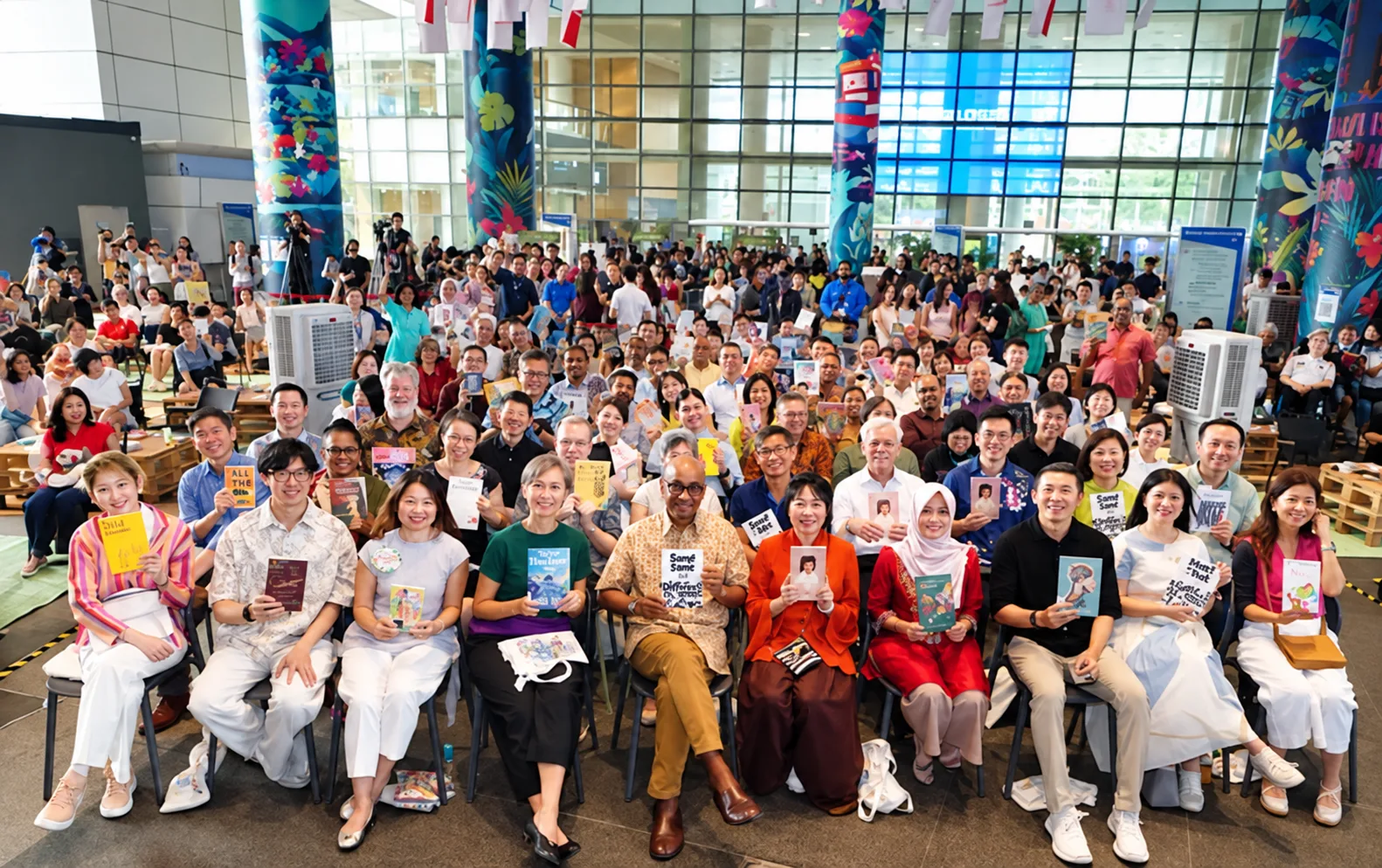
Singapore is putting a new spin on promoting literacy by rewarding people for reading, offering residents points that can eventually be converted into cash and shopping vouchers through a government-backed reading programme. The initiative is designed to encourage people of all ages to read more regularly while strengthening lifelong learning in one of the world's most education-focused nations.
This month, the city-state officially launched the Read30 campaign, a five-year national movement led by the National Library Board (NLB) to rebuild reading habits at a time when smartphones and endless scrolling are competing for people's attention. Rather than simply urging citizens to read more, the government is using gamification, rewarding consistent reading with virtual coins that translate into modest financial incentives.
At the heart of the programme is the NLB Mobile app and an accompanying government platform where participants log their daily reading sessions. A reading session of 15 minutes or more earns 20 virtual coins, and readers can record only one session per day. After accumulating 1,000 coins, equivalent to 50 days of reading, participants receive SG$1 (about US$0.80) as a reward.
The scheme is intentionally modest. Officials say the objective is not to pay people a meaningful income, but to create a sustainable reading habit through small, motivating rewards that reinforce consistency rather than quantity.
“While short-form content helps us stay informed, long-form reading strengthens attention, critical thinking and imagination,” National Library Board chief executive Melissa Tam said in a statement.
She added: “Ultimately, we want to see a nation of readers who are curious, thoughtful, discerning and equipped to navigate an increasingly complex world.”
Singapore's approach reflects a broader national strategy that links education with public policy. The city-state has invested heavily in public libraries, digital learning platforms and community literacy programmes, ensuring residents can access books both physically and electronically while encouraging families, schools and workplaces to embrace reading as a shared culture.
Educators have welcomed the initiative, noting that behavioural science increasingly supports the use of small incentives to establish positive long-term habits. While some critics argue that reading should be driven primarily by intrinsic motivation, supporters contend that the rewards simply provide an initial nudge, especially for younger generations growing up in an age of algorithm-driven “doomscrolling.”
As countries around the world grapple with declining reading habits and shrinking attention spans, Singapore's experiment offers a fresh policy idea: treating literacy not just as an educational goal, but as a national habit worth cultivating. If successful, its five-year campaign could become a model for governments seeking creative ways to inspire a new generation of readers.
More on Education

Education
Nigeria Launches Free Daily Data Scheme for Five Million Students
11 Sept 2026
Education
Mbah Calls for National Emergency in Education, Unveils New Enugu Education Policy
8 Oct 2026
Education
150 University Academic Projects to Receive ₦20 Million Grooming Centre Research Grant
13 Sept 2026

Education
MTN Nigeria Opens 2026 mPulse Spelling Bee, Giving Young Learners a National Stage
3 Aug 2026

Education
Germany's Rising Appeal: Five Reasons African Students Are Choosing Europe's Academic Powerhouse
4 Aug 2026
You may also like
Education
From France to Belgium: Students Take to Streets Over Education Costs and School Conditions
8 Oct 2026
Education
5,000 Arrested, Hundreds of Schools Closed as France's Student Protests Grow
5 Oct 2026
Education
Enugu Recruits 2,299 Teachers to Drive Smart Green Schools Initiative
21 Sept 2026

Education
Nigerian-Born Yale Scholar Begins Landmark Fulbright Residency at UNILAG
6 Sept 2026
Education
7UP Unveils 16th Harvard MBA Scholar, Reaffirming Commitment to Nigerian Leadership
2 Sept 2026

Education
Dangote Pledges ₦600m LASU Girls’ Hostel, Offers Jobs to First-Class Graduates
22 Aug 2026