
Madagascar ex-Senate president sentenced to 10 years over deadly protest crackdown
Madagascar's former Senate President Richard Ravalomanana has been sentenced to 10 years of hard labour over his role in the deadly 2025 protest crackdown, in one of the country's most significant post-crisis trials.
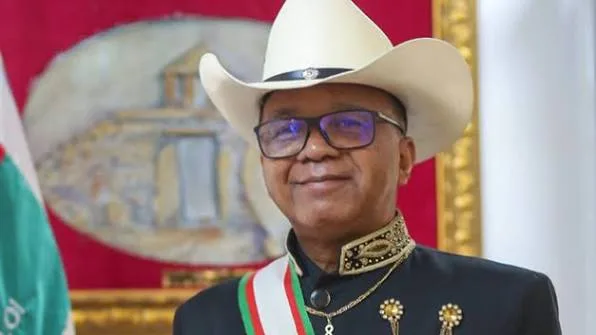
A court in Madagascar has sentenced former Senate President Richard Ravalomanana to 10 years of hard labour after convicting him of complicity in murder and assault linked to the violent suppression of anti-government protests that shook the island nation in 2025.
The verdict follows months of legal proceedings over the deaths of at least 22 protesters and injuries to more than 100 others during demonstrations that began over chronic water and electricity shortages before expanding into a nationwide movement against then-President Andry Rajoelina's government. UN casualty figures were cited during the case.
Ravalomanana, a retired general and close ally of the former president, denied all wrongdoing throughout the trial. Prosecutors argued that he used his influence within Madagascar's security establishment to encourage the violent response to protesters, while the defence maintained there was no evidence that he personally ordered police, gendarmes or soldiers to open fire. His lawyers have confirmed they will appeal the conviction.
The case stems from the political crisis that culminated in the October 2025 military takeover, when President Andry Rajoelina fled the country after weeks of unrest and Colonel Michael Randrianirina assumed leadership of a transitional administration. Ravalomanana was removed as Senate president during the upheaval and later arrested after failing to comply with a gendarmerie summons.
During the trial, a former national police chief testified that Ravalomanana was not part of the operational chain of command directing security forces during the demonstrations. Defence lawyers relied heavily on that testimony, arguing the prosecution had failed to establish direct criminal responsibility despite his senior political position.
The court nevertheless found him guilty of complicity in murder and voluntary assault, imposing one of the harshest sentences handed down against a senior official since Madagascar's political transition began.
The conviction has reignited debate over accountability in Madagascar's turbulent political history. Supporters of the transitional authorities describe the ruling as an important step toward justice for victims of the crackdown, while critics warn that appeals and future proceedings will be crucial in determining whether the judicial process is viewed as independent and credible.
Madagascar has experienced repeated cycles of political instability since independence, including coups, contested elections and mass protests. The sentencing of one of the country's most powerful former officials signals a new chapter in efforts to address alleged abuses committed during the 2025 crisis, even as the nation continues its transition toward a promised return to democratic elections in 2027.
More on Law/Legal
Law/Legal
Kosovo’s Former President Hashim Thaçi Sentenced to 25 Years in War Crimes Case
16 Sept 2026
Law/Legal
Ex-Liberia Vice President Remanded in Prison as Drug Trafficking Case Moves to Court
26 Aug 2026
Law/Legal
Nigerian Sentenced to 87 Months in US Prison Over $1.7m Money-Laundering Scheme
18 Aug 2026
Law/Legal
Supreme Court Blocks Trump's Mail-In Voting Plan Ahead of US Midterm Elections
15 Sept 2026

Law/Legal
Egypt TV Presenter, 11 Others Sentenced to Death in Major Drugs Case
6 Sept 2026
You may also like
Law/Legal
Tunisia’s Top Court Upholds Convictions of Opposition Figures and Activists
4 Sept 2026

Law/Legal
Former Chemistry Teacher Found Guilty of Assaulting Two Boys in 1980s
28 Aug 2026
Law/Legal
Joseph Kabila Challenges US Sanctions in Washington Court
24 Aug 2026
Law/Legal
30 Years Later, Tupac’s Murder Mystery Finally Lands in Court
19 Aug 2026

Law/Legal
US Advocacy Firm Files $57m Suit Against Tinubu, Nigeria and Fani-Kayode
6 Oct 2026

Law/Legal
Dolly Parton’s Estate Seeks Court Order Against Nephew Over Alleged Threats
23 Sept 2026