
US Advocacy Firm Files $57m Suit Against Tinubu, Nigeria and Fani-Kayode
A U.S.-based advocacy firm has filed a $57 million federal lawsuit against President Bola Tinubu, Nigeria, Femi Fani-Kayode and DCI Group over alleged defamation and an alleged plot to harm its founder.

A United States-based advocacy firm has taken its increasingly bitter dispute with Nigerian officials into a federal courtroom in Washington, filing a $57 million lawsuit against President Bola Tinubu, the Federal Government of Nigeria, former Aviation Minister Femi Fani-Kayode and U.S. public-affairs company DCI Group.
The case was filed on September 28, 2026, in the U.S. District Court for the District of Columbia by Karl Von Batten, the principal of Von Batten-Montague-York. Federal court records identify the case as Von Batten v. Tinubu et al., Case No. 1:2026cv03374, with U.S. District Judge Randolph D. Moss presiding. The docket classifies the action as involving assault, libel and slander and cites the Foreign Sovereign Immunities Act as a basis for the case.
According to the firm, the damages being sought are divided among the defendants: $36 million jointly from Tinubu and the Federal Government of Nigeria, $3 million from Fani-Kayode individually and $18 million from DCI Group. The firm says it kept the filing out of the public domain temporarily while attempting to serve the foreign defendants in accordance with U.S. procedures governing lawsuits against foreign states and officials.
At the centre of the lawsuit is Von Batten's allegation that efforts were made to intimidate and silence him because of his advocacy in Washington over historical U.S. government records relating to allegations concerning Tinubu. The firm alleges that the defendants were involved in a conspiracy involving defamation and plans to kidnap or physically harm Von Batten.
Those allegations have not been established by any court. The federal docket confirms that a complaint was filed, but a complaint represents the plaintiff's claims and is not itself a finding of fact or liability.
The legal dispute has been building publicly for several weeks. In September, Von Batten-Montague-York said it had been preparing a $36 million action against Tinubu and Fani-Kayode over what it described as threats against its principal. The firm also said it had contacted U.S. authorities over what it characterized as possible transnational repression.
Fani-Kayode has rejected the allegations. Before the lawsuit was filed, he challenged Von Batten to produce evidence that he or the Nigerian government had threatened to kidnap or kill him. He also threatened a separate lawsuit seeking at least $100 million over what he described as defamatory allegations and said he would pursue possible extradition proceedings against Von Batten in Nigeria.
The dispute is closely connected to Von Batten's campaign concerning old U.S. government records involving Tinubu. His firm has been seeking public access to records held by agencies including the FBI and DEA, relating to historical allegations of drug trafficking and a 1990s U.S. civil-forfeiture case. The firm argues that the records warrant greater public scrutiny.
The underlying allegations concerning Tinubu are themselves a separate matter from the new defamation and alleged-conspiracy lawsuit. Historical U.S. court records have documented a civil forfeiture proceeding involving funds associated with accounts linked to Tinubu, while the current advocacy campaign is seeking additional government records. The existence of such records does not, by itself, establish that Tinubu committed a criminal offence, and the lawsuit against him should not be interpreted as a criminal prosecution.
Another significant element is DCI Group AZ, LLC, a Washington-based public-affairs company named as a defendant. The court docket confirms DCI Group, alongside Tinubu, the Nigerian government and Fani-Kayode, as defendants in the action. The complaint also names unidentified "John Does 1-10."
The case could face substantial procedural questions before any court considers the underlying allegations. The Nigerian government is a foreign sovereign, and the Foreign Sovereign Immunities Act (FSIA) generally restricts when foreign states can be sued in U.S. courts, subject to statutory exceptions. The plaintiff has specifically invoked the legislation, but that does not guarantee that the claims against Nigeria or the Nigerian president will proceed to a trial on their merits.
The status of the defendants also differs. A lawsuit against the Federal Government of Nigeria raises sovereign-immunity issues, while claims against an individual foreign official can involve separate questions concerning official conduct, immunity and jurisdiction. Those issues are likely to be addressed early as the case develops.
The filing follows another legal battle involving Von Batten. On September 15, he filed a separate federal defamation lawsuit against Sahara Reporters Media Group and Ademola Bello, seeking damages over publications he says falsely portrayed him. That case is also pending in the U.S. District Court for the District of Columbia.
For Nigeria, the latest lawsuit adds another layer to an already politically charged dispute surrounding the president's historical U.S. records. For Von Batten, the case moves his campaign from public advocacy and political exchanges into a setting where allegations must eventually be tested through formal pleadings, evidence and procedural rules.
The broader significance of the case will ultimately depend less on the $57 million figure than on whether the plaintiff can overcome the jurisdictional and immunity hurdles and substantiate the allegations made in the complaint. Until then, the lawsuit should be understood as a legal claim rather than a judicial finding against Tinubu, the Nigerian government, Fani-Kayode or DCI Group. What is clear is that a dispute that began around political advocacy and historical U.S. records has now entered the American federal court system, where its next chapter will be shaped by evidence, jurisdiction and due process rather than political rhetoric.
More on Law/Legal

Law/Legal
Grindr Agrees to £26 Million Settlement Over UK Privacy Lawsuit
8 Sept 2026

Law/Legal
Tinubu FBI Files: US Court Allows Secret Evidence as Disclosure Fight Deepens
27 Aug 2026
Law/Legal
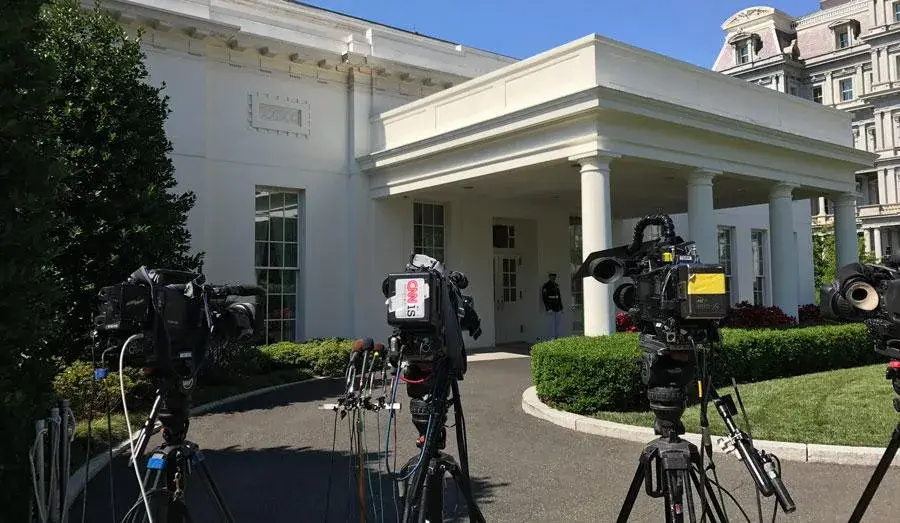
CNN, MSNBC and Politico File Emergency First Amendment Lawsuit Against Trump
21 Sept 2026
Law/Legal
Tinubu Drug Records: US Judge Allows FBI to Submit Sensitive Files for Private Review
22 Aug 2026
Law/Legal
ICC Tribunal Dismisses Sunrise Power’s $2.35 Billion Claim Against Nigeria
18 Sept 2026
You may also like
Law/Legal
Kosovo’s Former President Hashim Thaçi Sentenced to 25 Years in War Crimes Case
16 Sept 2026

Law/Legal
Madagascar ex-Senate president sentenced to 10 years over deadly protest crackdown
3 Sept 2026
Law/Legal
Ex-Liberia Vice President Remanded in Prison as Drug Trafficking Case Moves to Court
26 Aug 2026
Law/Legal
Joseph Kabila Challenges US Sanctions in Washington Court
24 Aug 2026

Law/Legal
Nigerian Sentenced to 87 Months in US Prison Over $1.7m Money-Laundering Scheme
18 Aug 2026

Law/Legal
Dolly Parton’s Estate Seeks Court Order Against Nephew Over Alleged Threats
23 Sept 2026