Kenya’s Edwin Kipyego Wins Enugu City Marathon as East Africans Dominate Elite Race
Kenya’s Edwin Kipyego has won the men’s 42km elite race at the second Enugu City International Marathon, leading an East African sweep of the podium.
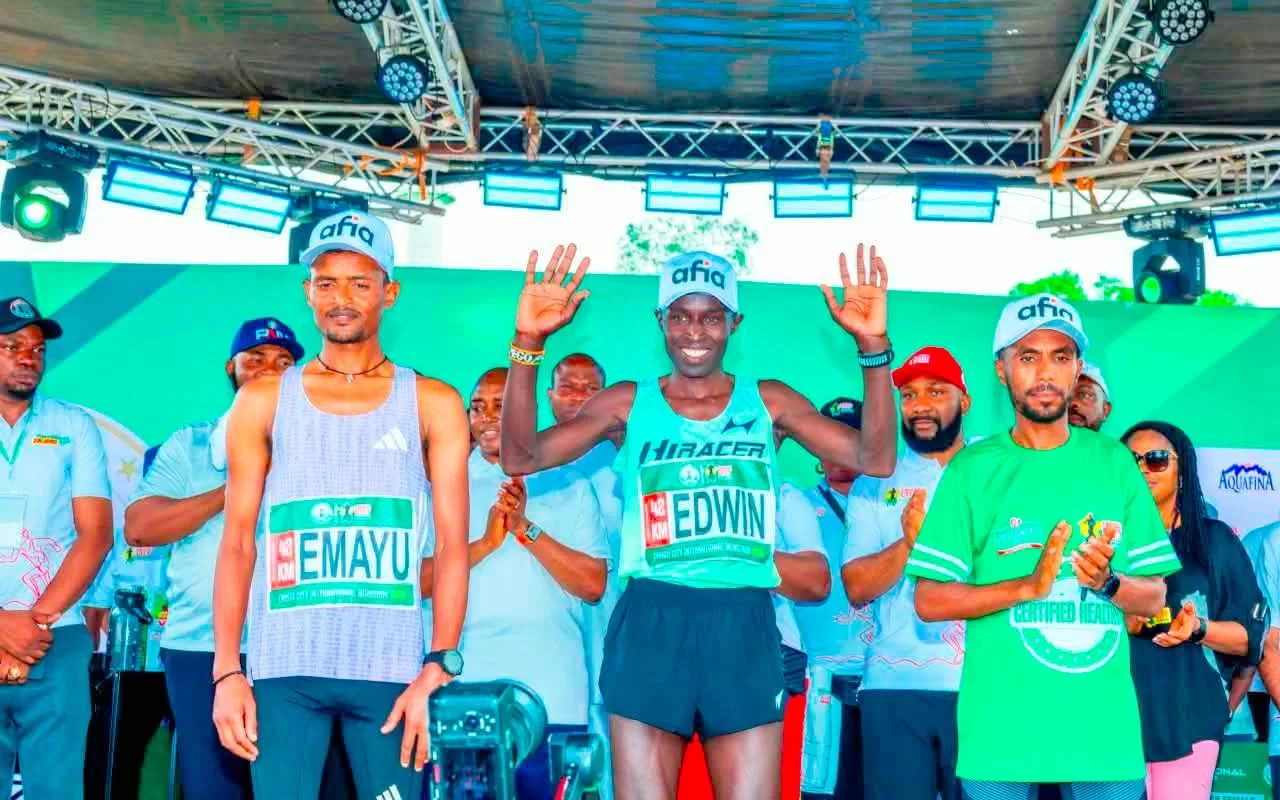
Kenyan distance runner Edwin Kipyego has won the men's 42km elite race at the second edition of the Enugu City International Marathon, crossing the finish line in 2 hours, 23 minutes and 38 seconds to claim the top prize. Kipyego produced a decisive late surge to finish ahead of a strong international field, adding another major victory to Kenya's long-distance running tradition.
Kipyego made his decisive move in the closing stages of the race, breaking away from the leading group at around the 37-kilometre mark before maintaining his advantage to the finish at Michael Okpara Square. His victory earned him the reported $15,000 first prize, alongside the gold medal and the title of Enugu's 2026 marathon champion.
Ethiopia's Habtamu Girma finished second in 2:23:39, while Kenya's Shiferaw Daltiemayo took third in 2:23:41, completing an elite men's podium dominated by East African runners. The second- and third-place finishers were reported to have received $10,000 and $5,000 respectively.
Kipyego described the Enugu course as demanding but praised the atmosphere created by spectators along the route. The marathon started at 6:30am from the Shoprite area on Abakaliki Road before taking runners through parts of the city and finishing at Michael Okpara Square.
The women's elite race also went to Ethiopia, with Zenebe Aberu taking the 42km title in 2:48:40. Negashu Chatiu finished second in 3:03:18, while Adugna Mahley was third in 3:06:32. Like the men's race, the result highlighted the strength of East African distance running on the Enugu course.
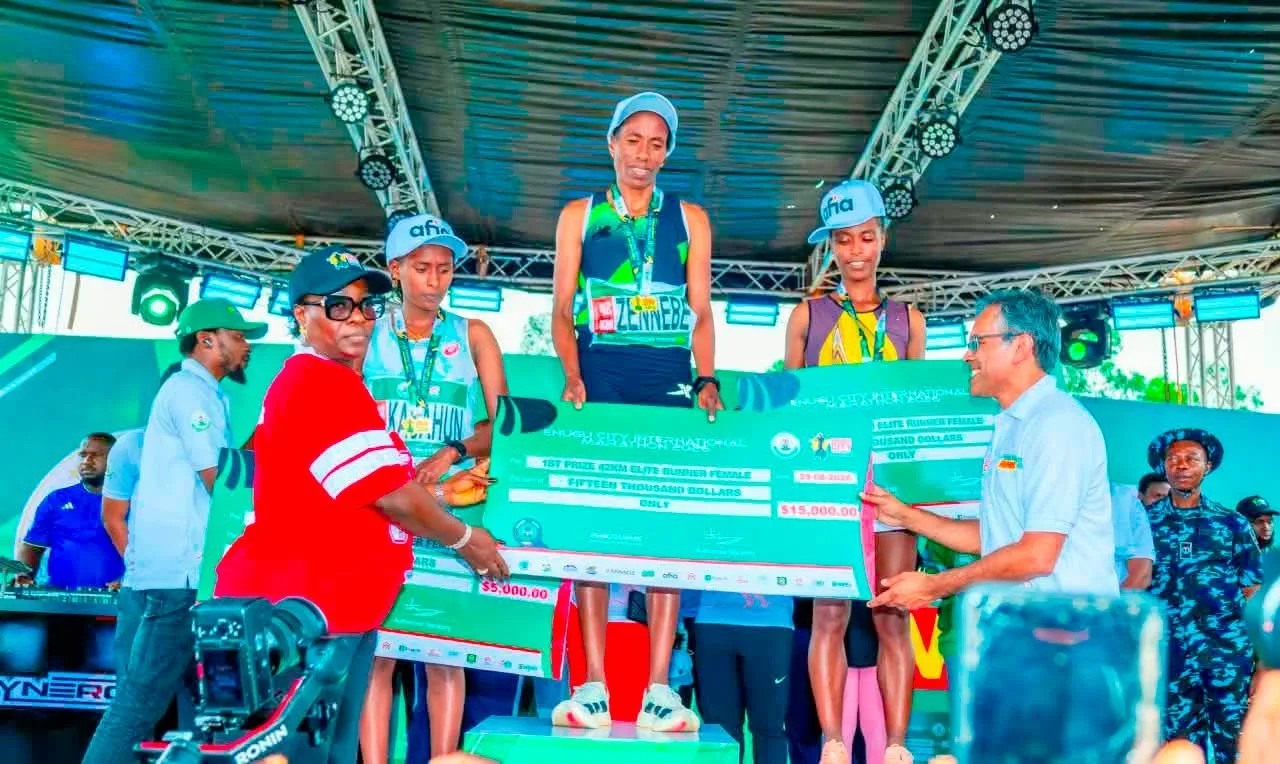
The event attracted more than 3,000 runners across the 42km and 10km races, according to organizers and local media reports. The Athletics Federation of Nigeria provided technical support, while the Enugu State Government and Nilayo Sports Management jointly organised the marathon.
There was also success for Nigerian runners in the shorter race. Gang James Boyi won the men's 10km in 29:59, while Vivian Obadiah claimed the women's 10km title in 35:13.09. Nigerian athletes occupied the leading places in the 10km events, giving the home contingent something to celebrate despite the dominance of foreign runners over the full marathon distance.
Kipyego's victory continues a pattern established at the inaugural Enugu marathon in 2025, when Kenyan runners dominated the elite 42km races. Kenya's Ken Kopos won the men's race in 2:22:32, while Shaoline Chepriroi took the women's title in 2:44:37.
The organisers have broader ambitions for the event. The Enugu City International Marathon was created not only as a competitive road race but also as part of the state's drive to promote sports tourism, healthy living and international visibility. The event is being developed with the ambition of meeting World Athletics accreditation standards and attracting elite runners from around the world.
Those ambitions received another boost with Enugu State officials indicating that the state is pursuing World Athletics Road Race Label status for 2027. If secured, the recognition could strengthen the marathon's ability to attract stronger international fields and further establish Enugu on the African road-racing calendar.
For Kipyego, however, the immediate story is simpler: he came to Enugu, negotiated a demanding course and timed his final move perfectly. His victory adds another Kenyan name to the event's growing roll of honour, while the strong showing by Ethiopia and Kenya underlines the competitive benchmark Nigerian distance runners will face as the Enugu marathon develops.
The broader significance is that Enugu is beginning to build a sporting event with ambitions beyond a single race day. Bringing thousands of runners into the city, attracting elite athletes from East Africa and putting significant prize money on the line gives the marathon growing international credibility. The next challenge will be sustaining that momentum, improving the event's competitive and technical standards and creating more opportunities for Nigerian runners to close the gap with the continent's distance-running powerhouses.
More on Trending
Trending
Enugu City Marathon Takes Over Coal City as Thousands Race for Glory
29 Aug 2026
Trending
President Trump Claims ‘The Moon Is Ours,’ Igniting Global Space Debate
7 Sept 2026

Trending
Missing Nigerian Woman Saratu Jibo Found Safe in Doha After Airport Scare
7 Sept 2026
Trending
Glacier Collapse Warning Deepens Nepal–China Flood Disaster as Death Toll Tops 1,000
1 Sept 2026

Trending
Glacier Collapse Triggers Deadly Nepal Flood as Rescue Teams Search for Nearly 1,500 Missing
27 Aug 2026
Partner with Follow Global Trends
Display banners, sponsored stories and founder spotlights.
You may also like

Trending
Royal Caribbean Passenger Rescued After 20 Hours at Sea
15 Oct 2026

Trending
Harry and Meghan Back in UK Spotlight With Visits to Youth and Food Charities
15 Oct 2026

Trending
Nicki Minaj Follows Peter Obi on X After Amplifying His Niger State Security Message
19 Sept 2026

Trending
Lady Gaga Welcomes First Child With Fiancé Michael Polansky
12 Sept 2026

Trending
UK Coroner Links Nigerian Influencer’s Death to Cosmetic Procedure in Thailand
6 Sept 2026

Trending
Trump Says He’s Naming Projects After Himself Because ‘Nobody Will’ Later
6 Sept 2026