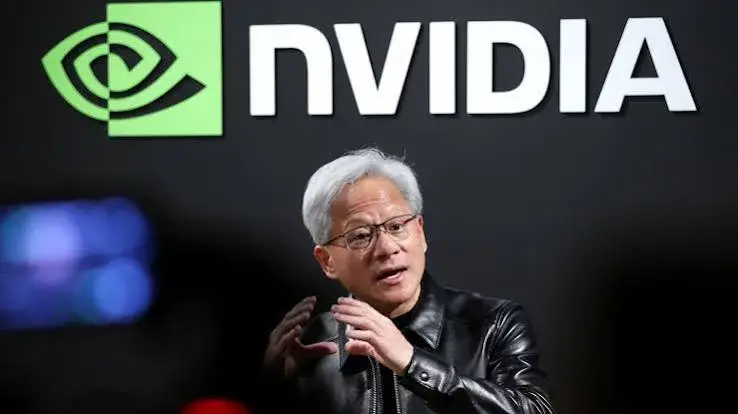
Nvidia founder Jensen Huang has offered to return as the company's chief executive. He says he would accept the position if the board approves.
Huang made the announcement in a personal statement released on Tuesday, November 17, 2026.
It marks his first public statement since leaving the world's leading AI chipmaker.
The former chief executive addressed his departure, personal mistakes and ongoing investigation. He also thanked people who have supported him and his family.
Most importantly, Huang made his position on returning clear.
He said he would be honoured to resume leadership if directors consider it beneficial.
His statement follows an extraordinary week for the technology company. Nvidia's board accepted his resignation on November 11, effective immediately. The company announced the leadership change publicly on November 12.
Huang admits mistakes and apologises to Nvidia's board
In his statement, Huang acknowledged that his personal actions fell below Nvidia's expected standards.
He also admitted creating problems for the company's board. He expressed deep regret and accepted responsibility.
Huang wrote
"I did not live up to the standards expected of everyone at NVIDIA, and I have made serious mistakes in my personal life."
He continued by acknowledging the difficulties his actions created for the board.
He also promised to cooperate with its independent investigation.
This acknowledgement follows an earlier apology issued on November 8. In that message, Huang admitted being unfaithful to his wife.
He apologised to his family, colleagues, shareholders and business partners. He also asked the public to respect his family's privacy.
The November 17 statement does not disclose additional details. It does not identify everyone involved in the matters under investigation.
Huang also emphasised his commitment to the United States. He said he arrived in America 53 years ago.
He described becoming an American citizen as one of his proudest moments. He credited the country with creating opportunities for companies like Nvidia.
He also described building Nvidia alongside his colleagues as a privilege.
Jensen Huang says he would return if Nvidia's board agrees
The most significant part of Huang's statement concerned his possible comeback.
He said employees, investors, business partners and customers had contacted him. According to Huang, many have encouraged him to return.
He also said people continue reaching out directly. He explained that Nvidia is navigating complicated business and geopolitical challenges.
Huang described the company as a once-in-a-generation organisation.
He then made his offer conditional on the board's decision.
"If the Board of Directors decides that my return is in the best interest of our shareholders, our employees, the company, and America, I would be honored to answer these calls and return as CEO."
His wording is important for understanding the situation.
Huang has not announced an immediate return. He has placed the decision entirely in the board's hands.
His statement also does not establish that the directors have reconsidered their earlier succession plans.
Reuters reported on November 16 that Nvidia's board was not considering reinstating him. The report cited three people familiar with the board's thinking.
The company had already announced plans to search for a permanent chief executive. It said candidates could come from inside or outside Nvidia.
Consequently, Huang's offer creates a new development. However, there is no confirmed board decision approving his return.
Nvidia investigates concerns as leadership changes
Huang's departure followed reports involving his personal relationships. The developments also raised questions about national security and Nvidia's international business relationships.
On November 8, Nvidia announced an independent investigation. The company said it was examining reports that Huang had been targeted by a foreign intelligence effort.
The board said it had no reason to believe national security or Nvidia's secrets had been compromised.
However, it said the investigation would examine all available information.
On November 10, independent directors appointed former acting US Attorney Joon H. Kim and his law firm, Wachtell, Lipton, Rosen & Katz, to conduct the investigation.
Reports also raised questions about Alice Huang, a former senior executive and controlling shareholder of Singapore-based technology company Megaspeed.
US intelligence agencies reportedly suspect links between her and Chinese intelligence. Megaspeed has also faced scrutiny over possible diversion of restricted Nvidia chips to China.
The company has denied wrongdoing.
These remain separate allegations and investigative questions. No published finding has established that Nvidia's secrets were compromised.
Meanwhile, Nvidia has introduced another important governance measure.
On November 17, the company announced a new National Security and Export Control Oversight Committee.
The committee will oversee national security policies and export-control compliance. It will also supervise the company's global trade risk management.
Director Suzanne Nora Johnson will chair the committee. Directors Stephen C. Neal and John O. Dabiri will serve alongside her.
The committee will meet at least once every quarter. It will also work with independent legal and national security experts.
Nvidia said its existing National Security and Global Trade Compliance teams would report directly to the committee. Interim CEO Colette Kress will oversee their daily operations.
Reuters reported that it was not immediately clear whether the new committee was created specifically because of the Huang controversy.
The development nevertheless represents a significant change in board-level oversight.
Colette Kress leads Nvidia as Huang's future remains uncertain
Following Huang's resignation, Nvidia appointed Colette Kress as interim chief executive.
Kress previously served as the company's executive vice president and chief financial officer. She joined Nvidia in September 2013.
She will continue handling her financial responsibilities while serving as interim CEO.
Nvidia's board also appointed Harvey C. Jones as its first-ever chairman.
Jones has served on Nvidia's board since 1993. He will play an important role in the company's governance during the transition.
The board has said it will consider internal and external candidates. It has not publicly announced a permanent replacement.
Huang's departure is particularly significant because of his long relationship with Nvidia.
He co-founded the company in 1993 and led it for approximately 33 years.
Under his leadership, Nvidia became a central supplier of processors used in artificial intelligence and advanced computing.
Its technology supports major data centres and AI development worldwide.
His influence also extended beyond product development. He became one of the most recognisable executives in the global technology industry.
His possible return therefore raises important questions about corporate leadership and accountability.
For Nvidia, the challenge involves maintaining business confidence while addressing governance concerns. The company must also continue its technology development and international operations.
For now, Kress remains responsible for daily leadership. Huang's proposed return remains subject to a board decision.
What happens next in Jensen Huang's possible comeback?
Huang's November 17 statement has placed his possible return back into public discussion.
However, several important issues remain unresolved.
The independent investigation must establish its findings. The board must also determine the company's permanent leadership arrangements.
Huang has committed to cooperating with investigators. He has also expressed gratitude to those supporting him and his family.
His closing message was directed towards his family.
He expressed love for them and promised to spend his life becoming worthy of their support.
Meanwhile, Nvidia is entering an important period. Its board is strengthening national security oversight while managing the leadership transition.
The company is also scheduled to release its third-quarter fiscal 2027 financial results on November 17.
Investors will be watching its financial performance alongside the leadership developments.
Ultimately, Huang has made his position clear. He is willing to return, but he cannot make that decision alone.
The final decision rests with Nvidia's board of directors.