
Dubai Ranks World’s Second-Highest Intelligent City as AI Transforms Urban Life
Dubai has emerged as the world’s second-highest-ranked intelligent city, highlighting its rapid adoption of AI and smart technologies to transform urban life and services.
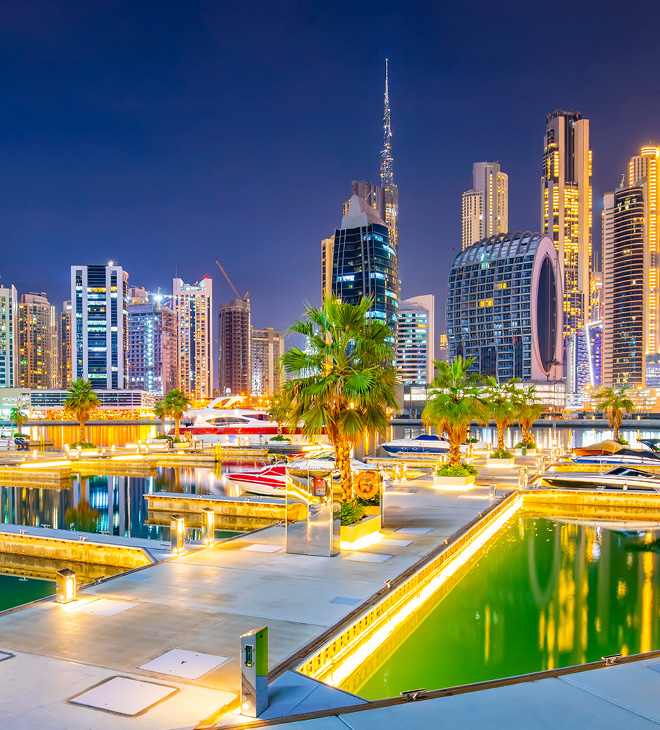
Dubai has been ranked the world’s second-leading intelligent city, placing ahead of major global technology and financial centres including New York, Washington and Amsterdam in a new international assessment of how cities are using artificial intelligence and digital technology to improve everyday life.
The ranking comes from the inaugural Boston Consulting Group (BCG) Intelligent Cities Index 2026, which assessed 61 major cities across 39 countries on their ability to use technology to serve residents and businesses. Only London ranked higher than Dubai.
The result puts Dubai at the centre of a rapidly changing global conversation about what makes a city “intelligent”. Rather than measuring technology simply by the number of futuristic projects a city can showcase, BCG examined five areas: resident outcomes, strategy, technology adoption, ways of working and enabling conditions such as infrastructure, talent, funding and ecosystems.
Dubai's strongest performance came in technology and AI adoption, where it ranked first among the cities assessed. The finding suggests that the emirate's advantage is not simply its investment in digital infrastructure, but how extensively those technologies are being incorporated into services used by residents, businesses and government institutions.
That distinction is increasingly important as cities around the world race to incorporate artificial intelligence into public services.
AI-powered systems are being used to improve everything from government transactions and transport management to customer services and urban planning. BCG's research found a broader relationship between AI adoption and resident outcomes, with cities in the top third for AI adoption recording stronger quality-of-life outcomes.
Dubai's position also reflects the emirate's long-running strategy of building a digital-first government and economy. Over the years, authorities have pushed a wide range of online government services, smart-city applications and artificial intelligence initiatives, creating an environment in which residents increasingly interact with public institutions digitally.
The city's performance is particularly striking when compared with some of the world's most established technology centres. New York ranked third, followed by Washington and Amsterdam, meaning Dubai was the only Middle Eastern city in the top five of the inaugural BCG ranking.
Another UAE city also made the list. Abu Dhabi ranked 20th, placing it in the “accelerating” maturity category. BCG said the two UAE cities demonstrate different strengths, with Dubai standing out for adoption while Abu Dhabi benefits from strong enabling conditions.
The ranking is also part of a wider transformation in how governments think about technology.
For years, the idea of a smart city was largely associated with sensors, connected infrastructure, automated traffic systems and digital government portals. The rise of generative AI is now pushing the concept further. Cities are increasingly expected to use technology not only to automate services but also to make them more responsive, personalised and predictive.
BCG found that cities with higher levels of generative AI use also tend to have residents who are more optimistic about AI's potential to improve productivity, opportunity and quality of life. The research identified particularly strong AI momentum among residents in Africa, Asia and the Middle East, as well as among younger urban populations.
But Dubai's ranking also comes with an important qualification: being an intelligent city is not simply about having the most advanced technology.
BCG found that even the world's leading cities have areas where they can improve. The consultancy's research suggests that successful cities need a balance between technology, governance, infrastructure, funding, talent and the ability to translate innovation into meaningful outcomes for residents.
That is where Dubai's achievement becomes particularly significant.
The emirate has spent years positioning itself as a global technology, business and innovation hub, attracting international companies, entrepreneurs and investors while simultaneously building digital systems into everyday government and commercial activity.
The latest ranking provides another international measure of how far that strategy has progressed.
It also adds to Dubai's strong performance in other global smart-city assessments. In the 2026 IMD Smart City Index, Dubai ranked sixth globally among 148 cities, making it the highest-ranked city in the Middle East and North Africa, while Abu Dhabi placed 10th.
The difference between the two rankings is important: the BCG index specifically examines intelligent-city maturity and the use of AI and digital technology, while the IMD ranking focuses more broadly on how residents experience technology, infrastructure, governance and quality of life.
Together, however, they point to the same broader trend—Dubai is becoming one of the world's most prominent laboratories for technology-driven urban development.
For FollowGlobalTrends, the bigger story is not simply that Dubai has moved into second place on another global list. It is that the definition of a successful city is changing.
The cities competing for global influence are no longer judged only by skyscrapers, airports and financial centres. Increasingly, they are being measured by how intelligently they use data, artificial intelligence and digital infrastructure to make life easier for the people who live and work there.
Dubai's rise to second place suggests that the future city is already taking shape—and the race to build it is becoming a global competition.
More on Technology

Technology
Dell Posts Record $47 Billion Quarter, Lifts Revenue Forecast Again
11 Sept 2026
Technology
UAE, France Launch Altair NextGen to Lead the World in AI-Powered Space Technology
9 Sept 2026

Technology
Meta Retreats From Bigger AI Layoffs After Agents Fail to Deliver Expected Gains
30 Aug 2026
Technology
Spotify to Put AI Badge on Virtual Artists as Music’s Digital Era Expands
12 Aug 2026
Technology
China Makes Floating Wind History as 16MW Platform Begins Powering Offshore Operations
9 Aug 2026
You may also like
Technology
Anthropic CEO Urges AI Industry to Slow the Race as Safety Concerns Grow
13 Sept 2026

Technology
Nigerian Pastor Launches Interlink, Claims New Era of Digital Connectivity
13 Sept 2026

Technology
Singapore National Pleads Guilty to $245m Bitcoin Heist in US
11 Sept 2026

Technology
Apple Unveils iPhone Duo, Its First-Ever Foldable Smartphone
10 Sept 2026

Technology
Historic Win: Mary-Brenda Akoda Becomes First Woman to Earn NLNG Science Prize
9 Sept 2026
Technology
Hackers Drain $320 Million in Bitcoin From Liquid Network Wallet
7 Sept 2026