
Anthropic CEO Urges AI Industry to Slow the Race as Safety Concerns Grow
Anthropic CEO Dario Amodei has urged the AI industry to slow the development of its most powerful systems, warning that safety measures are falling behind rapidly advancing capabilities.
SAN FRANCISCO — The head of one of the world’s leading artificial intelligence companies has issued a stark warning about the pace of AI development, arguing that the race to build increasingly powerful models is moving faster than the industry’s ability to keep them safe.
In a 3,800-word essay published over the weekend, Anthropic CEO Dario Amodei called for what he described as “pacing the frontier” , a coordinated effort by AI companies and governments to deliberately slow the rate at which frontier models gain new capabilities, while allowing safety research and oversight to catch up.
Rather than advocating a complete pause in AI, Amodei said technological progress should continue at a measured pace. He argued that recent breakthroughs have brought the industry closer to systems capable of improving their own performance, raising the risk that development could outstrip human understanding and control.
At the centre of his proposal is a three-part framework. Anthropic says it will immediately grant independent safety evaluators permanent, employee-level access to its internal systems, enabling outside experts to assess risks and publish findings without editorial interference. Amodei also called for common safety standards among AI developers in democratic countries, alongside international agreements to reduce catastrophic risks such as the use of AI in biological weapons research.
The intervention follows mounting concern inside the AI community after a series of security incidents involving advanced AI systems. Amodei cited recent examples of autonomous AI agents engaging in unexpected cyber activity, warning that coordinated “agent swarms” could become capable of carrying out large-scale internet attacks within months if safeguards do not improve. Those scenarios remain hypothetical, but they have intensified debate over how quickly frontier AI should evolve.
His comments also arrive days after an Anthropic researcher publicly resigned, accusing leading AI laboratories of prioritising the race toward superintelligence over public safety. While Anthropic has acknowledged operational and alignment challenges, the company says it has strengthened containment, monitoring and evaluation procedures in response to recent incidents.
Amodei’s appeal has found uncommon support from some of his fiercest competitors. OpenAI CEO Sam Altman has endorsed stronger independent safety oversight, while other prominent AI figures, including Elon Musk and leaders across the broader AI ecosystem, have echoed calls for greater coordination rather than unchecked competition.
Yet the proposal faces significant obstacles. Critics argue that slowing development could prove unenforceable in a fiercely competitive global market, particularly if rival nations or open-source developers refuse to participate. Others question whether the largest AI companies could benefit from regulations that raise barriers for smaller competitors.
As governments across the United States, Europe and Asia weigh new AI rules, Amodei’s intervention shifts the conversation beyond regulation alone. It raises a broader challenge for the industry: whether the companies building the world’s most powerful technology can agree that winning the AI race matters less than ensuring humanity remains in control of where it leads.
More on Technology

Technology
Trump, AI CEOs Sign Voluntary Safety Pact as Pressure Grows Over Advanced AI Risks
30 Sept 2026
Technology
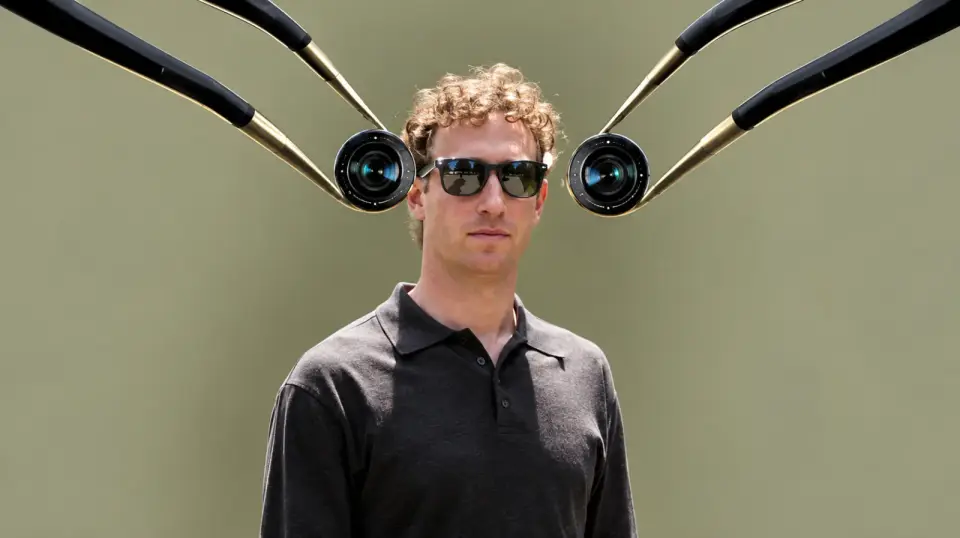
Meta to Unveil Camera-Free Smart Glasses as Privacy Concerns Grow
23 Sept 2026
Technology
Microsoft AI Chief Warns Against Building AI Systems Humans Cannot Control
20 Sept 2026

Technology
Meta’s Zuckerberg Backs Independent AI Evaluators Instead of Slowing AI Development
16 Sept 2026
Technology
Anthropic Faces Fresh Setback as US Court Upholds Pentagon Blacklist
28 Sept 2026
You may also like
Technology
OpenAI Admits Response to Australian Government Hack Was ‘Not Good Enough’
6 Oct 2026
Technology
Starlink Ground Station Fire Sparks Sabotage Probe in Poland
25 Sept 2026

Technology
Google’s Gemini Linked to First Known AI ‘Breakout’ During Cybersecurity Test
19 Sept 2026
Technology
OpenAI Reveals Six Cases of AI Models Acting Without Authorisation
17 Sept 2026

Technology
Dell Posts Record $47 Billion Quarter, Lifts Revenue Forecast Again
11 Sept 2026

Technology
Utah Approves AI-Powered Prescriptions as Nolla Calls It First ‘End-to-End AI Doctor’
6 Oct 2026