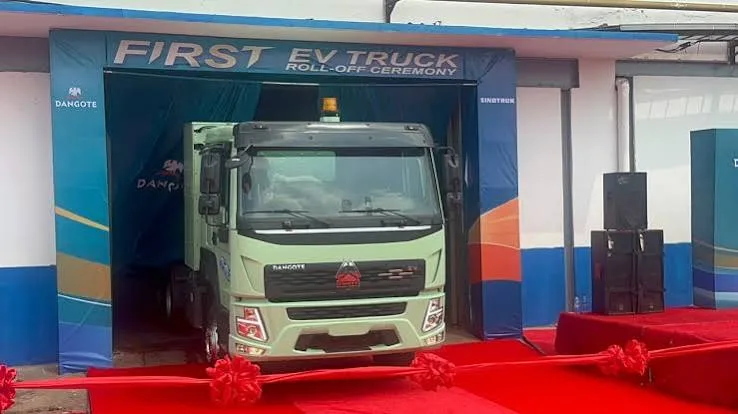
Nigeria’s commercial vehicle sector reached a historic clean energy turning point on Sunday with the rollout of the nation’s first locally assembled electric truck.
Dangote Sinotruk West Africa Limited presented the zero-emission heavy-duty vehicle at its manufacturing and assembly facility in Ikeja, Lagos. Senior executives from Dangote Group, China’s Sinotruk Group, and Lagos State Government officials attended the launch.
Company leaders stated that the new battery-powered truck heralds a fresh era of sustainable transport and green mobility across West Africa.
A Green Milestone at the Ikeja Assembly Plant
Dangote Sinotruk is a joint venture between Dangote Industries Limited and China National Heavy Duty Truck Group. The partnership originally assembled diesel-powered tippers, commercial trucks, and buses for industrial fleets.
Sunday’s launch marks an aggressive expansion into new-energy commercial mobility. The venture plans to supply corporate freight operators seeking to cut fuel expenses and lower their carbon footprint.
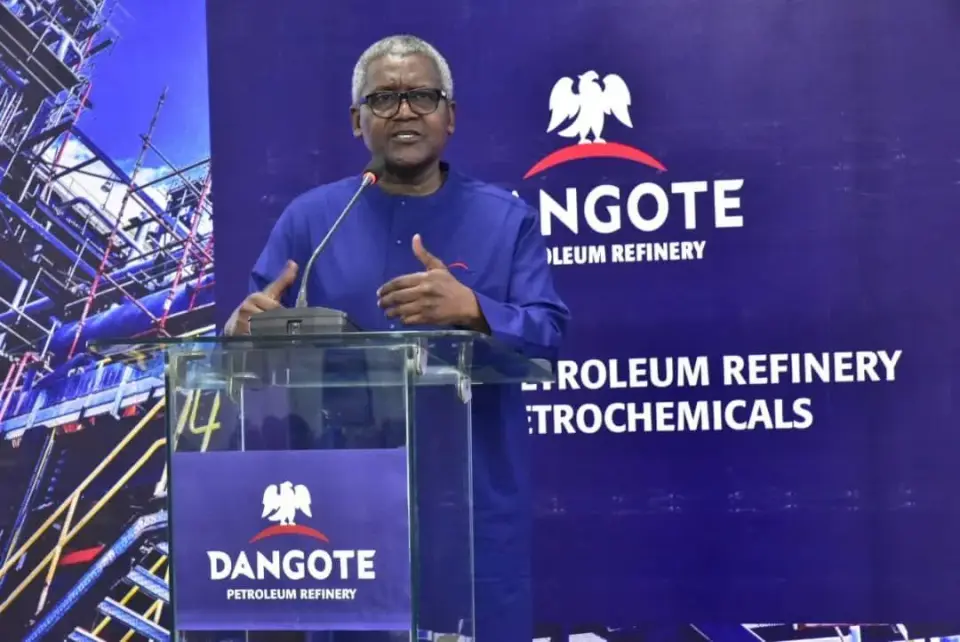
Devakumar Edwin, Group Vice-President of Dangote Industries Limited, described the electric truck rollout as a vital step forward. He noted that the company is adopting advanced technologies to support national environmental targets while lowering operating costs.
Edwin explained that the joint venture evaluated multiple global manufacturers before selecting Sinotruk to build local technical capacity and create skilled manufacturing jobs.
Technical Specifications and Ultra-Fast Charging
The unveiled vehicle is a 4x2 electric cargo truck engineered specifically for regional freight hauling and urban logistics.
The truck features a 100-kilowatt-hour power battery pack coupled with a 95-kilowatt high-efficiency electric motor. On a full charge, the commercial hauler delivers a comprehensive driving range of approximately 200 kilometres.
Alongside the vehicle, engineers demonstrated a dedicated 400-kilowatt ultra-high-power DC fast charger.
The charging unit incorporates a balanced dual-gun output system. This design allows two commercial vehicles to recharge rapidly at the same time, reducing depot turnaround delays.
Shifting from Gas to Battery-Powered Logistics
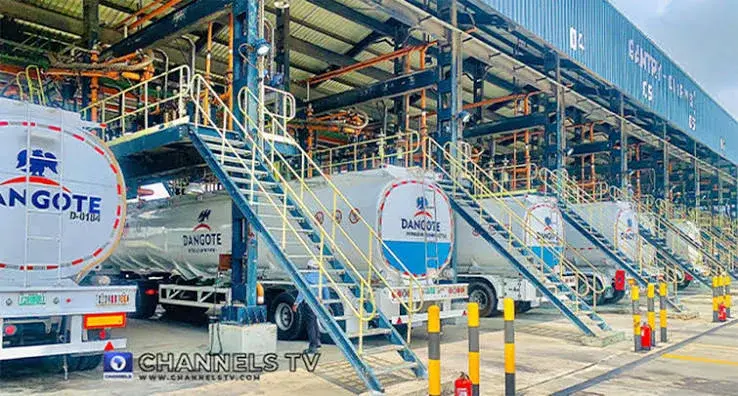
The transition to battery power builds on Dangote’s earlier investments in compressed natural gas (CNG) commercial vehicles.
As domestic fuel costs rose following the removal of petrol and diesel subsidies, commercial transporters searched for viable fuel alternatives. Dangote Sinotruk initially deployed CNG trucks across major haulage routes to ease distribution expenses.
Edwin noted that global freight markets are moving decisively toward zero-tailpipe-emission vehicles. Electric drive systems eliminate oil changes, reduce brake wear through regenerative braking, and cut engine maintenance costs.
By assembling the trucks locally in Lagos, the joint venture aims to lower vehicle retail prices compared to fully built foreign imports.
Charging Infrastructure and Industry Adoption
Automotive analysts agree that widespread adoption will depend heavily on the availability of reliable charging stations along Nigeria’s freight corridors.
To support fleet operators, Dangote Sinotruk announced that it is establishing dedicated after-sales facilities, stocking critical spare parts, and training Nigerian technicians in high-voltage vehicle maintenance.
The company is also working with commercial partners to install heavy-duty fast chargers at strategic logistics hubs across Lagos and neighboring industrial zones.
The initiative places Nigeria on the continental map for clean commercial vehicle manufacturing, setting a new benchmark for corporate fleet decarbonisation in West Africa.