
Banks Lead as Nigerian Companies Raise ₦2.45 Trillion on NGX
Over 40 companies raised ₦2.45 trillion on Nigeria’s NGX in nine months, with banks accounting for ₦883.8 billion amid a strong stock market rally.
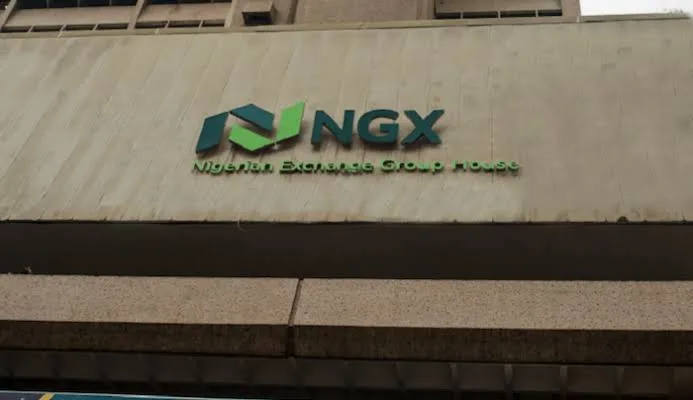
More than 40 companies raised a combined ₦2.45 trillion through Nigeria’s capital market between January and September 2026, with banking institutions among the biggest contributors as businesses turned to the Nigerian Exchange Limited (NGX) to secure fresh funding.
The fundraising covered public offers, private placements and supplementary share listings, according to figures reported by THISDAY on Sunday, October 18, citing data on corporate listings on the NGX. The activity reflects the exchange’s role in helping companies obtain equity financing at a time when businesses continue to navigate economic pressures and the cost of borrowing. Seven major financial services groups: Fidelity Bank, United Bank for Africa (UBA), FCMB Group, First HoldCo, Access Holdings, Sterling Financial Holdings Company and Guaranty Trust Holding Company (GTCO), accounted for approximately ₦883.8 billion of the reported listings.
Their fundraising activities were closely linked to regulatory requirements introduced by the Central Bank of Nigeria (CBN), which directed banks to raise their minimum paid-up capital to specified thresholds by March 2026. The exercise prompted lenders to pursue rights issues, private placements and other capital-raising transactions to strengthen their capital positions and meet the new requirements.
FCMB Group recorded listings valued at ₦231.83 billion during the period, while Fidelity Bank listed ₦227.05 billion. UBA and First HoldCo recorded ₦157.8 billion and ₦128.7 billion, respectively, from rights issues and private placements admitted to the exchange in January. Sterling Financial Holdings recorded ₦106.978 billion, while Access Holdings listed ₦21.4 billion. GTCO also listed ₦10 billion following a private placement involving 125 million ordinary shares priced at ₦80 each.
Beyond the banking sector, Dangote Sugar Refinery raised ₦485.88 billion through a rights issue, making it one of the largest individual corporate fundraising transactions identified in the report. Other companies that raised capital or listed additional shares included Abbey Mortgage Bank, Guinea Insurance, Regency Alliance Insurance, SUNU Assurances Nigeria, Sovereign Trust Insurance, Neimeth International Pharmaceuticals, Critical Minerals Financing Corporation and Eunisell Interlinked.
The transactions varied considerably in size, reflecting the different funding needs of large financial institutions, insurance companies, manufacturers and other businesses. While some firms sought to comply with regulatory capital requirements, others pursued financing to support their operations and corporate expansion.
The fundraising activity coincided with a strong rally in the Nigerian equities market. The NGX All-Share Index, the benchmark measure of stock market performance, gained 61.43 per cent between the end of December 2025 and September 30, 2026, rising from 155,613.03 points to 251,211.67 points.
The market’s total equity capitalization also expanded from approximately ₦99.38 trillion at the end of 2025 to ₦163.10 trillion by September 30, representing an increase of about ₦63.73 trillion. However, growth in market capitalization reflects changes in the market value of listed shares and should not be confused with fresh cash raised by companies.
Aruna Kebira, managing director of Globalview Capital Limited, attributed the increase in capital-raising activity partly to improved investor confidence, greater transparency and technological developments that have made participation in the market easier for retail investors.
He also pointed to the T+1 settlement cycle, which allows eligible securities transactions to settle one business day after the trade date, as one of the developments supporting market participation. The growing use of digital platforms and distribution channels has also helped investors access public offers without relying entirely on traditional paper-based processes.
The Nigerian Exchange Group has separately reported that its NGX Invest platform facilitated approximately ₦2.8 trillion of the ₦4.65 trillion raised during the banking sector’s 24-month recapitalization exercise. The platform was introduced to streamline subscriptions to public offers and rights issues, connecting investors with opportunities through brokers, banks, fintech companies and other financial service providers.
Nevertheless, the increase in capital raised does not automatically mean that all participating companies will deliver stronger profits, higher dividends or immediate employment growth.
Patrick Ajudua, national chairman of the New Dimension Shareholders Association, cautioned that investors still face risks even when companies successfully raise new funds. He noted that some businesses may reward shareholders, while others may fail to translate fresh capital into improved returns.
For companies, the long-term benefit of equity financing depends partly on how effectively the proceeds are deployed. Unlike conventional borrowing, equity does not require scheduled interest payments, but it can dilute existing shareholders’ ownership and places greater importance on corporate performance, governance and the efficient use of investors’ money.
The ₦2.45 trillion fundraising total therefore represents more than activity on the exchange’s listing boards. It highlights the role of Nigeria’s capital market in financing businesses, supporting regulatory reforms and providing alternatives to bank lending. Whether the capital raised translates into stronger companies, expanded productive capacity and sustainable shareholder returns will depend on what businesses achieve with the funds and how effectively they account for their use.
More on Business
Business
SoftBank-Backed OPay Files for New York IPO, Eyes $4 Billion Valuation
14 Oct 2026

Business
Moove Exits Nigeria, Transfers ₦35 Billion Worth of Vehicles to Customers
8 Oct 2026
Business
Elon Musk’s Fortune Jumps $65 Billion in One Day to Hit $1.04 Trillion
7 Oct 2026

Business
Bumble Agrees to $1.3 Billion Buyout as Revenue and Paying Users Fall
14 Oct 2026
Business
Dangote Refinery Pushes Nigeria’s Petrol Imports Down as Local Supply Hits 71%
26 Sept 2026
Partner with Follow Global Trends
Display banners, sponsored stories and founder spotlights.
You may also like
Business
Dangote Refinery Strengthens Balance Sheet as Debt Falls to ₦7.9tn
10 Sept 2026
Business
Nigerian Breweries Goes Debt-Free as Cash Generation Jumps 264% in H1
9 Sept 2026
Business
Amazon AWS to Invest More Than $1 Billion in US Data Centre Communities Over Five Years
3 Oct 2026
Business
Germany Brings Rheinland-Pfalz Wines to Lagos in Push for West African Market
30 Sept 2026
Business
Nigeria Seals Three US Mining Investment Deals Across Technology, Energy and Security
28 Sept 2026
Business
Dangote Refinery’s Profit Soars to $4.7bn as ₦2.15tn IPO Deadline Moves to October 27
13 Oct 2026