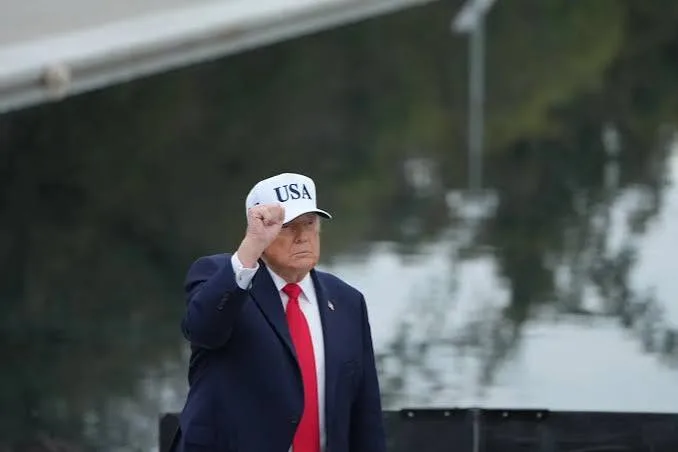
President Donald Trump announced on Tuesday that the United States plans to halt annual US aid to Israel by the end of the year.
Speaking in a televised morning interview, Trump stated that Washington intends to terminate roughly $4 billion in annual assistance. He described the proposed policy shift as a joint understanding reached with Israeli Prime Minister Benjamin Netanyahu.
The American leader argued that the close ally no longer requires direct financial support, describing the nation as economically thriving and fully capable of financing its own defense needs.
Transitioning from Grants to Direct Commercial Sales The proposal outlines a fundamental change in how Washington manages bilateral security cooperation.
Under the outlined approach, the United States will end taxpayer-funded grants while continuing to authorize commercial arms purchases. Trump explained that the two nations had discussed phasing out financial transfers for several years, noting that Israeli leadership initially welcomed reducing reliance on foreign assistance.
The administration affirmed that halting monetary subsidies would not compromise diplomatic ties, emphasizing that Washington remains committed to supporting its ally during critical security emergencies.
Legislative Framework and Existing Security Agreements The prospective termination of US aid to Israel faces complex legal and legislative procedures in Washington.
Current defense funding operates under a formal ten-year bilateral memorandum of understanding signed in 2016. That framework commits roughly $3.8 billion annually in Foreign Military Financing and collaborative missile defense allocations through the 2028 fiscal year.
Altering or terminating the longstanding arrangement would require formal consultations with the United States Congress. Lawmakers hold constitutional authority over federal appropriations and have historically maintained strong bipartisan support for security assistance packages.
Strategic Repercussions for Regional Defense Policy Ending direct financial transfers marks a notable strategic pivot in Middle Eastern foreign policy.
Supporters argue that ending US aid to Israel reflects economic reality, as the ally boasts an advanced domestic defense manufacturing sector and high gross domestic product. Analysts note that purchasing weapons independently could give regional partners greater operational autonomy in procurement decisions.
However, diplomatic observers caution that any abrupt halt to US aid to Israel could trigger intense congressional debate over international treaty commitments, foreign military sales protocols, and broader regional deterrence posture.