
Sydney Rattled by 3.4-Magnitude Earthquake as Hundreds Feel Ground Shake
A magnitude 3.4 earthquake has rattled Sydney’s south-west, with hundreds of residents reporting sudden shaking but no significant damage or injuries.
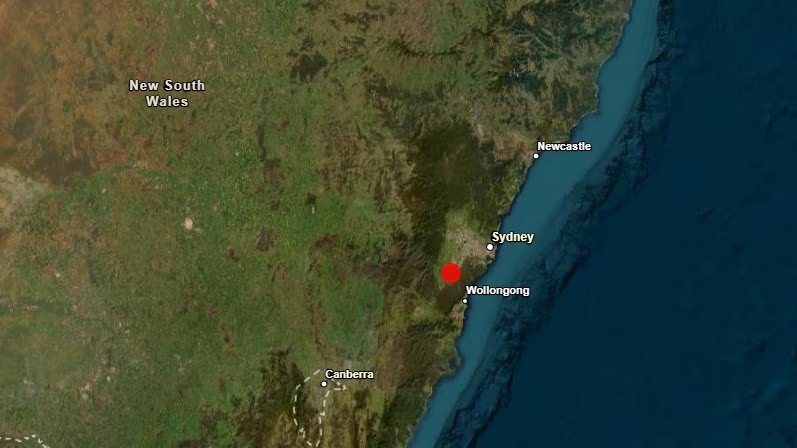
Sydney’s south-west has been jolted by a magnitude 3.4 earthquake, startling residents and prompting hundreds of reports of shaking across the metropolitan area.
The tremor struck shortly after 1pm local time on Friday near Appin, south of Sydney, with the epicentre close to Douglas Park. The earthquake was relatively shallow, at a depth of about three kilometres, which helped make the movement noticeable across surrounding communities.
Almost 400 people had reported feeling the earthquake through Geoscience Australia’s reporting system, according to local reports. Residents described houses and apartments shaking, while some said the event began with a loud bang or rumble before the movement subsided.
The shaking was particularly noticeable around Sydney’s south-west, including areas around Campbelltown and Wollondilly. One resident described the sensation as similar to a collision with a building, while others reported that the shaking lasted several seconds.
There were no immediate reports of significant structural damage or injuries. The relatively modest magnitude also means the event was not in the same category as the destructive earthquakes that have occasionally affected New South Wales.
Friday’s tremor is nevertheless a reminder that earthquakes are not unusual in Australia. Geoscience Australia says the country experiences more than 100 earthquakes above magnitude 3 every year, despite sitting well away from the major tectonic plate boundaries associated with some of the world's most earthquake-prone regions.
Australia's earthquakes occur largely because stresses gradually accumulate within the continent's ancient and fractured crust. When those stresses exceed the strength of rocks along existing faults, the rocks can suddenly shift, producing an earthquake.
The Appin area has experienced seismic activity before. A magnitude 3.5 earthquake struck near Appin in May 2025, also at a shallow depth, and was felt across parts of Sydney's southern suburbs. At the time, Geoscience Australia said the event appeared consistent with normal seismic activity recorded in the region and was not a mine blast.
The latest event also comes during a year in which several earthquakes across New South Wales have been widely felt. A magnitude 4.4 earthquake near Boorowa in March generated more than 7,000 felt reports, including from Sydney, while a magnitude 4.5 event south of Orange in April was felt across a large part of the state.
For residents who experience shaking, Geoscience Australia's advice is straightforward: drop, cover and hold on. People are advised to get down, protect their head and neck under sturdy furniture where possible, and remain there until the shaking stops and it is safe to move.
The latest Sydney earthquake was not large enough to cause the sort of widespread destruction associated with major seismic disasters, but its reach is a useful reminder that Australia's relatively stable reputation does not mean it is earthquake-free. As Sydney continues to expand across areas where seismic events can occur, Friday's sudden jolt reinforces the importance of understanding local earthquake risk, maintaining resilient infrastructure and knowing how to respond when the ground unexpectedly starts moving.
More on Weather
Weather
Colombia Hit by Powerful 7.4-Magnitude Earthquake as Damage Assessment Begins
10 Aug 2026

Weather
7.0-Magnitude Earthquake Hits China’s Tibet, Killing at Least 16
23 Oct 2026
Weather
24 Canadians Among Hundreds Missing After Deadly Nepal Floods
27 Aug 2026

Weather
Indonesia Quake Turns Morning Into Chaos as 20 Die and Thousands Flee
15 Aug 2026

Weather
UAE Feels First Autumn Chill as Temperatures Hit 18.6°C
29 Sept 2026
Partner with Follow Global Trends
Display banners, sponsored stories and founder spotlights.
You may also like

Weather
Bangkok Declared Disaster Zone as Heavy Rains Cause Severe Flooding
26 Sept 2026
Weather
Anambra Flood Tragedy: One Schoolchild Missing as Police Rescue Nine From Submerged Bus
23 Sept 2026

Weather
Autumn to Begin in UAE on September 23 as Temperatures Set to Gradually Fall
21 Sept 2026
Weather
UAE Weather Turns Unsettled Again as Rain Hits Al Ain and Shawkah
26 Aug 2026

Weather
Abu Dhabi Hit by Heavy Rain and Lightning as Unstable Weather Sweeps Capital
21 Aug 2026
Weather
Europe Caught in Eclipse Fever as Protective Glasses Fly Off Shelves
12 Aug 2026