
Spain Falls Into Darkness as Rare Total Solar Eclipse Draws Millions and Lights Up Tourism
The Moon's shadow crossed Spain from the north-west towards the Mediterranean, with totality lasting roughly one to two minutes depending on location.
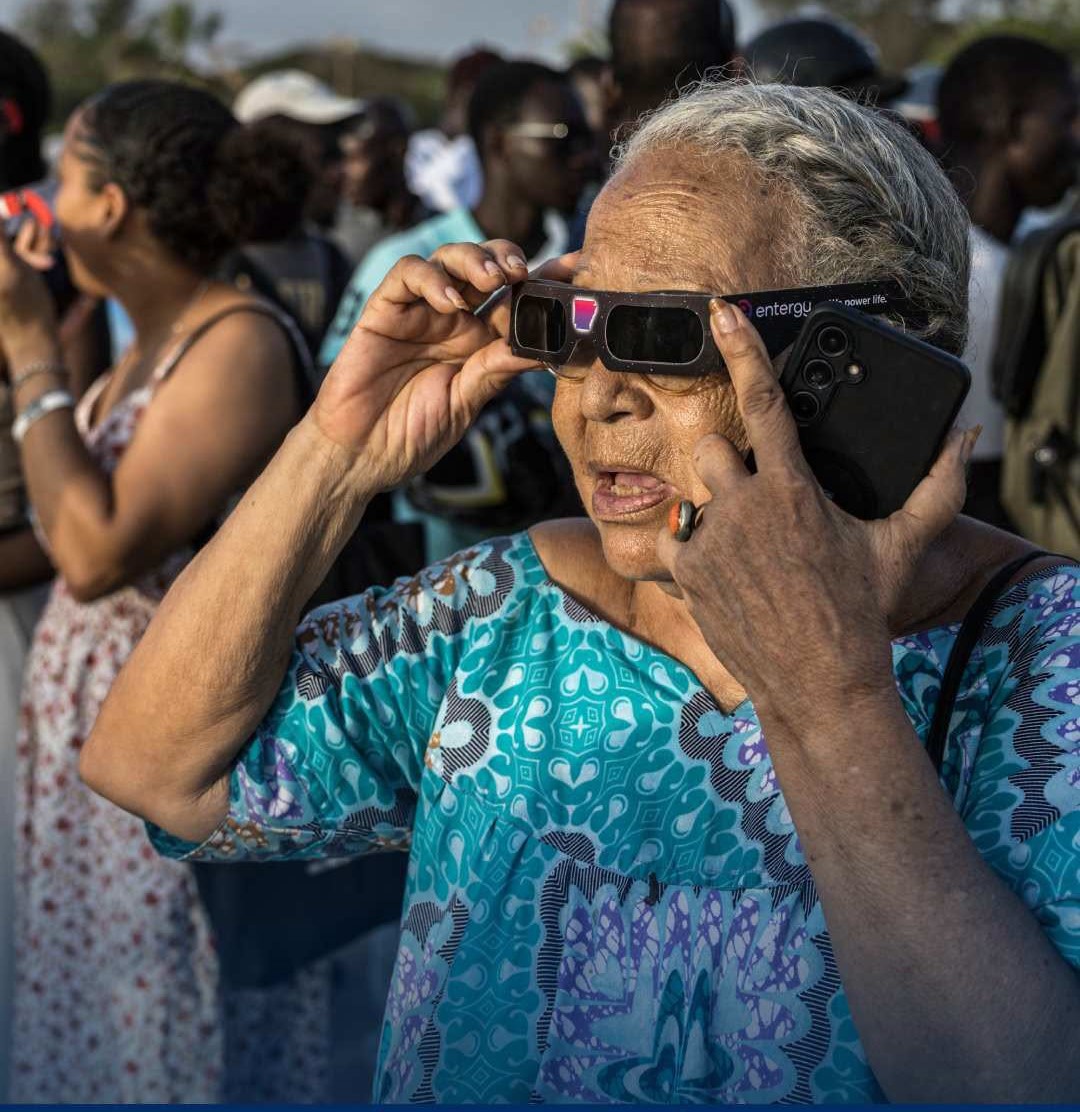
Spain briefly lost the daylight on Wednesday as the Moon passed directly between the Earth and the Sun, turning parts of the country dark in the middle of the evening in one of the most anticipated celestial events in decades.
The August 12 total solar eclipse was the first total eclipse visible from mainland Spain in more than a century, transforming northern Spanish towns, coastal areas and parts of the Balearic Islands into enormous open-air observatories. Millions of spectators gathered along the path of totality, many travelling long distances for a glimpse of the few precious moments when the Sun disappeared completely.
For a country accustomed to attracting visitors with beaches, architecture and food, Wednesday offered a very different tourism proposition: the chance to watch daytime turn into night.
The Moon's shadow crossed Spain from the north-west towards the Mediterranean, with totality lasting roughly one to two minutes depending on location. In places such as Buitrago de Lozoya, north of Madrid, spectators watched the sky darken rapidly before the solar corona emerged around the black silhouette of the Moon. Applause and cheers erupted as totality arrived.
The experience was as much emotional as astronomical.
For observers standing inside the narrow path of totality, the sudden transformation was striking. Temperatures fell, the light changed dramatically and stars became visible while the Sun's normally overwhelming brightness was replaced by the delicate glow of its outer atmosphere.
That brief period of darkness was the reason thousands of people had travelled into parts of Spain that are not traditionally among the country's biggest tourist destinations.
A tourism boom written in the stars
The eclipse created a major opportunity for Spain's rural communities, particularly areas in the north and interior that are often overshadowed by Madrid, Barcelona and the country's famous Mediterranean resorts.
Hotels and accommodation in several cities and towns along the eclipse route filled rapidly, while restaurants, transport operators and local businesses prepared for an influx of visitors.
Reuters reported that Spain expected up to six million people to gather in rural observation areas, while authorities mounted an unusually large security and traffic operation to manage the crowds. More than 25,000 police officers and around 100 aircraft were deployed as part of preparations.
The result was a rare example of astronomy becoming a major tourism driver.
Small communities suddenly found themselves at the centre of international attention, while locations with clear skies and low light pollution became prized viewing destinations.
The eclipse has effectively demonstrated the growing appeal of astrotourism—travel organised around astronomical events and dark-sky experiences.
For Spain, the timing is particularly interesting because the country is not finished with eclipses.
Spain's eclipse story is only beginning
Wednesday's spectacle is the first of what is being described as an unusual sequence of major solar events for Spain.
Another total solar eclipse is expected in 2027, followed by an annular eclipse in 2028. The sequence has already encouraged tourism planners and astronomy enthusiasts to think beyond a single event and towards a multi-year eclipse tourism opportunity.
That could be particularly valuable for less-visited parts of the country.
Instead of tourists concentrating around Barcelona, Madrid, the Costa del Sol or the Balearic beaches, eclipse tourism can direct visitors towards inland communities where the economic benefits of international tourism are often less evenly distributed.
In that sense, Wednesday's darkness may have illuminated something important for Spain's tourism industry: people will travel surprisingly far for a rare experience they cannot recreate on a screen.
Science meets spectacle
The eclipse was not simply a tourism event.
Scientists also used the rare alignment to study the Sun's corona and observe how Earth's atmosphere responds to the sudden disappearance and return of solar radiation.
NASA deployed a high-altitude research aircraft to study the solar corona, while other scientific teams conducted experiments in Spain and Iceland. The event therefore provided researchers with a natural laboratory that could not easily be replicated under ordinary conditions.
The eclipse also offered an opportunity to reconnect the public with astronomy.
For a few minutes, millions of people who might never normally attend an observatory or follow space science closely were looking upwards, comparing observations and waiting for totality.
That collective experience may ultimately be one of the event's most lasting effects.
A carefully managed national spectacle
The enormous crowds also presented practical challenges. Authorities had to prepare for traffic congestion, wildfire risks and the movement of large numbers of people into rural locations. Spain deployed thousands of emergency and security personnel, while hundreds of official viewing sites were established.
The preparations reflected a reality that increasingly accompanies major natural spectacles: when millions of people want to see the same thing at exactly the same time, tourism becomes a logistics exercise.
There were some incidents, including traffic problems and isolated emergencies, but the event was largely described as peaceful and successfully managed.
For visitors, the reward was a phenomenon that lasted only minutes but required months of planning.
And that may be precisely what makes a total eclipse so powerful as a tourism experience.
Unlike a monument or theme park, it cannot be visited whenever convenient. There is no second showing later in the evening. Miss totality, and the next opportunity requires another journey—and often years of waiting.
For FollowGlobalTrends, Spain's eclipse is therefore more than a spectacular travel story. It is a reminder of the growing power of experience-driven tourism, where travellers are increasingly willing to organise entire trips around rare moments rather than simply visit conventional attractions.
On Wednesday, Spain offered visitors something no hotel, museum or beach could provide. For a few extraordinary moments, day became night, millions looked up, and an entire country shared the same sky. And with another total eclipse heading across Spain in 2027, the country's celestial tourism story is only just beginning.
More on Travel & Tourism
Travel & Tourism
Riyadh Set to Host New Global Travel Summit as Tourism Ministry Joins WTM
2 Sept 2026

Travel & Tourism
Arabian Travel Market 2026 to Spotlight Dubai’s Resilience and Future of Global Tourism
28 Aug 2026
Travel & Tourism
Fewer Migrants, More Deaths: Central Mediterranean Route Turns Deadlier in 2026
13 Aug 2026

Travel & Tourism
Trump Targets Birth Tourism: US Tightens Rules for Pregnant Travellers
8 Aug 2026
Travel & Tourism
Tunisia Welcomes 5.8 Million Tourists by July as 2026 Travel Boom Accelerates
25 Aug 2026
You may also like
Travel & Tourism
UK Passport Fee Backlash Forces Nigeria High Commission to Refund £50
13 Sept 2026

Travel & Tourism
Canada Expands Study Access for Temporary Foreign Workers
11 Sept 2026
Travel & Tourism
One Visa, Six Countries: GCC Grand Tourist Visa Set to Launch Soon
8 Sept 2026
Travel & Tourism
Mount Anak Krakatau: What to Know About the Volcano Disrupting Indonesia Flights
8 Sept 2026

Travel & Tourism
UK Immigration: Far-Right Protesters Block Asylum Seekers in Southern England
7 Sept 2026
Travel & Tourism
Indonesia Grounds Flights as Anak Krakatau Ash Shuts Jakarta’s Main Airport
6 Sept 2026