Nigeria Escalates South Africa Xenophobia Row to AU, Seeks Collective Action
Nigeria has taken its dispute over recurring attacks on Nigerians and other Africans in South Africa to the African Union, seeking a continental response ahead of a key AU summit in 2027.
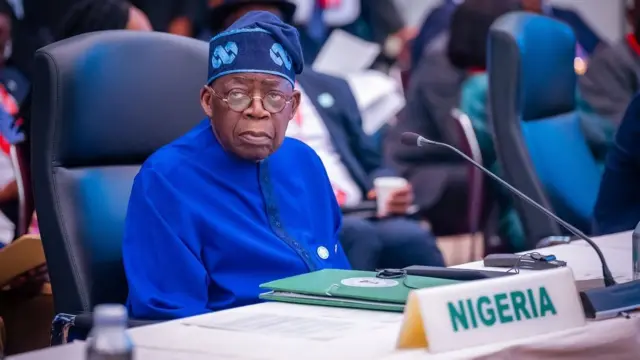
President Bola Tinubu has formally taken Nigeria’s concerns over recurring xenophobic and Afrophobic attacks in South Africa to the African Union, calling for a collective continental response to violence and hostility directed at Nigerians and other African nationals.
Tinubu’s position was delivered by Vice President Kashim Shettima at the 21st Extraordinary Session of the African Union Assembly in Luanda, Angola, on Sunday. The Nigerian president asked the AU to place the issue on the agenda of its 40th Ordinary Session of the Assembly in January 2027, where African leaders could consider what action should be taken.
Nigeria's complaint comes after months of renewed anti-immigrant activity in South Africa, including protests and attacks targeting foreign nationals. Nigerian officials have repeatedly raised concerns that Nigerians and other Africans have been subjected to harassment, intimidation and violence, including incidents affecting people who are legally resident in the country.
Presenting Nigeria's position, Shettima said the government recognised South Africa's right to enforce its immigration laws and acknowledged the country's contribution to the continent. But he argued that immigration enforcement could not justify attacks against African nationals.
Nigeria wants the AU to treat the matter as a continental concern rather than a dispute limited to Abuja and Pretoria. Tinubu called for stronger efforts against xenophobia and Afrophobia and emphasised dialogue, preventive diplomacy and collective action as necessary tools for protecting African unity and peaceful coexistence.
The latest diplomatic push follows increasingly strong language from Abuja. In July, Nigeria's Minister of State for Foreign Affairs, Sola Enikanolaiye, told visiting South African Foreign Minister Ronald Lamola that Pretoria needed to take concrete steps to protect Nigerians and other African migrants. He warned that failure by authorities to tackle the attacks could raise questions about state complicity, while stressing that Nigeria did not support criminal conduct by its citizens.
Nigeria has also taken practical measures to protect citizens caught up in the unrest. The government established a crisis notification mechanism through its diplomatic missions in South Africa, while more than 1,490 Nigerians were evacuated in seven batches, according to Tinubu's July statement. The first group of 258 returnees arrived in Lagos in June.
The latest violence has also had deadly consequences. The Associated Press reported that two Nigerians were killed in South Africa in June amid the wider anti-immigrant unrest. One death was reportedly linked to police action, while the other involved an attack by unidentified individuals. The incidents came during a period of protests driven by demands for tougher action against undocumented migrants.
South African authorities, however, have rejected the idea that the government supports xenophobia. During the July diplomatic discussions, South African officials reiterated opposition to xenophobia, racism and discrimination, while maintaining that the country has a sovereign responsibility to enforce its immigration laws.
The distinction is important because the unrest is rooted partly in South Africa's domestic pressures. High unemployment, crime, poverty and pressure on public services have fuelled resentment towards migrants, while groups such as Operation Dudula and March and March have pushed for tougher immigration controls. Activists involved in the protests have generally framed their demands around undocumented immigration, while critics argue that violence and intimidation have frequently extended beyond people without legal status.
For Nigeria, however, the issue carries an additional historical weight. Abuja has repeatedly reminded Pretoria of Nigeria's support for South Africa's liberation struggle and its contribution to the anti-apartheid movement. Nigerian officials argue that the relationship between the two countries should not be reduced to disagreements over immigration when both have played central roles in shaping post-apartheid Africa and continental institutions.
The dispute also has economic implications. Nigeria and South Africa are two of Africa's largest economies, with significant commercial links and substantial populations of citizens and businesses operating across each other's markets. Previous outbreaks of xenophobic violence have triggered calls for retaliation against South African interests in Nigeria, prompting Nigerian authorities to warn against reprisal attacks.
Tinubu's decision to elevate the matter to the AU therefore marks a shift from bilateral complaints towards continental diplomacy. The Nigerian government is seeking to make the protection of Africans in other African countries a broader regional principle, while avoiding a direct confrontation that could damage relations between two of the continent's most influential states.
The significance of the move will ultimately depend on what the AU does with the issue. A formal discussion in January could give African leaders an opportunity to establish stronger mechanisms for addressing xenophobia, protecting migrants and separating legitimate immigration enforcement from collective punishment or mob violence. For Nigeria and South Africa, the challenge is equally clear: preserving a strategic relationship between two major African powers while ensuring that the safety and dignity of Africans travelling, working and building businesses elsewhere on the continent are not treated as secondary concerns.
More on Africa
Africa
Nigeria–South Africa Tensions Rise as Fani-Kayode Issues Strong Warning
13 Sept 2026
Africa
Xenophobia: 1,695 Nigerians Evacuated from South Africa, Says Ambassador Ajayi Alexander
5 Sept 2026
Africa
Another 65 Nigerians Head Home From South Africa Amid Xenophobia Concerns
26 Aug 2026
Africa
Ghana Rejects MTN’s GH¢20m Offer for Victims of South Africa Xenophobic Attacks
27 Aug 2026

Africa
South African Surgeon Makes History With 3D-Printed Ear Transplant That Restores Hearing
17 Sept 2026
You may also like
Africa
US Imposes Targeted Visa Restrictions on South Africans Over Land and Race Policies
16 Sept 2026

Africa
Multi-Car Crash Kills 21 in South Africa’s Western Cape
14 Sept 2026
Africa
Immigration Tensions Rise as South African Activists Issue September Ultimatum
11 Sept 2026
Africa
Africa's Financing Debate Heats up as Dangote Disputes Ramaphosa's Banking Claim
3 Sept 2026

Africa
24-Hour AfCFTA Certificate Reform Set to Accelerate Nigeria’s Non-Oil Exports
10 Sept 2026
Africa
Business Forum 2026: Mauritius Pitches Itself as Africa’s Financial Bridge
13 Sept 2026