
Istanbul Airport Overtakes Heathrow as World’s Most Connected Airport
Istanbul Airport has overtaken London Heathrow to become the world’s most connected airport, strengthening Türkiye’s position as a global aviation hub.
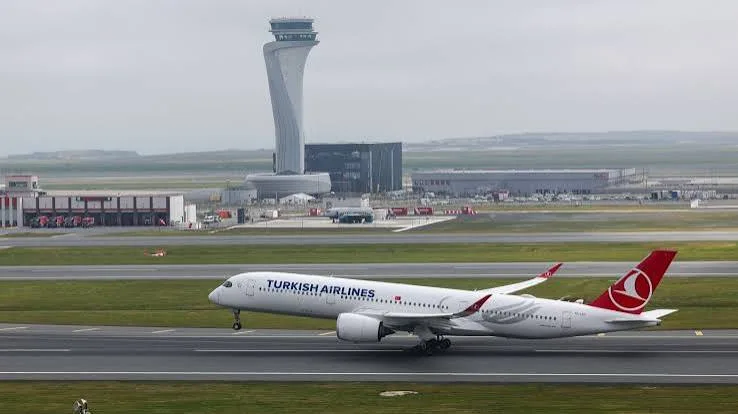
Istanbul Airport has taken the top spot in global airport connectivity for the first time, overtaking London Heathrow in the 2026 OAG Megahubs Index and cementing its growing role as a bridge between Europe, Asia, Africa and the Middle East.
The airport, operated by iGA Istanbul Airport, recorded a connectivity index of 265.4, significantly ahead of Heathrow’s 246.2 and Amsterdam Schiphol’s 242.7. Istanbul also offered connections to 337 destinations, giving it the widest destination reach among the airports ranked by OAG.
OAG's ranking measures how effectively an airport enables travellers to connect between arriving and departing international flights. The methodology examines potential connections within a six-hour window on the busiest aviation day of the year, while also taking into account the number of destinations served. It is therefore a measure of network connectivity rather than a simple ranking of passenger numbers or airport quality.
The result marks a significant change at the top. Istanbul climbed from second place in 2025, while Heathrow fell to second after its potential connections declined by 6% year on year. Amsterdam remained third, followed by Kuala Lumpur International Airport and Chicago O’Hare.
A major reason for Istanbul’s rise is Turkish Airlines, which accounts for roughly 80% of the airport’s capacity. The carrier has built one of the world's broadest international networks, using Istanbul's geographic position to connect travellers travelling between continents.
Istanbul's infrastructure has also given it an advantage. OAG says the airport is the only facility in Europe currently capable of handling simultaneous operations across three runways, giving it greater room to accommodate additional flights than capacity-constrained rivals. Heathrow, by comparison, has operated for years close to its limits, with expansion plans for a third runway continuing to face political and planning challenges.
The airport's broader growth has been substantial. Istanbul Airport handled about 84 million passengers in 2025, according to Türkiye's State Airports Authority and airport authorities, up from roughly 80.4 million in 2024. Almost half of the airport's passengers in 2025 were travelling on long-haul transfer journeys, highlighting the importance of connecting traffic to its business model.
The momentum has continued into 2026. Turkish authorities reported that Istanbul Airport averaged about 1,665 flights a day during a period in August, making it Europe's busiest airport by daily flight activity. On August 16, it recorded a record 1,739 flights and 290,287 passengers in a single day.
The airport's location is central to the strategy. Istanbul sits at the intersection of major travel markets stretching from Western Europe and North America toward Central and East Asia, the Gulf, Africa and the wider Middle East. That allows Turkish Airlines to use the airport not simply as a destination gateway but as a transfer point for passengers whose journeys may have little connection to Türkiye itself.
The shift also highlights a structural challenge facing Heathrow. The London airport remains one of the world's most important international hubs, with 227 destinations and more than 51 million seats in the OAG measurement period. But its ability to add flights is constrained by existing capacity, while geopolitical disruption in the Middle East also affected this year's connectivity calculations.
The wider rankings show how competitive the global hub market has become. Kuala Lumpur held fourth place, while Chicago O’Hare climbed to fifth and became the highest-ranked airport in the Americas. Frankfurt, Tokyo Haneda, Paris Charles de Gaulle and Atlanta completed the global top 10.
For travellers, the significance of Istanbul's rise is practical. A highly connected hub can mean more options for reaching smaller or less directly served destinations, particularly when an airline has coordinated arrival and departure schedules around a large transfer operation. For Türkiye, meanwhile, the growth strengthens Istanbul's position not only as a tourism destination but as an important gateway for international business, trade and aviation.
Istanbul's new No. 1 position therefore represents more than a change in an airport ranking. It reflects years of investment in a purpose-built hub, the global expansion of Turkish Airlines and the strategic advantage of Istanbul's location. As airlines and passengers increasingly value network reach and efficient connections, the latest ranking suggests that the centre of gravity in global aviation is becoming more distributed—and Istanbul is positioning itself firmly at the centre of that shift.
More on Travel & Tourism
Travel & Tourism
Riyadh Set to Host New Global Travel Summit as Tourism Ministry Joins WTM
2 Sept 2026
Travel & Tourism
Sardinia: Inside Italy’s Blue Zone Where Exceptional Longevity Has Made the Island a Global Travel Curiosity
3 Oct 2026

Travel & Tourism
Sheikh Mohammed Highlights Dubai Tourism Growth at Arabian Travel Market 2026
14 Sept 2026

Travel & Tourism
Indonesia Grounds Flights as Anak Krakatau Ash Shuts Jakarta’s Main Airport
6 Sept 2026

Travel & Tourism
Low-Flying Airlink Jets Ignite Global Debate Over Rugby Stadium Spectacle
1 Sept 2026
You may also like

Travel & Tourism
Arabian Travel Market 2026 to Spotlight Dubai’s Resilience and Future of Global Tourism
28 Aug 2026

Travel & Tourism
ATM 2026 Closes in Dubai with Tourism Leaders from 115+ Countries and Major Travel Deals
18 Sept 2026

Travel & Tourism
UAE Online Travel Bookings to Exceed 50% by 2030, ATM Research Finds
17 Sept 2026

Travel & Tourism
Technology, Talent and Customer Focus Will Define Travel's Future, Leaders Say at ATM 2026
15 Sept 2026
Travel & Tourism
UK Passport Fee Backlash Forces Nigeria High Commission to Refund £50
13 Sept 2026

Travel & Tourism
Mount Anak Krakatau: What to Know About the Volcano Disrupting Indonesia Flights
8 Sept 2026