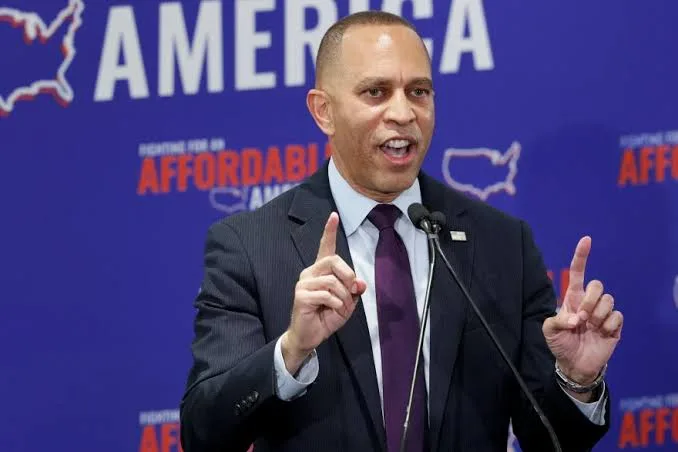
Democratic leader Hakeem Jeffries has pledged to rein in President Donald Trump’s administration following decisive midterm election victories. The results handed Democrats majority control of both chambers of the United States Congress.
The electoral shift dramatically reshapes the balance of power in Washington for the remainder of Trump’s term. Jeffries, who is now poised to become the first Black Speaker of the House of Representatives, declared that Congress will reassert its role as an independent and co-equal branch of government.
Reclaiming the Gavel in a Divided Capital
The Democratic victories across key battleground districts reversed Republican majorities in both the House and the Senate. While election officials continue finalizing ballots in a handful of tight western districts, projected seat totals ensure clear Democratic control starting in January.
In his post-election address, Jeffries argued that voters delivered a direct mandate for change. He stated that the incoming majority will put an end to unilateral executive decisions and demand strict transparency across federal agencies.
Party leaders attributed their broad gains to voter frustration over economic pressures, inflation, and foreign military entanglements. The outcome leaves the administration facing a divided capital where legislative initiatives now require bipartisan cooperation.
Oversight Plans Balance Accountability with Affordability
Jeffries promised that congressional committees will review executive actions, federal spending, and regulatory rollbacks. He stated that lawmakers will investigate alleged abuses of power and hold officials accountable for ethical violations.
However, the Democratic leader firmly downplayed talk of immediate impeachment proceedings. He emphasized that rank-and-file lawmakers want Congress to focus on practical legislation rather than endless procedural battles.
Instead, the new leadership plans to prioritize cost-of-living relief, affordable housing investments, and healthcare protections. Jeffries insisted that everyday economic stability must guide the legislative docket above partisan retaliation.
White House Faces New Legislative Obstacles
The loss of unified party control poses immediate challenges for the administration's second-term domestic goals. Without friendly majorities in the House and Senate, controversial executive appointments and partisan spending packages will face intense resistance.
In post-election remarks, the president acknowledged that foreign policy strain and household economic anxiety weighed heavily on voter choices. Administration officials signaled an openness to negotiate on shared priorities, including domestic infrastructure and manufacturing incentives, while warning that executive vetoes will block sweeping opposition bills.
The split government ensures high-stakes fiscal debates ahead. Bipartisan agreements will be essential to pass federal budgets, avoid government shutdowns, and maintain foreign aid commitments.
What the New Balance of Power Means for Citizens
The return of divided government effectively halts unilateral party legislation in Washington. While sweeping new federal programs are unlikely to pass without compromise, committee subpoenas and public hearings will bring renewed scrutiny to executive agencies.
For everyday citizens, the immediate focus shifts to how both parties handle upcoming statutory deadlines. Observers expect intense negotiations over tax rates, healthcare subsidies, and national debt limits as the new Congress convenes.
Both parties face pressure to show voters they can manage basic governance. The coming months will test whether divided leadership yields practical policy compromises or prolonged institutional deadlock.