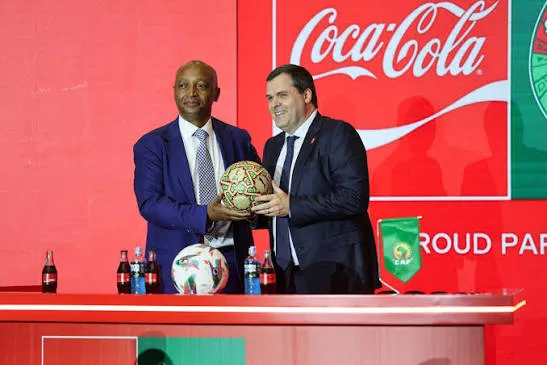
Coca-Cola is returning to the Africa Cup of Nations after nearly three decades, following a new sponsorship agreement with the Confederation of African Football (CAF). The global beverage company has become an Official Competition Sponsor of the TotalEnergies CAF Africa Cup of Nations Kenya, Tanzania and Uganda 2027 and the 2028 edition.
The agreement was signed in Johannesburg, South Africa, on November 23, 2026, by CAF President Dr Patrice Motsepe and Luis Felipe Avellar, President of Coca-Cola's Africa Operating Unit.
The reunion comes at an important moment for African football. Kenya, Tanzania and Uganda are preparing to jointly host AFCON 2027, marking the first time three countries will organise the competition together.
The tournament, officially branded AFCON PAMOJA 2027, will run from June 19 to July 17, 2027. The name Pamoja, meaning together in Swahili, reflects the shared hosting arrangement and regional identity behind the competition.
For CAF, the partnership strengthens the commercial profile of its flagship tournament. For Coca-Cola, it creates an opportunity to reconnect with African football supporters through one of the continent's biggest sporting events.
Importantly, TotalEnergies remains AFCON's title sponsor. Coca-Cola joins the competition as an Official Competition Sponsor.
Almost 30 Years Since Coca-Cola's Previous AFCON Sponsorship
Coca-Cola's relationship with African football goes beyond its latest announcement. According to CAF, the company previously sponsored the Africa Cup of Nations in 1996, when South Africa hosted the competition, and in 1998, when Burkina Faso staged the tournament.
Its return represents a renewed connection with a competition that has grown considerably in international visibility and commercial importance.
Today, AFCON attracts audiences far beyond the participating countries. Millions of supporters follow their national teams through television, digital platforms, social media and local viewing centres. African communities abroad also remain closely connected to the competition.
This widespread following makes football an attractive platform for international brands seeking to reach diverse audiences.
Coca-Cola has historically connected its marketing activities with sports, music and entertainment. Its return to AFCON offers another opportunity to combine those interests with the excitement surrounding African football.
The company has indicated that its involvement will focus on fans, communities, music and local cultural experiences. However, detailed promotional activities and individual fan campaigns have not all been publicly announced.
The agreement covering two consecutive tournaments also gives Coca-Cola a longer-term commercial relationship with CAF rather than a one-off association with AFCON 2027.
Why East Africa's Historic Tournament Matters
The three host countries face an important opportunity to showcase their sporting infrastructure, tourism industries and ability to organise major international events.
Hosting AFCON across Kenya, Tanzania and Uganda requires close cooperation between governments, football associations, transport authorities and event organisers. Teams, supporters, journalists and officials will need reliable transport, accommodation, security and stadium facilities throughout the competition.
The tournament could also create opportunities for businesses in hospitality, transportation, restaurants, retail and entertainment as visitors arrive in the region.
However, these economic benefits are not automatic. Their scale will depend on infrastructure readiness, visitor spending, effective planning and how successfully local businesses participate in the tournament.
Preparations are already moving forward. On November 25, 2026, CAF inaugurated the AFCON 2027 Coordination Headquarters in Dar es Salaam, Tanzania. The facility will support planning and coordination across the three host countries.
For East Africa, a successful competition could strengthen the region's reputation as a destination for major sporting events. It also provides an opportunity to demonstrate how neighbouring countries can work together to organise a continental championship.
Coca-Cola's participation adds another international commercial partner to this historic project, increasing the tournament's visibility as preparations continue.
What CAF and Coca-Cola Expect From the Partnership
CAF President Dr Patrice Motsepe welcomed Coca-Cola's return, describing the agreement as an important development for African football.
He expressed confidence that the partnership would support the growth of football across the continent while advancing the commercial interests of both organisations.
Coca-Cola's Africa Operating Unit President, Luis Felipe Avellar, also highlighted the importance of African football as a source of pride, unity and inspiration.
His comments emphasised the company's interest in connecting with supporters through the culture and experiences surrounding the game.
The partnership reflects a broader commercial opportunity for African football. International companies are increasingly interested in sporting competitions that offer access to large audiences and strong cultural connections.
For CAF, attracting recognised global brands can strengthen the commercial value of its competitions. For sponsors, football provides an opportunity to build relationships with consumers through shared experiences.
Nevertheless, the value of such partnerships should be measured by more than brand visibility. Their longer-term contribution depends on the quality of fan engagement, the resources involved and the opportunities created around the competition.
What Happens Next?
With AFCON 2027 scheduled for June 19 to July 17, attention will increasingly shift towards tournament preparations, qualification and the readiness of the three host nations.
The 24-team competition will bring together national teams from across Africa, while supporters will travel to Kenya, Tanzania and Uganda to experience the tournament.
Coca-Cola's return adds a familiar international brand to the preparations, almost 30 years after its previous AFCON sponsorship.
The agreement also extends into AFCON 2028, giving the company a continuing presence across two editions of Africa's leading national team football competition.
For African football, this reunion is another indication of the commercial interest surrounding the continent's biggest sporting events. The greater challenge will be ensuring that the attention and investment generated by AFCON translate into meaningful opportunities for the competition, its supporters and the wider football community.