
Canada Fires Back With Dollar-for-Dollar Tariffs After US Trade Talks Collapse
Canada is preparing dollar-for-dollar tariffs on US goods after Washington imposed new 50% levies on Canadian imports.
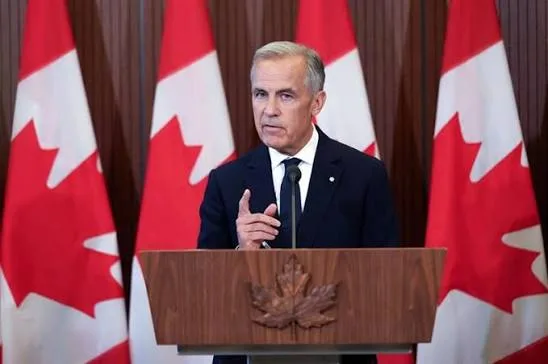
Canada and the United States have moved into a sharper phase of their trade dispute after negotiations collapsed and Ottawa announced retaliatory tariffs against American goods, deepening an economic confrontation between two countries whose economies have long been closely intertwined.
Prime Minister Mark Carney said Canada will impose new tariffs from September 8, targeting US products including steel, electronics, dairy and agricultural equipment. The move follows Washington’s decision to impose 50% tariffs on about $20 billion worth of Canadian goods from August 22.
Carney described the Canadian response as a “dollar-for-dollar” retaliation, arguing that Ottawa could not accept the conditions Washington had put forward during the final stages of negotiations. He said the US had introduced last-minute demands that Canada considered unacceptable and damaging to its economic interests and sovereignty.
The collapse of talks came after several weeks of negotiations aimed at finding a new framework for bilateral trade. Earlier in the week, there had been signs of progress, with Washington temporarily delaying implementation of the latest 50% tariffs to give negotiators more time. Carney's government said it remained focused on preserving tariff-free access for most Canadian businesses while protecting key industries.
That optimism disappeared when the two sides failed to agree. The United States has accused Canada of unfair treatment of American products, including restrictions affecting US alcoholic beverages and other goods. The White House has also argued that Canadian policies discriminate against US commerce.
Washington's latest tariffs affect a relatively small portion of total Canadian exports to the United States, but the impact could still be significant for businesses operating in sectors covered by the new measures. Existing American tariffs on Canadian steel, aluminium, automobiles and lumber remain separate from the latest round.
Canada's retaliation will in turn expose American producers to higher costs and reduced access to the Canadian market. Among the products expected to face Canadian duties are US steel, dairy products, appliances, electronics and farm equipment, putting pressure on companies that rely heavily on cross-border trade.
The dispute is particularly sensitive because of the scale of the economic relationship. The United States remains Canada's overwhelmingly dominant trading partner, while Canadian energy, manufacturing, agriculture and other exports are deeply integrated into American supply chains. A prolonged tariff battle therefore risks affecting businesses and consumers on both sides rather than simply punishing governments.
Carney has signalled that Canada is preparing support for businesses and workers affected by the latest American measures. At the same time, his government is seeking to reduce Canada's dependence on the US market by expanding trade and investment relationships elsewhere. Canadian political leaders and several provincial premiers have largely backed the government's decision to take a firmer position against Washington.
The confrontation is also raising questions about the future of the US-Mexico-Canada Agreement (USMCA), the framework that has governed much of North American trade. The failure of the latest negotiations makes it harder to predict whether the three countries can preserve the relatively integrated trading system that businesses have relied on for decades.
For Washington, the strategy is based on using tariffs to force concessions from trading partners. For Ottawa, the calculation increasingly appears to be that accepting American demands would carry its own economic and political costs. Carney has argued that Canada must protect its ability to make independent economic and trade decisions even while maintaining close ties with its largest neighbour.
The broader significance is that the traditional North American trade relationship is being fundamentally tested. What began as a dispute over tariffs is increasingly becoming a question of how Canada and the United States define their economic relationship in an era of greater protectionism. If the confrontation continues, companies may accelerate efforts to diversify supply chains and markets, while consumers on both sides could ultimately bear part of the cost. The next round of negotiations will therefore matter not only to Ottawa and Washington, but to the future shape of one of the world's most integrated economic partnerships.
More on Business

Business
Nigeria, Canada Move to Deepen Trade Ties as Musawa Leads Delegation to Toronto
31 Aug 2026

Business
Nigeria’s Biggest Banks Ease FX Pressure With Higher Naira Card Dollar Limits
7 Sept 2026
Business
Europe’s Biggest Carmaker Plans 50,000 More Job Cuts Amid EV Pressure
4 Sept 2026
Business
UAE Suspends Trade With Iran After Detecting Missiles Targeting Maritime Traffic
19 Aug 2026
Business
Trump Signs Two-Year AGOA Extension as Okonjo-Iweala Hails Boost for Africa
6 Sept 2026
You may also like

Business
PZ Cussons Nigeria Profit Soars 348.7% to N45.17bn, Declares N2.50 Dividend
31 Aug 2026
Business
U.S. Federal Reserve Hikes Rates to 3.75%–4.00% as Inflation Persists
17 Sept 2026
Business
UK Inflation Hits 3.1% as Stable Underlying Prices Ease Pressure on Bank of England
16 Sept 2026
Business
Ghana’s Economy Grows 6% in Q2 as Communications Sector Powers Recovery
10 Sept 2026
Business
Dangote Refinery Strengthens Balance Sheet as Debt Falls to ₦7.9tn
10 Sept 2026
Business
Nigerian Breweries Goes Debt-Free as Cash Generation Jumps 264% in H1
9 Sept 2026