
Burkina Faso Reintroduces Death Penalty After Eight-Year Abolition
Burkina Faso’s legislature has unanimously adopted a revised penal code restoring the death penalty for terrorism, treason, espionage and certain imports of expired or prohibited products that cause death, reversing the country’s 2018 abolition of capital punishment.
Burkina Faso’s legislature has unanimously approved a revised penal code restoring the death penalty for terrorism and several other serious offences, including the importation of expired or prohibited products that result in death, reversing a policy the West African country adopted in 2018.
The People’s Legislative Assembly approved the new code on Tuesday, October 20, with all 71 lawmakers voting in favour, according to the Justice Ministry and reports by Reuters and the Associated Press. Justice Minister Edasso Rodrigue Bayala presented the legislation, which also makes espionage, treason and the killing of a parent punishable by death.
The revised code does not make every importation of counterfeit or banned goods a capital offence. The provision reported by Burkinabè media specifically concerns the importation of expired or prohibited products when the act results in death, an important distinction in a country where the regulation of goods and public safety are also concerns.
The government has defended the return of capital punishment primarily as part of its response to the country’s prolonged security crisis. Bayala argued that armed groups had exploited the previous law by telling potential recruits that even if they were arrested for terrorism-related offences, they would face no punishment harsher than life imprisonment. The revised legislation is intended to strengthen the penalties available against those who commit or assist terrorist acts, according to the minister’s explanation following the vote.
The decision follows a process that began in December 2025, when Burkina Faso’s Council of Ministers approved a draft penal code proposing the restoration of the death penalty. An official government account of that meeting identified high treason, terrorism and espionage among the offences covered by the proposed reform. Parliamentary approval on October 20 marks a major step in the government’s effort to overhaul the country’s criminal justice framework.
Burkina Faso abolished the death penalty for ordinary crimes in 2018 under then-President Roch Marc Christian Kaboré. Its last known judicial execution took place in 1988, according to Amnesty International and Human Rights Watch. The new code therefore represents a significant reversal after decades without a recorded judicial execution and nearly eight years after the formal abolition of capital punishment.
The reform comes as the country continues to battle an insurgency involving armed groups linked to al-Qaeda and the Islamic State. The violence has killed thousands of people and displaced millions across Burkina Faso and the wider Sahel. The authorities have increasingly prioritized security measures under military leader Captain Ibrahim Traoré, who came to power following a coup in September 2022.
However, the return of capital punishment has raised concerns among human rights organizations. Human Rights Watch criticized the move on Wednesday, warning that reinstating the death penalty in a country experiencing restrictions on civil and political freedoms could expose government critics to further risks. The organization has also raised concerns about weaknesses in the justice system, including procedural shortcomings in terrorism-related cases.
The government’s position centres on the argument that harsher penalties are necessary to deter terrorism and punish particularly serious crimes. Rights advocates, by contrast, question whether the death penalty can address the underlying security crisis and warn that irreversible punishments carry additional risks where fair-trial protections are inadequate. The vote itself was unanimous, but that does not establish that the policy has broad public support or that it will prove effective as a deterrent.
More on Africa

Africa
Tanzania Mourns Death of First Gentleman Hafidh Ameir Hassan
7 Sept 2026

Africa
US Imposes Targeted Visa Restrictions on South Africans Over Land and Race Policies
16 Sept 2026
Africa
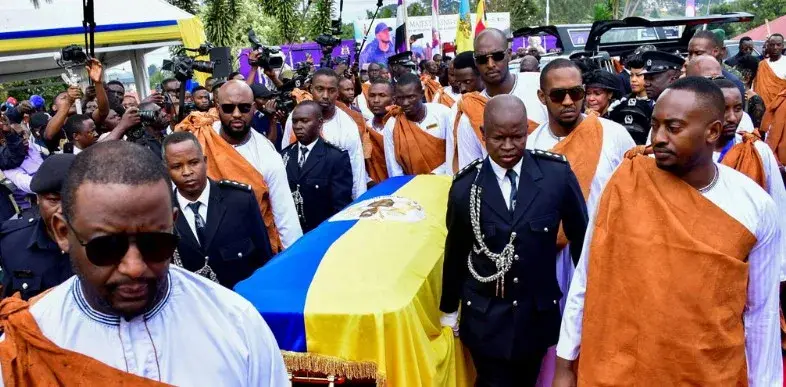
King Oyo Buried as Tooro Kingdom Faces Succession Dispute
14 Sept 2026
Africa
Immigration Tensions Rise as South African Activists Issue September Ultimatum
11 Sept 2026
Africa
Fire Sweeps Through Two DR Congo Schools, Leaving Dozens of Children Dead
10 Sept 2026
Partner with Follow Global Trends
Display banners, sponsored stories and founder spotlights.
You may also like

Africa
24-Hour AfCFTA Certificate Reform Set to Accelerate Nigeria’s Non-Oil Exports
10 Sept 2026
Africa
South Africa Remains Africa’s Largest Economy at $489.1 Billion
18 Oct 2026
Africa
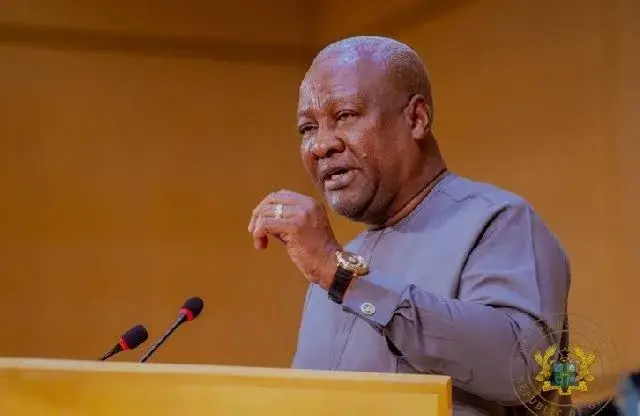
Mahama Challenges Global Financial System Over Africa’s Wealth Outflows
16 Oct 2026

Africa
Formula 1 Returns to Africa After 33 Years With Historic Rwanda Grand Prix Deal
13 Oct 2026

Africa
Mahama: Africa’s Youth Need Affordable Finance to Build Businesses
13 Oct 2026
Africa
South Africa Reverses Asylum Policy After Vehicles Burned and Foreign-Owned Shops Looted
10 Oct 2026