
30 Years Later, Tupac’s Murder Mystery Finally Lands in Court
30 years after Tupac’s death, ‘Keffe D’ Davis on trial for orchestrating 1996 Killing. Davis, 63, is the only person charged in Tupac Shakur’s murder.
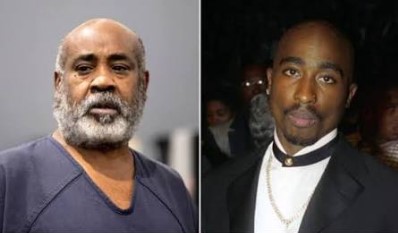
Nearly three decades after Tupac Shakur was fatally shot in Las Vegas, the long-running mystery surrounding one of hip-hop's most notorious killings has finally reached a courtroom, with Duane “Keffe D” Davis standing trial over allegations that he orchestrated the 1996 attack.
Davis, 63, is the only person ever charged in connection with Tupac's murder. Prosecutors told jurors that he organised the shooting as an act of revenge after Tupac and members of his entourage attacked Davis' nephew, Orlando “Baby Lane” Anderson, at the MGM Grand shortly before the fatal drive-by. Davis has pleaded not guilty and maintains that the prosecution's account is not supported by reliable evidence.
The trial, which began this week in Las Vegas, is reopening a case that has remained deeply embedded in popular culture since Tupac was shot on September 7, 1996. The rapper was riding in a BMW driven by Death Row Records co-founder Marion “Suge” Knight when a white Cadillac pulled alongside them and gunfire erupted. Tupac was struck four times and died six days later at the age of 25.
For years, the investigation produced more theories than answers. Anderson, who was identified early in the investigation as a possible suspect, was killed in 1998 and was never charged. The other men prosecutors say were in the Cadillac are also dead, leaving Davis as the only surviving member of the group allegedly connected to the shooting.
The prosecution's case now rests heavily on Davis' own past words.
Authorities have pointed to statements he made in interviews with law enforcement and, particularly, his 2019 memoir, Compton Street Legend. Prosecutors say those accounts provide evidence that Davis was involved in planning the attack, obtained the firearm and helped direct what happened that night. They do not allege that Davis personally pulled the trigger.
That distinction is central to the case.
Prosecutors are seeking to convince the jury that Davis can be held responsible for the killing even though another person allegedly fired the shots. Their argument is that he played a directing and facilitating role in an attack carried out in retaliation for the earlier confrontation involving Anderson.
Davis' defence is attacking that narrative at its foundation. His lawyers argue that his previous accounts were exaggerated or fabricated and that he was someone who had built a reputation by telling dramatic stories about his past. They have also questioned the quality of the original investigation and the reliability of evidence being presented nearly 30 years after the shooting.
That passage of time is one of the biggest challenges facing both sides.
Memories have faded, witnesses have died and some people who could potentially shed light on the events have been reluctant to testify. One witness, James McDonald, a former associate of Suge Knight, appeared in court under subpoena and openly resisted questions about Davis and the gang world surrounding the case. His testimony illustrated just how difficult it can be to reconstruct a violent event that happened three decades ago.
The courtroom has also had to confront the physical reality of Tupac's final moments. A forensic pathologist testified about the gunshot injuries that ultimately killed him, while graphic autopsy photographs were shown to jurors. Some members of Tupac's family left the courtroom before the images were displayed, while others remained, describing the process as part of their effort to understand what happened and find some measure of closure.
The case carries significance far beyond the question of one man's criminal liability.
Tupac had already become one of hip-hop's most influential figures before his death, using songs to explore poverty, racism, violence, politics and the contradictions of life in America. His killing, coming during the violent period of the East Coast-West Coast rap rivalry, became one of the defining tragedies in music history and helped fuel decades of speculation about who was ultimately responsible.
Now the courts are being asked to separate fact from the mythology that has grown around the case.
The trial is expected to run for several weeks and could feature dozens of witnesses, including the possibility of testimony from Knight, who survived the shooting but is currently serving a prison sentence for an unrelated conviction.
For Tupac's family and millions of fans, the proceedings offer something the case has lacked for almost 30 years: a formal opportunity for evidence to be tested in court.
But a trial is not the same as a conclusion. Davis remains presumed innocent unless prosecutors prove the charge beyond a reasonable doubt, and his defence is already challenging the reliability of the evidence that has brought him to court.
Three decades after gunfire tore through a Las Vegas street and ended the life of a 25-year-old rapper who would become a global cultural icon, the Tupac case has finally moved from speculation and street lore into the courtroom. What emerges from that courtroom could determine, at last, what the law says happened on that September night in 1996.
More on Law/Legal
Law/Legal
Poco Lee's UK Court Pre-Trial Adjourned Until February 2027
14 Sept 2026

Law/Legal
Paris Court Awards Kim Kardashian €1 in Landmark 2016 Robbery Case
16 Sept 2026

Law/Legal
UK Actor Noel Clarke Charged With Six Sexual Offences Involving Five Women
11 Sept 2026

Law/Legal
Egypt TV Presenter, 11 Others Sentenced to Death in Major Drugs Case
6 Sept 2026

Law/Legal
Dolly Parton’s Estate Seeks Court Order Against Nephew Over Alleged Threats
23 Sept 2026
You may also like
Law/Legal
Kosovo’s Former President Hashim Thaçi Sentenced to 25 Years in War Crimes Case
16 Sept 2026
Law/Legal
Supreme Court Blocks Trump's Mail-In Voting Plan Ahead of US Midterm Elections
15 Sept 2026

Law/Legal
UK Court Grants Poco Lee Bail Ahead of Tuesday Hearing
14 Sept 2026
Law/Legal
Tunisia’s Top Court Upholds Convictions of Opposition Figures and Activists
4 Sept 2026

Law/Legal
Madagascar ex-Senate president sentenced to 10 years over deadly protest crackdown
3 Sept 2026
Law/Legal
Tinubu FBI Files: US Court Allows Secret Evidence as Disclosure Fight Deepens
27 Aug 2026