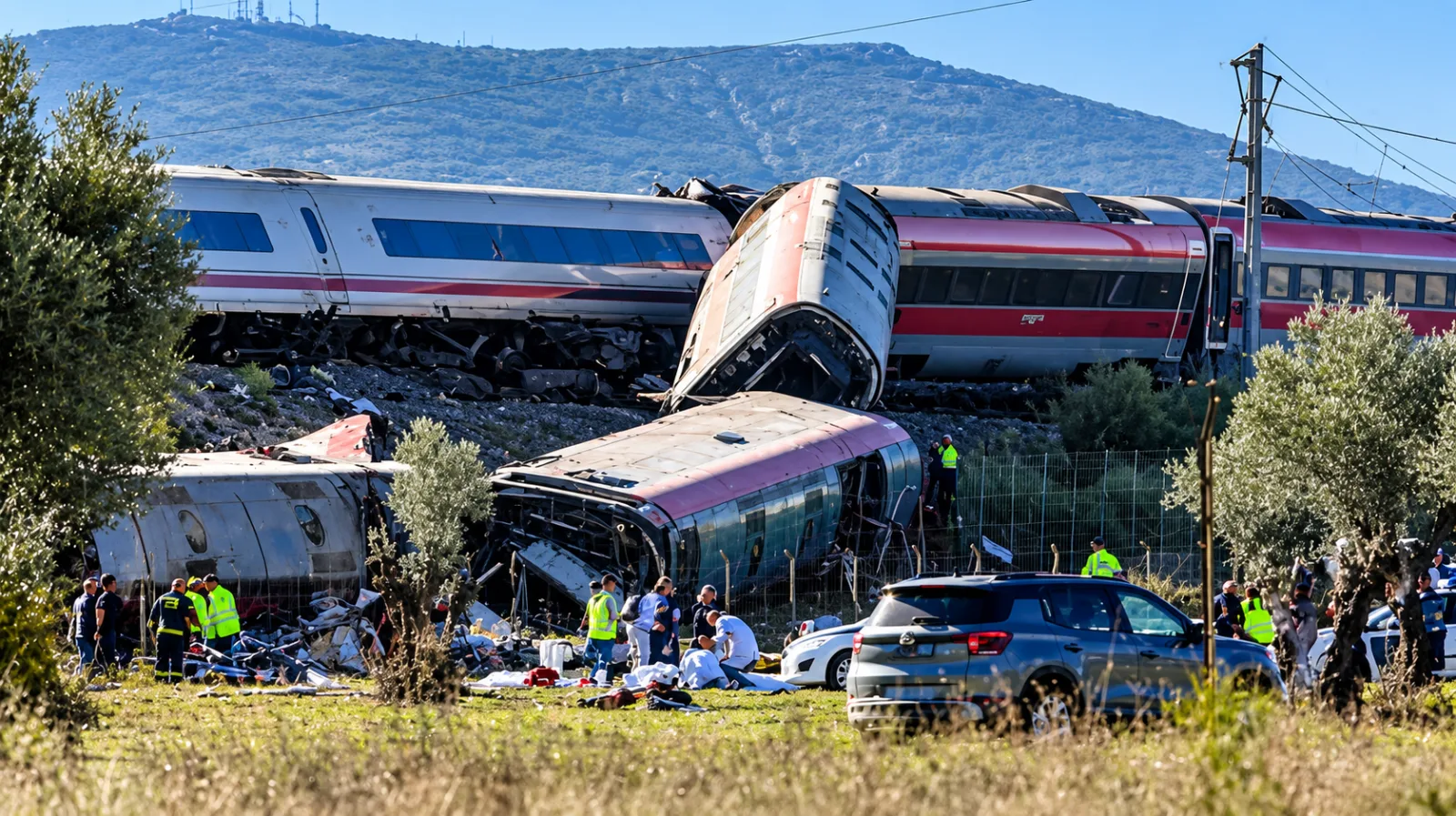
At least 10 people have died and dozens more are injured following a catastrophic Spain train crash in central Spain on Wednesday morning. Two high-speed passenger trains collided south of Madrid, throwing multiple carriages off the tracks and forcing the total shutdown of one of the country's busiest railway corridors.
The collision occurred shortly before 9:00 a.m. local time near Urda station in Toledo province, roughly 140 kilometres south of the Spanish capital. More than 500 passengers were travelling aboard the two services when the impact took place along the main high-speed line linking Madrid to Seville and the wider Andalusia region.
According to Spanish railway authorities, the disaster involved a state-run Renfe service carrying 397 passengers and an Iryo commercial train carrying 146 passengers and an infant. Initial field reports indicate that one high-speed train slammed into the rear of another service that had come to a halt on the tracks.
The force of the collision crushed passenger compartments and caused the two rear carriages of the Iryo train to derail and tumble down a steep embankment. Emergency responders arriving at the scene described widespread wreckage, with twisted metal and debris scattered across both tracks.
Emergency medical units, regional firefighters, and officers from Spain's Civil Guard mobilised immediately to reach trapped survivors in the rural area between Mora and Orgaz. Rescue teams established an advanced field hospital beside the rail line to triage wounded passengers and coordinate airlift evacuations to regional trauma centres.
Esther Padilla, spokesperson for the regional government of Castilla-La Mancha, confirmed that at least 10 fatalities had been verified at the site. She warned that the casualty count is expected to climb as rescue workers continue cutting through damaged carriages to search for missing travellers.
Following the fatal Spain train crash, national rail infrastructure manager Adif suspended all high-speed train services between Madrid and Andalusia in both directions. Thousands of passengers across southern Spain faced severe delays and cancellations, while rail operators offered free ticket refunds and alternative transport arrangements.
Spanish Prime Minister Pedro Sánchez expressed deep sorrow over the tragedy, confirming that he remains in continuous contact with Transport Ministry officials and regional authorities. While judicial and transport safety investigators have launched an inquiry, authorities emphasised that the definitive cause of the crash remains under active investigation as technical teams inspect signalling systems and track data.