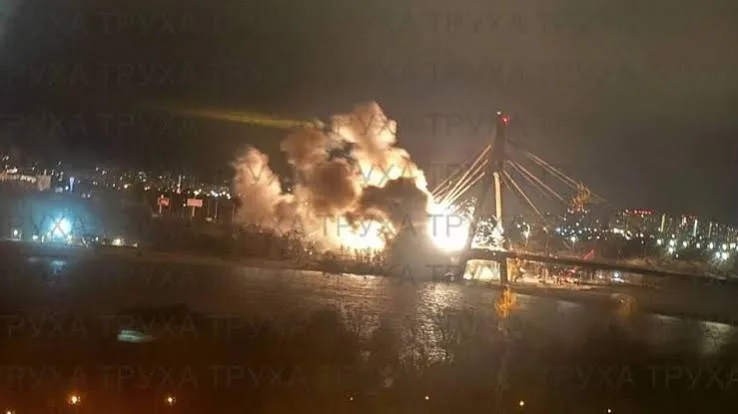
Russian forces struck two major bridges across the Dnipro River in Kyiv during attacks late on November 16 and into November 17, damaging critical infrastructure in the Ukrainian capital.
Kyiv Mayor Vitali Klitschko confirmed that the Northern and Southern bridges had been hit. The attacks forced authorities to restrict traffic, disrupted parts of the metro network and affected essential services in several districts.
Ukrainian President Volodymyr Zelenskyy later said Russia fired seven ballistic missiles at the two crossings. Four reportedly struck the Southern Bridge, while three hit the Northern Bridge.
The attacks formed part of a wider Russian missile and drone assault across Ukraine.
The damage raised fresh concerns about Kyiv’s ability to maintain transport connections between communities on opposite sides of the Dnipro River.
Russian missiles strike Kyiv’s Northern and Southern bridges
The attacks began late on Monday, November 16, with further missile activity continuing into Tuesday morning.
Klitschko initially reported preliminary information indicating impacts on both bridges.
The Northern Bridge, known locally as the Pivnichnyi Bridge, connects parts of northern Kyiv across the Dnipro.
The Southern Bridge, or Pivdennyi Bridge, is another important crossing linking the capital’s eastern and western banks.
Both structures support daily movement between residential areas, workplaces and other essential destinations.
Following the attacks, Kyiv authorities suspended traffic across both bridges while specialists examined the damage.
Zelenskyy subsequently provided further details about the reported missile strikes.
According to his November 17 statement, Russian forces launched four ballistic missiles against the Southern Bridge and three against the Northern Bridge.
The Ukrainian government also began considering alternative transport arrangements to reduce disruption.
The attacks followed earlier Russian strikes against bridges across the Dnipro during October and November.
Bridge damage disrupts transport, metro and heating supplies
The damage affected more than road traffic.
Kyiv’s city administration reported disruptions to critical infrastructure, including heating and water supplies in some districts.
The attack also damaged above-ground metro infrastructure.
As a result, authorities temporarily suspended Green Line train services between Osokorky and Chervony Khutir stations.
Trains continued operating on the underground section between Syrets and Vydubychi.
The damage to the Southern Bridge also affected the district heating network.
According to local officials, 317 buildings in the Darnytskyi district were left without heating.
Municipal teams began working to restore affected services and assess the damaged infrastructure.
The disruption highlighted how attacks on major transport crossings can affect other essential systems.
Bridges are not simply road connections. They also support the movement of emergency services, public transport and people travelling to work.
Damage to their surrounding infrastructure can therefore create wider problems for residents.
Kyiv partially reopens Southern Bridge after inspections
Although authorities initially closed both bridges, restrictions began easing after engineers examined the structures.
On November 17, Kyiv partially reopened the Southern Bridge following an inspection by Ukraine’s National Institute for Infrastructure Development.
The reopening allowed restricted traffic from the city's left bank towards the right bank.
Authorities permitted vehicles weighing up to 10 tonnes to cross under regulated conditions.
Public transport vehicles weighing up to 18 tonnes were also allowed to use the crossing.
However, traffic in the opposite direction remained suspended because of damage to that section.
Engineers continued assessing the structure’s condition and load-bearing capacity.
Municipal repair teams also began work to address the damage.
The Northern Bridge remained under assessment in the latest reports reviewed for this article. Kyiv Mayor Klitschko said specialists needed to establish the extent of the structural damage before authorities could determine when normal traffic could resume.
The partial reopening of the Southern Bridge offered some relief to commuters. However, restrictions continued to affect movement across the capital.
Wider Russian attacks raise concerns over Ukraine’s infrastructure
The strikes against Kyiv occurred during a wider wave of attacks across Ukraine.
Russian forces also targeted other regions, including Cherkasy, Kharkiv, Dnipropetrovsk and Zaporizhzhia.
Officials in the Cherkasy region reported three people injured during the attacks.
Ukraine’s President had warned that intelligence indicated Russia was preparing further strikes.
The Russian Defence Ministry said its forces had attacked transport, military and energy facilities, alongside port infrastructure and cargo ships.
However, the ministry’s statements did not independently establish the full circumstances or extent of damage at each location.
Reuters reported that it could not immediately independently verify all the competing battlefield claims.
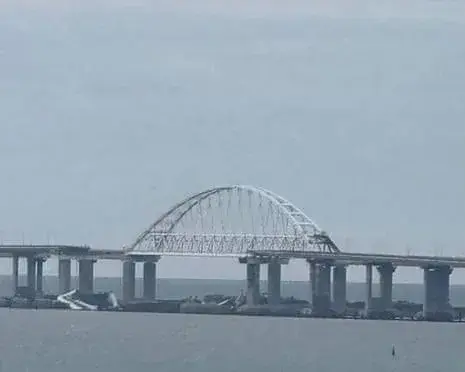
The wider exchange of attacks also involved Ukraine’s strikes against Russian targets, including the strategically important bridge connecting Russia with occupied Crimea.
The simultaneous attacks on transport infrastructure have increased concerns about the security of important supply routes on both sides.
For Kyiv residents, the immediate concern remains restoring transport services and protecting essential supplies.
The Northern and Southern bridges are important connections across the Dnipro. Their continued repair and safe operation will be important for the capital’s daily movement.
As of the latest confirmed updates reviewed for this report, the Southern Bridge had partially reopened, while engineers continued assessing the Northern Bridge. Further technical inspections will determine when normal traffic can safely resume.