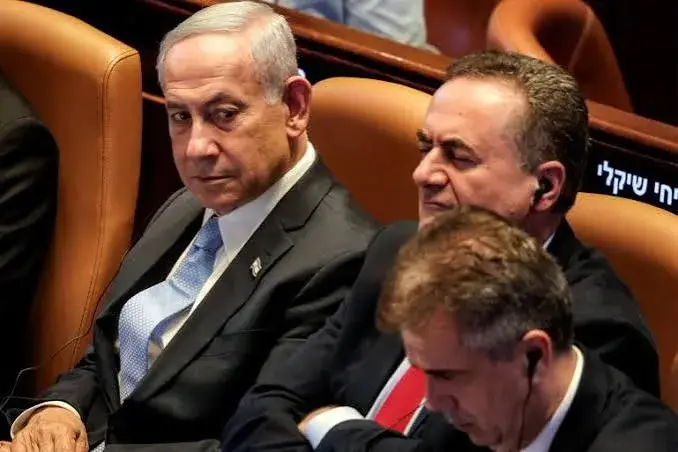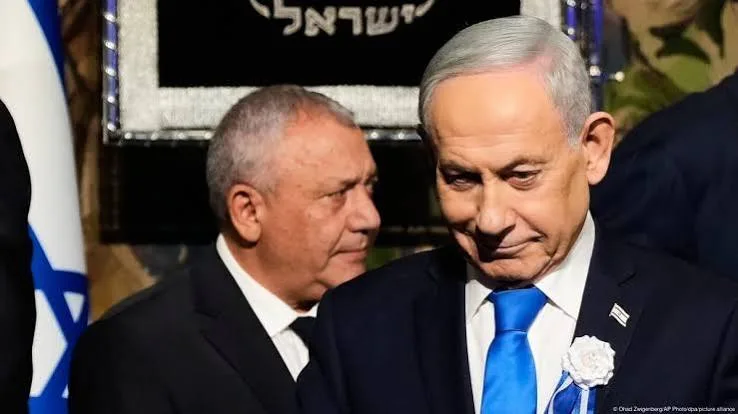
Israeli Prime Minister Benjamin Netanyahu announced an unexpected power-sharing offer to his chief political rival, Gadi Eisenkot.
Netanyahu said on Saturday night that he is willing to let Eisenkot serve as prime minister first under a proposed national unity agreement. The move comes as Eisenkot works to finalize an opposition-backed coalition that could unseat Israel’s longest-serving leader.
President Isaac Herzog tasked Eisenkot, a former military chief of staff who leads the centrist Yashar party, with forming a government following inconclusive national elections on October 27.
Sunday Talks at Tel Aviv Military Headquarters
The two leaders met on Sunday morning at military headquarters in Tel Aviv to discuss the unity proposal.
The meeting opened with a joint security briefing before transitioning into formal coalition negotiations. Following the session, both leaders issued a joint statement describing the conversation as businesslike, noting efforts to bridge substantial political differences.
Netanyahu argued that while his Likud party won more parliamentary seats than Yashar, national security imperatives justified relinquishing the prime minister’s chair first to avoid protracted political instability.
Clashing Timetables and Coalition Alliances
Despite the high-profile overture, significant obstacles divide the two camps.
Netanyahu proposed an alternating structure featuring one-year terms for each leader. In contrast, Eisenkot’s negotiating team pushed for a three-year consecutive term, offering Netanyahu the premiership only in the fourth year.
A major point of friction remains Netanyahu’s coalition partners. Netanyahu has refused to abandon far-right allies, including National Security Minister Itamar Ben-Gvir.
Eisenkot and his allies have insisted on excluding hardline elements from key governance roles. Figures close to Yashar indicated after Sunday's talks that deep ideological disagreements remain unresolved.
December Mandate Deadline Pressures Both Sides
Eisenkot faces a December 6 deadline to finalize a governing majority in the 120-seat Knesset.
Political analysts view Netanyahu’s rotation offer as a tactical effort to disrupt Eisenkot’s concurrent talks with other opposition, centrist, and regional parties. If Eisenkot secures enough commitments this week, he could present a government to parliament and end Netanyahu's uninterrupted run in power.
If talks collapse and Eisenkot fails to assemble a coalition, Israel could face another round of snap elections. For now, both camps continue parallel negotiations as the constitutional clock winds down.