The United Nations' highest court has ruled that Myanmar committed genocide against the Rohingya minority during its brutal military campaign in 2017.
The International Court of Justice (ICJ) delivered the landmark judgment on Thursday, November 19, in The Hague, Netherlands.
Judges ruled by a 9–6 majority that Myanmar violated the Genocide Convention through its treatment of the Rohingya people in northern Rakhine State.
The decision marks a historic moment in international law. It is the first time the ICJ has ruled that a state committed genocide.
The court found that Myanmar's security forces killed thousands of Rohingya civilians. It also documented widespread sexual violence, extreme violence against children, and attacks on people fleeing the country.
The ruling followed a case brought by The Gambia in 2019. The West African country accused Myanmar of violating the international convention designed to prevent and punish genocide.
The Court Finds Genocide After Years of Atrocities
The judgment focused on military operations against the Rohingya in 2016 and 2017.
Myanmar's security forces launched a major campaign in August 2017. The operation followed attacks by Rohingya insurgents against security positions.
However, the military response triggered widespread destruction across Rohingya communities.
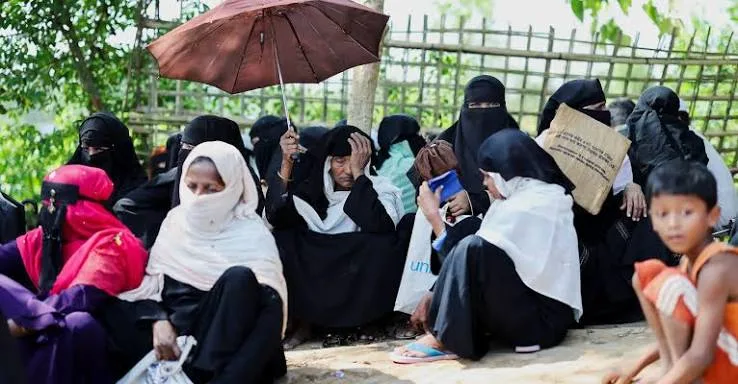
Thousands were killed, homes and villages were burned, and survivors reported sexual violence and other abuses. More than 730,000 Rohingya fled across the border into Bangladesh.
The ICJ concluded that the evidence established genocidal acts and the required intent to destroy the Rohingya group, at least in part.
Under international law, genocide involves certain prohibited acts committed with the specific intention of destroying a national, ethnic, racial, or religious group.
The court rejected Myanmar's argument that its military operations were legitimate counterterrorism actions targeting insurgents.
The Gambia's Case Produces a Landmark Legal Victory
The legal battle began in November 2019, when The Gambia filed its case against Myanmar.
The country argued that Myanmar had breached the 1948 Genocide Convention through its treatment of the Rohingya population.
The Gambia sought international accountability and measures to protect the Rohingya from further atrocities.
The ICJ issued provisional measures in January 2020, requiring Myanmar to protect the Rohingya and preserve evidence connected to alleged genocidal acts.
The case later moved into full hearings. Judges heard arguments and evidence from both sides in January 2026 before beginning deliberations.
The final judgment now establishes Myanmar's responsibility under international law.
The court's ruling is legally binding and cannot be appealed. However, the ICJ has no independent enforcement force. It may report non-compliance to the United Nations Security Council.
The case has also involved several countries intervening in proceedings because of their shared interest in interpreting the Genocide Convention.
The official ICJ case record confirms the proceedings, hearings and judgment date.
Court Orders Accountability and Reparations
The judgment carries obligations beyond acknowledging the crimes.
The court ordered Myanmar to investigate, prosecute and punish individuals responsible for genocidal acts.
It also directed the country to provide reparations to Rohingya victims. The amount and specific compensation arrangements will be determined through further proceedings.
The court additionally called for conditions allowing Rohingya refugees to return safely, voluntarily and with dignity to their places of residence.
That requirement remains especially significant for the hundreds of thousands who fled Myanmar.
Many Rohingya remain unable to return because of insecurity, restrictions, discrimination, and the absence of guarantees protecting their rights.
The legal ruling may strengthen demands for accountability. But translating the judgment into practical protection and justice will require cooperation and sustained international pressure.
Millions Still Face Displacement and Uncertainty
The Rohingya crisis remains far from resolved.
Approximately 1.2 million Rohingya refugees are living in Bangladesh, particularly around Cox's Bazar, where overcrowded camps face difficult humanitarian conditions.
Many families have spent years away from their homes. Refugees face restrictions on movement, employment, education and access to basic services.
Meanwhile, conflict and insecurity continue inside Myanmar. The country's wider political crisis following the 2021 military coup has complicated prospects for safe repatriation.
The court's ruling therefore carries both legal and human significance.
For Rohingya survivors, it represents formal international recognition of the crimes they endured. For governments and international institutions, it creates renewed pressure to pursue justice and protect displaced communities.
The judgment also reinforces the Genocide Convention's central principle: states cannot escape responsibility when evidence establishes genocide.
The next challenge is ensuring that this historic ruling leads to meaningful accountability, compensation and a future where Rohingya families can live safely without fear.