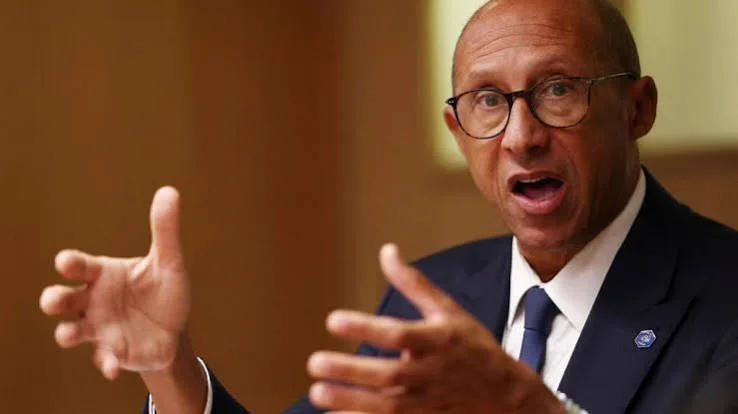
The FIFA presidential contest has gained a major challenger. French Football Federation (FFF) president Philippe Diallo has formally confirmed his candidacy.
The development followed a meeting of UEFA's leadership in Paris. The meeting took place on Monday, November 16, 2026. European football officials unanimously invited Diallo to represent their challenge.
UEFA announced its decision in an official statement. It said the national associations represented on its Executive Committee and FIFA Council had pledged their full support.
Diallo accepted the invitation and subsequently received formal approval. On Tuesday, November 17, the FFF Executive Committee ratified his candidacy.
The 63-year-old administrator will now challenge FIFA president Gianni Infantino. The election is scheduled for March 18, 2027, in Rabat, Morocco.
The contest could reshape the debate over football's global leadership. It also introduces a more organised European challenge to Infantino.
Who is Philippe Diallo?
Philippe Diallo is an experienced figure in French football administration. He became president of the French Football Federation in 2023.
Before taking the position, he worked across several areas. These included professional football clubs and France's professional football league.
He also served within FIFA's Dispute Resolution Chamber. This body handles certain disputes involving players and football clubs.
Diallo later joined UEFA's Executive Committee in 2023. His administrative experience helped strengthen his profile within European football.
However, his international recognition remains a potential campaign challenge. He must persuade football associations beyond Europe to support him.
His candidacy also followed the withdrawal of another potential challenger. Former Arsenal manager Arsène Wenger had been considered for the position. However, Wenger declined to enter the presidential race.
UEFA subsequently turned to Diallo as its preferred candidate.
Why UEFA is challenging Gianni Infantino
UEFA's decision reflects growing disagreements over FIFA's leadership. The organisation has raised concerns about governance and transparency.
One major disagreement involved FIFA Forward Enterprise. The proposal involved opening parts of FIFA's commercial assets to private investors.
The plan attracted criticism from several football stakeholders. Critics questioned its transparency and the process behind its development.
The proposal was subsequently abandoned in August 2026. Infantino also apologised over how the project was handled.
Diallo has made the issue central to his campaign. He believes FIFA needs stronger consultation with its members.
He also wants greater transparency in major decisions. His proposed direction places solidarity and football development at its centre.
In its endorsement statement, UEFA called for renewed unity. It also demanded stronger trust across the football community.
The organisation wants FIFA to prioritise development in every region. It further emphasised cooperation with national associations and other stakeholders.
These disagreements have created a significant leadership divide. However, FIFA's election will ultimately be decided by its member associations.
Infantino still holds a significant electoral advantage
Despite UEFA's endorsement, removing Infantino will not be straightforward. FIFA has 211 member associations entitled to vote.
Each association receives one vote in the presidential election. A candidate needs 106 votes to secure an absolute majority.
This means European support alone cannot guarantee Diallo's victory. Even a united UEFA represents only slightly more than one-quarter of the electorate.
Reuters reported that Diallo did not have the backing of all 55 UEFA members. The endorsement specifically covered associations represented on UEFA's Executive Committee and FIFA Council.
Infantino, meanwhile, has developed strong relationships worldwide. His administration has expanded development funding and international competitions.
The Asian Football Confederation had already announced support for his re-election. Reports have also pointed to substantial backing across Africa and South America.
These relationships give the incumbent a considerable advantage. Diallo must therefore build a wider international coalition.
Diallo seeks support beyond Europe
Diallo has acknowledged that European backing alone will not win the election. He must persuade associations across Africa, Asia and the Americas.
Speaking in Paris on Tuesday, he said he had received encouraging signals.
"To beat him you need 106 votes, which is a majority," Diallo said.
He added that he had received spontaneous signs of strong support. He said those indications would be revealed in the coming days.
However, these expressions of interest are not yet confirmed endorsements. No detailed list of supporting African or Asian associations has been publicly established.
Diallo also intends to present his campaign programme. According to the Associated Press, he plans to announce his campaign team in Belfast in early December.
He has promised a programme built around solidarity and excellence. He says FIFA needs leadership that respects football's wider community.
What happens before the March 2027 election?
The FIFA presidential election will take place on March 18, 2027. The venue will be Rabat, the capital of Morocco.
The deadline for candidates to declare their intentions is November 18, 2026. Japan's Kohzo Tashima is also among the announced candidates.
Infantino is seeking another four-year term. He has led FIFA since February 2016.
Diallo's immediate priority is building support outside Europe. He must also convince undecided associations that his proposed reforms offer a credible alternative.
The coming months will reveal whether UEFA's endorsement can become a worldwide coalition.
For now, Infantino remains a formidable contender. But Diallo's candidacy has introduced a significant challenge to his leadership.
The contest will test more than individual popularity. It will also expose how national associations view FIFA's governance, priorities and future direction.