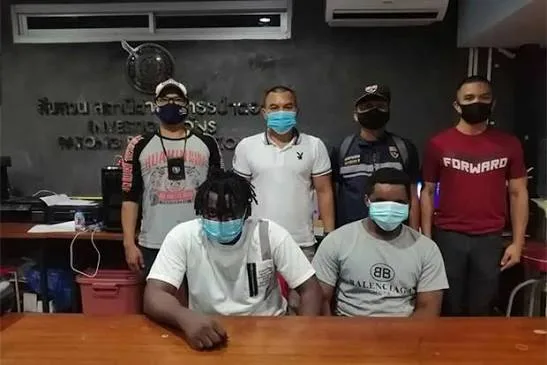
Thai authorities have arrested two Nigerian men suspected of participating in an international online romance-scam operation.
The suspects, aged 41 and 30, were arrested on November 18. The operation took place at a condominium in Ban Mai, Pak Kret district, Nonthaburi Province.
Investigators suspect the network used fake online identities to develop romantic relationships with potential victims. Some of the identities allegedly posed as United States military personnel.
The arrests followed an investigation involving Thailand's Immigration Division 3 and Provincial Police Region 1.
Officers reportedly recovered laptops and mobile phones containing conversations linked to the suspected operation.
However, the publicly reported charges against the two men concern immigration offences. Authorities have not announced confirmed fraud convictions against them.
Undercover Officers Disguised Themselves as Delivery Workers
The arrests followed several days of investigation into the suspected network.
On November 12, Thai police detained another Nigerian man, aged 37, at Owl Market in Nonthaburi.
Investigators suspected the man of belonging to an international scam network. His detention led officers to investigate other locations allegedly connected to the group.
Police subsequently searched a condominium in Bang Kraso, Mueang Nonthaburi district.
However, the suspected occupants had already left the property.
Further investigation led officers to another condominium in the Muang Thong Thani area. The two suspects had reportedly stayed there for approximately two to three days.
To gain access to their apartment, officers reportedly disguised themselves as food delivery workers.
Security guards helped the officers approach the suspects' room. They pretended to have a parcel for delivery.
When one of the men opened the door, the officers identified themselves as police personnel. They then arrested both suspects.
Fake US Military Identities Found on Electronic Devices
A search of the apartment reportedly uncovered laptops and mobile phones.
Investigators found conversations involving online identities allegedly posing as US military personnel.
Police suspect these identities were used to establish romantic relationships with potential victims.
The suspected operation allegedly involved building emotional connections before attempting to deceive people online.
Investigators also reportedly discovered social media accounts being created to target Thai residents.
Authorities believe Thailand may have served as a base for reaching victims across Southeast Asian countries.
However, investigators have not publicly established the full structure of the suspected network.
They have also not disclosed the number of people allegedly targeted or identified the victims.
The precise roles played by the two arrested men remain unclear.
One Suspect Had Overstayed His Thai Permission by 411 Days
Immigration checks reportedly revealed that the 41-year-old suspect had overstayed his permitted stay in Thailand by 411 days.
Authorities subsequently revoked both men's permission to remain in the country.
The suspects were transferred to Pak Kret Police Station for further legal proceedings.
The reported charges relate to immigration offences, including illegal entry and unauthorised residence.
Both men reportedly confessed during questioning, according to information attributed to the police investigation.
However, that reported admission should not be treated as a conviction for romance fraud.
The authorities have not publicly disclosed the specific fraud charges, if any, brought against the men.
Investigation Continues as Police Withhold Victim and Financial Details
The investigation into the suspected international romance-scam network remains ongoing.
Thai authorities have not identified the alleged victims or disclosed the total financial losses connected to the operation.
They have also not explained the individual responsibilities of the arrested suspects.
It remains unclear whether the men personally communicated with victims, managed fake accounts or handled financial transactions.
The investigation also follows the earlier detention of another Nigerian man in Nonthaburi on November 12.
That development suggests authorities are examining possible links between several individuals.
However, the full size and structure of the suspected network remain unconfirmed.
For people using dating platforms and social media, the case highlights the risks of trusting unfamiliar online identities.
Fraudsters can use fabricated photographs, false occupations and emotional conversations to gain someone's confidence.
Users should independently verify unfamiliar contacts before sending money or sharing sensitive financial information.
They should also be cautious when online acquaintances request payments for emergencies, travel arrangements or other personal expenses.
For now, the two Nigerian men remain subjects of an ongoing investigation. Further official information is needed to establish the full extent of the alleged operation.