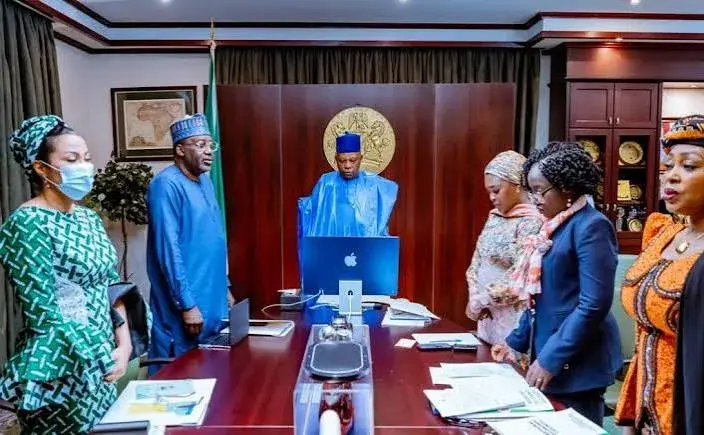
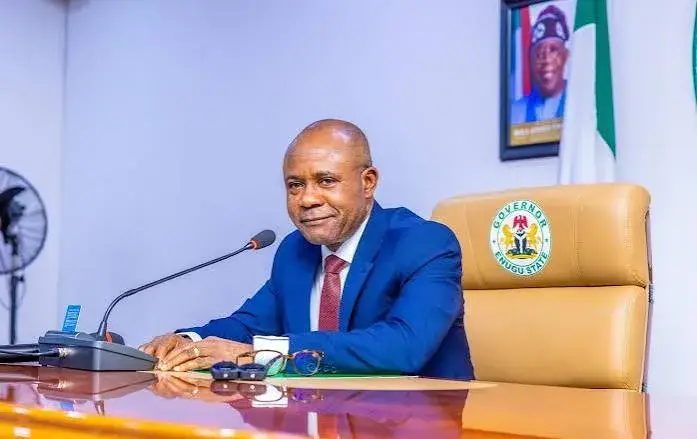
President Bola Ahmed Tinubu has officially flagged off the Bakassi Deep Seaport project in Cross River State.
The groundbreaking ceremony took place on Friday, November 13, 2026, in Bakassi. Vice President Kashim Shettima represented the President at the event.
Tinubu described the project as a major investment in Nigeria's economic diversification. He said the proposed port would open new trade routes, encourage industrial growth and create employment opportunities.
The President also commended Cross River Governor Bassey Otu for sustaining the project. He praised the state government for advancing an initiative that had faced institutional and financial challenges.
The project is expected to establish another major maritime gateway for Nigeria. It will also strengthen the country's access to international markets through the Gulf of Guinea.
Cross River State News+1
How the $3.5 Billion Bakassi Seaport Will Transform Trade
The proposed seaport is designed as a deep-water facility with a 20-metre draft. This means it is intended to accommodate large vessels that cannot easily access some existing Nigerian ports.
Tinubu said the facility would help Nigeria attract cargo currently handled by neighbouring countries.
He also highlighted the country's heavy dependence on Lagos for international maritime trade. According to his address, more than 80 per cent of Nigeria's foreign trade passes through Lagos.
The President argued that developing another major maritime gateway would ease pressure on existing facilities. It would also reduce the risks associated with concentrating national trade around one major commercial centre.
He stressed that the Bakassi project would complement Lagos rather than compete against it.
The proposed port will also connect with a superhighway designed to move cargo inland. This road connection is expected to improve transportation between the port and markets across Nigeria.
The project therefore combines maritime infrastructure with road transportation. Together, these facilities are intended to strengthen the country's logistics and distribution networks.
Bassey Otu Credits Tinubu With Reviving the Project
Cross River Governor Bassey Otu welcomed the groundbreaking as a significant milestone. He said the project had encountered political, administrative, legal and environmental challenges.
Otu credited the Tinubu administration with providing the federal support needed to advance it.
The governor also explained that the project originated before his administration. He acknowledged former Governor Ben Ayade's role in initiating the development.
According to Otu, the original conception dates back to 2014, while the state government's earlier announcement identified 2018 as the year the project was initiated under Ayade.
His administration subsequently worked to secure development partners and complete essential technical preparations.
These preparations included an Environmental Impact Assessment and hydrographic, geotechnical and geophysical surveys.
The surveys examine water depths, seabed conditions and the physical characteristics of the proposed construction site. Their findings help engineers determine the requirements for building and operating a safe port.
Otu also disclosed that the project had received federal approval and a Certificate of Compliance. The development is structured as a Public-Private Partnership involving government and private investors.
Under the ownership arrangement announced in February 2025, UAE-based Arise Integrated Industrial Platforms (Arise IIP) holds an 80 per cent stake. Cross River State retains the remaining 20 per cent.
The partnership is intended to combine private-sector financing and expertise with government oversight.
Funding, Employment and Infrastructure Plans
The financial structure is central to the project's next phase.
The Infrastructure Concession Regulatory Commission previously identified the proposed development as a $3.5 billion project. It also reported that financing had been secured through the African Export-Import Bank, commonly known as Afreximbank.
However, during Friday's groundbreaking ceremony, Governor Otu referred to an initial funding approval of $2.27 billion.
The two figures should not automatically be treated as contradictory. The $3.5 billion figure represents the project's stated overall value, while the $2.27 billion figure was described as its initial funding approval.
Further financial details, including the final financing structure and disbursement schedule, will be important as implementation progresses.
Beyond construction, the government expects the port to support several industries.
These include shipping, fishing, logistics, tourism, commerce and shipbuilding. Related businesses could also benefit from increased demand for transportation, storage and other services.
Otu disclosed that the state had started training selected residents for future construction and operational positions. The programme is expected to expand following the groundbreaking.
The governor said the training would cover artisans, skilled workers and professionals. This is intended to help local residents participate in the opportunities associated with the development.
The proposed seaport will also form part of a wider infrastructure corridor. The state government plans to connect the facility with the airport and the Lagos-Calabar Coastal Highway.
The combined infrastructure is expected to make cargo movement more efficient and attract additional investors.
What Happens Next for the Bakassi Project?
Friday's ceremony marks an important step towards construction, but it does not mean the seaport is ready for operations.
The project must progress through its construction and implementation phases. Its eventual success will depend on financing, engineering delivery, infrastructure connections and effective management.
There are also practical questions surrounding the project's delivery schedule. The government has not provided a definitive operational opening date in its groundbreaking announcement.
Environmental protection and the interests of communities around the proposed development will also require attention.
The project has particular significance for Cross River because of the state's maritime history and its economic challenges following the loss of the Bakassi Peninsula to Cameroon.
The territory dispute culminated in the 2002 judgment of the International Court of Justice, which awarded sovereignty over the peninsula to Cameroon. The subsequent transfer affected communities with longstanding social, economic and family connections to Nigeria.
For Cross River, the proposed seaport represents an opportunity to strengthen its maritime economy and restore commercial relevance.
For Nigeria, it offers the prospect of a stronger maritime network and additional capacity for international trade.
However, the real measure of success will be the delivery of the facility, the businesses it attracts and the employment it generates.
The groundbreaking has now taken place. Attention will turn to whether the governments and investors involved can translate the long-standing ambition into a functioning commercial port.