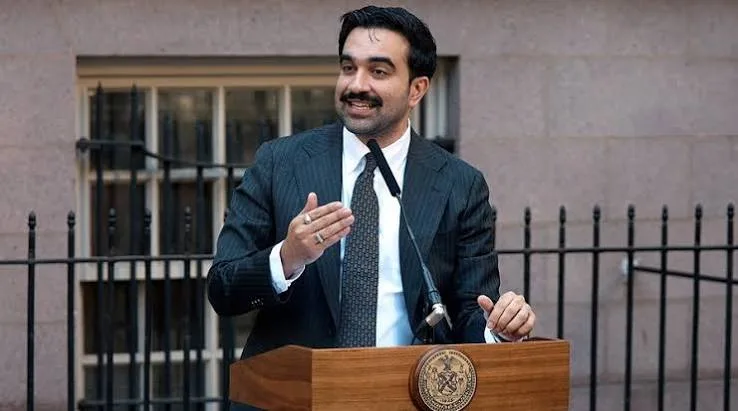
New York City Mayor Zohran Mamdani has unveiled a comprehensive plan to close Rikers Island by December 31, 2032.
The announcement, made on Friday, November 20, marks a renewed push to end operations at one of America's most controversial jail complexes.
The plan proposes replacing the existing facilities with four smaller jails across New York City's boroughs. It also includes expanded medical care, mental health treatment and programmes designed to reduce the number of people held in detention.
The administration says it will invest $146 million in the next fiscal year. The money will support rehabilitation, education, job training, substance-use treatment and services for crime victims.
However, the proposed closure will not happen immediately. Rikers Island remains operational, and the city must overcome significant construction, legal and population challenges before completing the transition.
Mamdani described the closure as both a legal and moral responsibility.
"It is time to finally close Rikers Island," the mayor said in his announcement.
He said the plan would address excessive pretrial detention, court delays and the conditions affecting people held in custody.
The announcement represents a significant development in a campaign that has lasted several decades.
Four New Jails to Replace Rikers Island
Under the proposal, New York City will construct four replacement facilities in Brooklyn, the Bronx, Queens and Manhattan.
The new facilities will bring detainees closer to courts, families, lawyers and essential community services.
The construction schedule identifies Brooklyn as the first facility, with an expected opening in 2029.
Queens and the Bronx are scheduled to follow in 2031. Manhattan's replacement facility is expected to open in 2032.
The administration says the new buildings will offer better conditions than the ageing Rikers complex.
They will feature individual cells, improved supervision arrangements, outdoor spaces and dedicated areas for educational and vocational programmes.
Each facility will also include separate community space for neighbourhood residents.
The Queens facility will accommodate women held in city custody. Its location is expected to improve access to Elmhurst Hospital for those requiring specialised medical attention.
The city also plans to create an additional 236 therapeutic housing beds in Brooklyn and the Bronx.
These will bring the total number of specialised therapeutic beds in NYC Health + Hospitals facilities to 340.
They will provide alternative accommodation for detainees with serious mental health conditions or complex medical needs.
According to the administration, the new system should improve safety for detainees and correctional employees.
It should also make family visits and access to legal representation easier.
$146 Million Investment Targets Rehabilitation and Public Safety
A central part of Mamdani's strategy is reducing the number of people held in New York City's jails.
The Associated Press reports that the population at Rikers currently exceeds 6,500. The replacement facilities are designed around a substantially smaller jail population of approximately 4,500.
Achieving that reduction will require more than constructing new buildings.
The administration wants to expand supervised release, community-based diversion and supportive housing programmes.
These measures are intended to prevent unnecessary detention, particularly for people awaiting trial.
The proposed $146 million investment includes $50 million for programmes inside correctional facilities.
These will cover education, vocational training, mental health counselling and substance-use treatment.
Another $76 million will support community-based services, including housing assistance, rehabilitation and programmes helping formerly incarcerated people return to society.
The city will also allocate $15 million to victim support services and another $1 million to the Bronx District Attorney's Office.
The administration believes that stronger community support can reduce repeat offending and ease pressure on the correctional system.
It also plans to restore an online bail payment portal that has been unavailable since 2023.
The system is expected to make it easier for families to pay bail without travelling to correctional facilities.
Additionally, the city intends to address delays in criminal proceedings by improving coordination between prosecutors, defence lawyers, courts and investigative agencies.
These measures are important because many people held at Rikers have not yet been convicted of the offences they face.
Reducing unnecessary pretrial detention is therefore a major part of the proposed transition.
Why Rikers Island Has Become a Major Closure Target
Rikers Island has long faced criticism over violence, overcrowding, inadequate medical care and deteriorating infrastructure.
Located in the East River between Queens and the Bronx, the island houses New York City's main jail complex.
Its troubled history has made it a major focus of criminal justice reform campaigns.
The closure campaign gained renewed political momentum following the death of Kalief Browder.
Browder was arrested as a teenager and spent approximately three years at Rikers without trial. He died by suicide in 2015, aged 22, after his release.
His experience became a powerful symbol of the problems associated with prolonged pretrial detention.
In 2019, the New York City Council approved a plan to close Rikers and replace it with four borough-based jails.
The original legal deadline required the city to end incarceration on the island by August 31, 2027.
However, construction delays, political disagreements and difficulties reducing the jail population have made that deadline increasingly unrealistic.
Mamdani's announcement therefore establishes a revised target of December 31, 2032.
The City Council will introduce legislation to update the legal timeline and align it with the construction programme.
The correctional system is also under federal court-ordered oversight following years of concerns about conditions at Rikers.
The federal intervention reflects the seriousness of the problems facing the facility.
The new plan is intended to address those problems while creating a different approach to detention and rehabilitation.
Political Support, Challenges and What Happens Next
Mamdani's announcement has received support from several prominent New York officials.
New York Attorney General Letitia James welcomed the plan, describing the transition to borough-based jails as necessary for the safety of detainees and correctional officers.
City Council Speaker Julie Menin also backed the proposal.
She acknowledged that previous delays had made additional time necessary to fulfil the city's 2019 commitment.
New York City's four district attorneys also expressed support, while warning that significant obstacles remain.
Their statement stressed the importance of preserving public safety and maintaining humane conditions throughout the transition.
Public Advocate Jumaane Williams similarly welcomed the renewed commitment but called for immediate improvements at Rikers while the city works towards closure.
However, the proposal still faces important tests.
The city must secure the necessary legislative approval, complete construction and bring the jail population down to a level the replacement facilities can accommodate.
There are also questions about how the administration will ensure that the new facilities do not inherit the same problems that have plagued Rikers.
The mayor's administration says it will work with correctional staff, courts, community organisations and the federal oversight team to manage the transition.
Meanwhile, planning has begun for the future use of Rikers Island after incarceration ends there.
The city is considering renewable energy and sustainability projects, alongside broader redevelopment ideas.
For now, the immediate priority remains reducing the jail population and delivering the replacement facilities.
Mamdani's announcement offers a clearer timetable for ending Rikers Island's long and troubled role in New York's correctional system.
But the real measure of success will be whether the city can turn that commitment into a safer, more accountable and genuinely humane system by 2032.